Key Findings
A collaborative research effort by Helmholtz-Zentrum Berlin (HZB) and HTW Berlin has demonstrated that accelerated degradation tests effectively mirror real-world outdoor aging in perovskite solar cells (PSCs), providing a reliable framework for predicting their long-term lifespan. Published in the journal Joule, the study compared naturally aged PSCs with artificially stressed counterparts, identifying three primary degradation mechanisms: phase segregation, copper corrosion, and edge patterning. Crucially, these mechanisms were found to be reproducible under accelerated conditions, validating the predictive power of such laboratory tests.
Technical Details
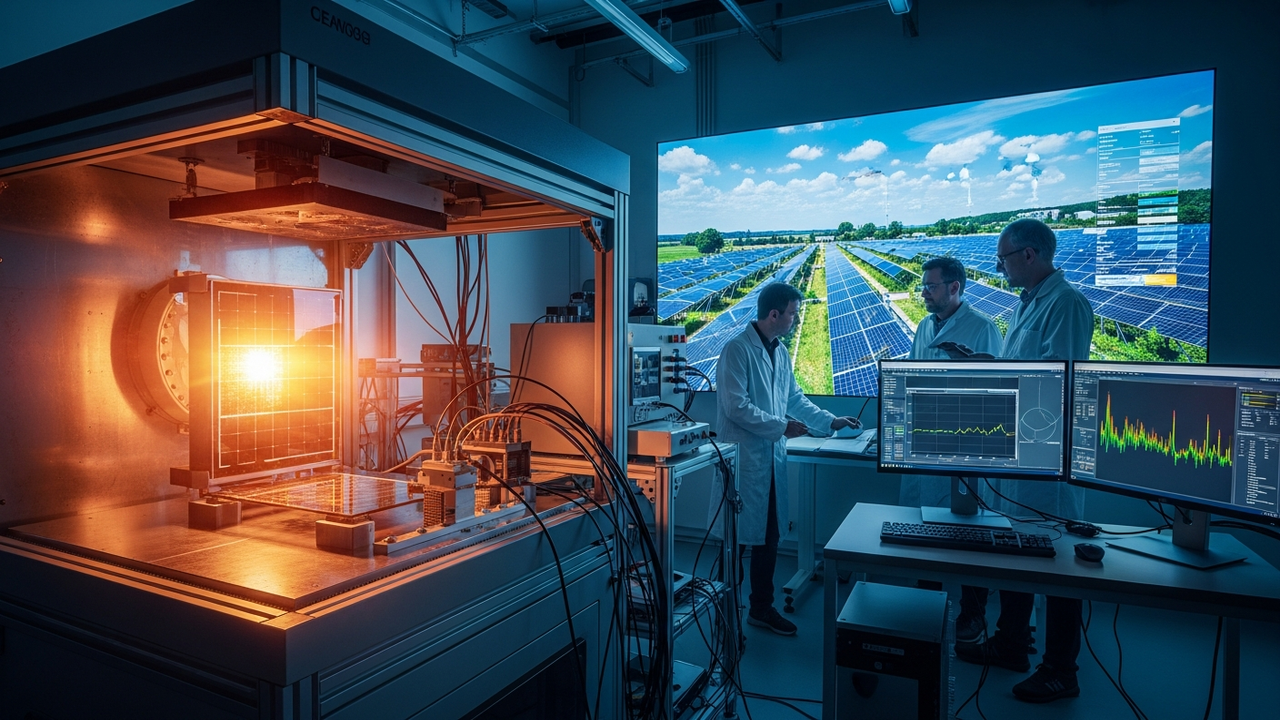
The research involved subjecting various PSC device architectures to both prolonged outdoor exposure—exceeding 20 months—and a battery of accelerated laboratory tests mimicking intense heat, humidity, light, and electrical bias. A direct correlation was observed between the degradation modes in outdoor conditions and those induced by accelerated aging. Specifically, phase segregation, driven by cation migration and exacerbated by thermal and electrical stress, was confirmed as a primary intrinsic degradation pathway. The findings establish that the degradation phenomena observed in accelerated testing faithfully represent the mechanisms occurring in actual outdoor environments, thereby providing a robust tool for overcoming a key bottleneck in PSC commercialization: reliable long-term stability assessment.
Background & Context
Perovskite solar cells have garnered significant attention for their high power conversion efficiency and potential for low-cost manufacturing, positioning them as a leading contender for next-generation photovoltaics. However, concerns regarding their long-term stability have been a major hurdle for widespread commercial adoption. Historically, accelerated degradation tests have faced skepticism regarding their ability to accurately predict real-world device lifetimes. This study is groundbreaking in definitively showing that accelerated tests can indeed capture the actual degradation mechanisms, offering a critical advancement for the field. This breakthrough promises to shorten development cycles and significantly reduce the time-to-market for new PSC technologies.
Strategic Significance & Outlook
The results of this study establish a new benchmark for evaluating PSC long-term stability, enabling more reliable lifetime predictions. This will empower manufacturers to enhance product quality assurance and boost confidence among investors and consumers in PSC technology. Moving forward, continued validation across diverse environmental conditions and application to different materials and device architectures are expected to further accelerate the improvement of PSC stability and their eventual broad commercial deployment, cementing their role in the future energy landscape.
Source: https://www.miragenews.com/perovskite-solar-cells-long-term-stability-1699394/
Get our weekly technology intelligence — free
Receive an infographic that lets you judge at a glance whether each field’s analysis report is worth reading.
Subscribe Free — Weekly Tech Intelligence
By subscribing, you’ll receive Troy-Technical’s weekly technology intelligence newsletter.
- Your email and selected fields are used only to deliver the newsletter.
- We never share your information with third parties.
- You can unsubscribe anytime via the link in each email.
See our Privacy Policy for details.
Takes about a minute · Unsubscribe anytime