Key Findings
A research team from the Hefei Institutes of Physical Science, Chinese Academy of Sciences, has reported a significant advancement in inverted perovskite solar cells (PSCs), achieving a power conversion efficiency (PCE) of 26.17% through a novel synergistic strategy utilizing glutathione (GSH) additives. This breakthrough also extended to 12.50 cm² mini-modules, which recorded an impressive 23.14% efficiency, coupled with substantially improved operational stability under diverse environmental stressors including heat, humidity, and UV light.
Technical Details
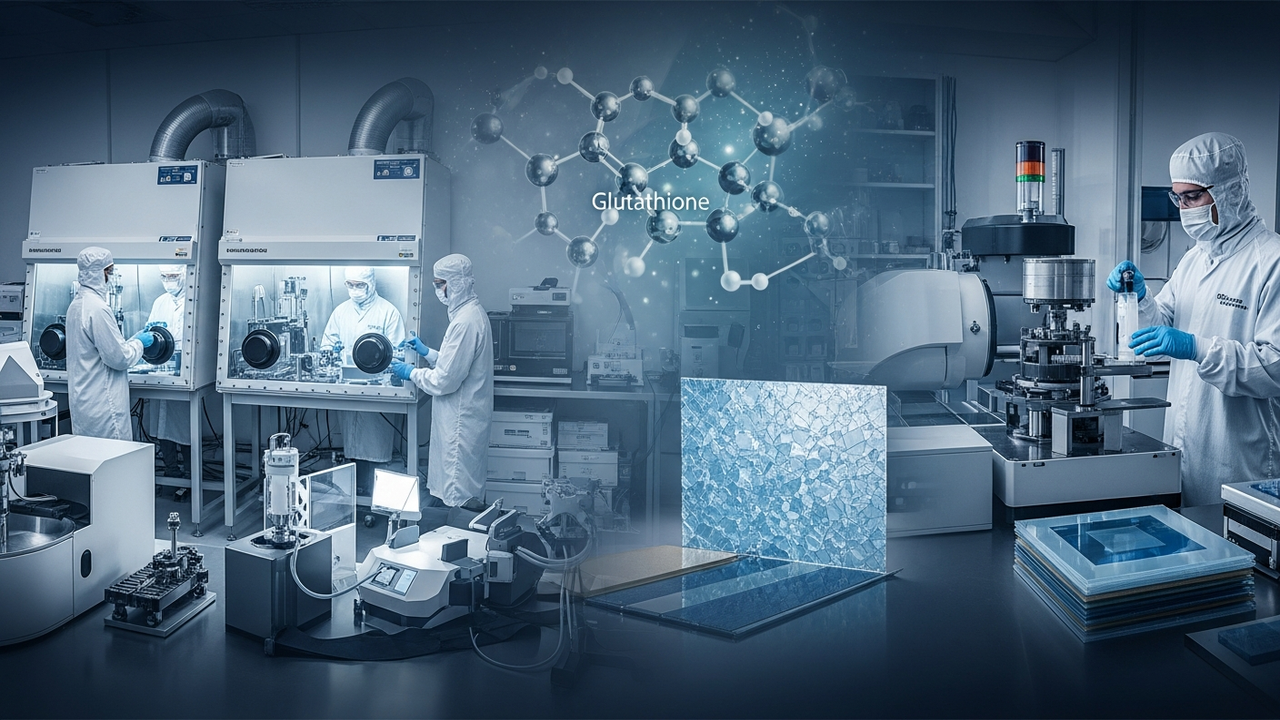
The team’s innovative approach involves incorporating glutathione (GSH) into the perovskite layer, which acts as a multifunctional additive. GSH facilitates the precise tuning of interfacial properties and significantly enhances film quality. Mechanistically, glutathione provides chemical protection and activates redox self-healing mechanisms within the PSC. This dual action effectively suppresses defect formation and minimizes ion migration, crucial factors for maintaining device stability. By optimizing the charge extraction efficiency between the electron transport layer and the perovskite, and simultaneously bolstering resilience against environmental degradation, this strategy addresses long-standing stability challenges inherent in PSC technology, offering a viable pathway towards robust, high-performance devices.
Background & Context
Perovskite solar cells are widely regarded as a game-changer for the photovoltaic industry due to their high efficiency and potential for low-cost manufacturing. However, their commercialization has been primarily hampered by insufficient stability against environmental factors such as moisture, heat, and UV radiation. The glutathione strategy developed in this study directly tackles these issues, representing a significant step forward in both efficiency and stability. The achievement of high efficiencies in larger mini-modules is particularly noteworthy, indicating strong potential for practical application and scalability, differentiating it from purely laboratory-scale achievements.
Strategic Significance & Outlook
This novel strategy holds immense promise for accelerating the practical deployment of perovskite solar cells. The enhanced environmental stress resistance directly translates to an extended product lifespan, potentially reducing the overall levelized cost of electricity (LCOE) for solar power systems. Future work will focus on scaling up this technology for mass production and conducting extensive long-term outdoor performance assessments. The development of such multifunctional additives like glutathione marks a critical milestone, influencing the future trajectory of perovskite solar cell technology and reinforcing its position as a key component in the global renewable energy transition.
Source: https://www.eurekalert.org/news-releases/1133758
Get our weekly technology intelligence — free
Receive an infographic that lets you judge at a glance whether each field’s analysis report is worth reading.
Subscribe Free — Weekly Tech Intelligence
By subscribing, you’ll receive Troy-Technical’s weekly technology intelligence newsletter.
- Your email and selected fields are used only to deliver the newsletter.
- We never share your information with third parties.
- You can unsubscribe anytime via the link in each email.
See our Privacy Policy for details.
Takes about a minute · Unsubscribe anytime