Key Findings
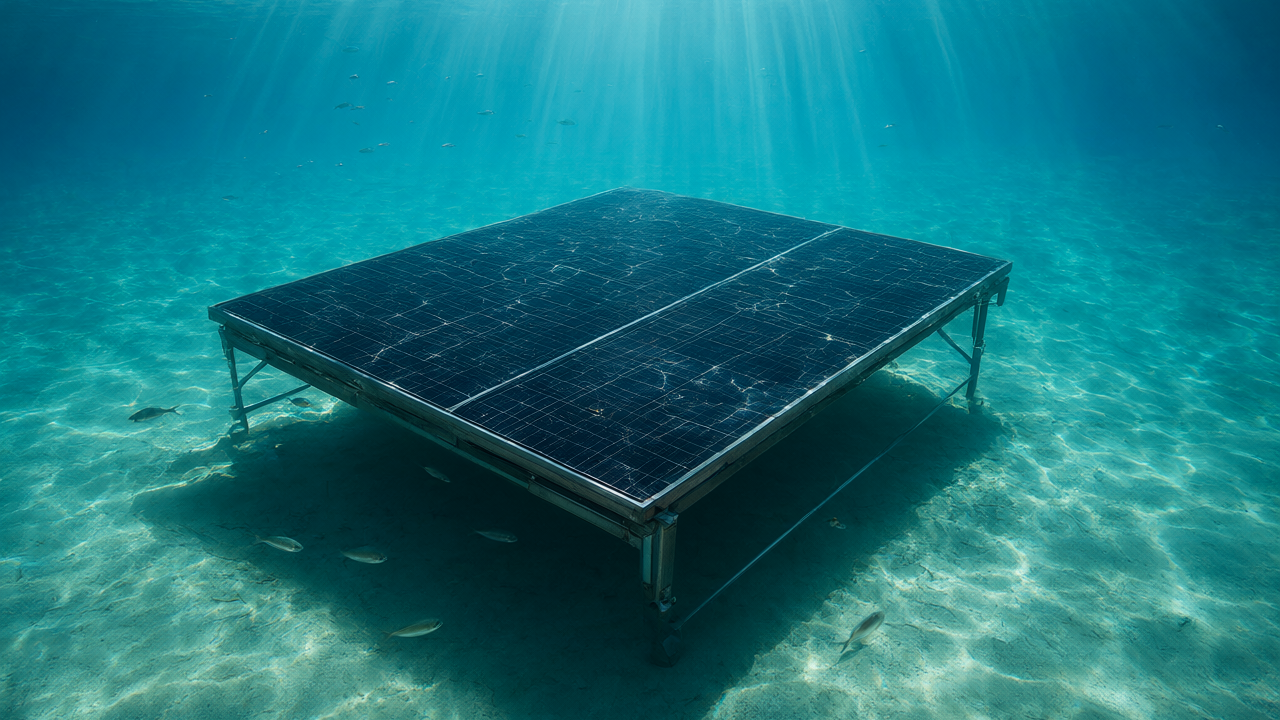
A significant breakthrough has been achieved in the development of high-efficiency underwater solar cells, utilizing a polymer-tuned mixed-anion lead halide perovskite. These innovative modules are specifically optimized to harness the blue-green light spectrum prevalent in deep-water environments, featuring a wide optical bandgap of approximately 1.96 eV. Protected by robust multilayer encapsulation, the devices demonstrated stable electricity production at a depth of 10 meters in the South China Sea, indicating a major advancement for sub-aquatic energy solutions.
Technical / Clinical Details
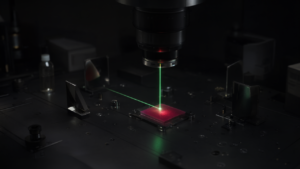
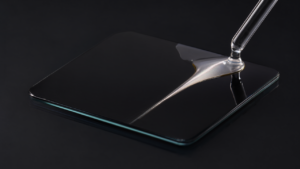
- Perovskite Optimization: The introduction of polyhexamethylene guanidine hydrochloride (PHMG) as a crystallization additive fundamentally alters the crystallization dynamics and surface electronic properties of the perovskite film. This process stabilizes and strengthens the crystal structure, making it more resilient in aquatic conditions.
- Spectral Tuning: The perovskite material is precisely tuned to a wide optical bandgap of approximately 1.96 eV, maximizing its absorption efficiency for the blue-green wavelengths that penetrate deepest into water. This optimization is crucial for effective energy conversion in submarine environments.
- Enhanced Durability: The modules incorporate a robust multilayer encapsulation strategy, crucial for protecting the sensitive perovskite material from water ingress and pressure. Accelerated thermal aging tests predict a T80 lifetime (maintaining 80% of initial efficiency) of approximately 48,094 hours (equivalent to 5.49 years) of continuous underwater operation, signifying remarkable long-term reliability.
Background & Context
The vast expanse of the world’s oceans presents a challenging yet promising frontier for renewable energy. Traditional solar technologies struggle with the unique demands of underwater environments, including spectral attenuation, high pressure, corrosion, and biofouling. The development of specialized solar cells capable of operating efficiently and stably beneath the surface opens new possibilities for powering underwater sensors, autonomous vehicles, and marine research equipment, which currently rely heavily on limited-duration battery power.
Strategic Significance & Outlook
This development of high-efficiency, durable underwater solar cells represents a pivotal step towards sustainable energy solutions in marine applications. The ability to provide stable power generation in deep-water settings will dramatically extend the operational capabilities of a wide range of underwater technologies, from environmental monitoring to defense systems. This innovation is poised to create new market segments within the renewable energy sector, fostering both the utilization of ocean resources and the advancement of marine science and technology, while offering a greener alternative to existing power solutions.
Get our weekly technology intelligence — free
Receive an infographic that lets you judge at a glance whether each field’s analysis report is worth reading.
Subscribe Free — Weekly Tech Intelligence
By subscribing, you’ll receive Troy-Technical’s weekly technology intelligence newsletter.
- Your email and selected fields are used only to deliver the newsletter.
- We never share your information with third parties.
- You can unsubscribe anytime via the link in each email.
See our Privacy Policy for details.
Takes about a minute · Unsubscribe anytime