Key Findings
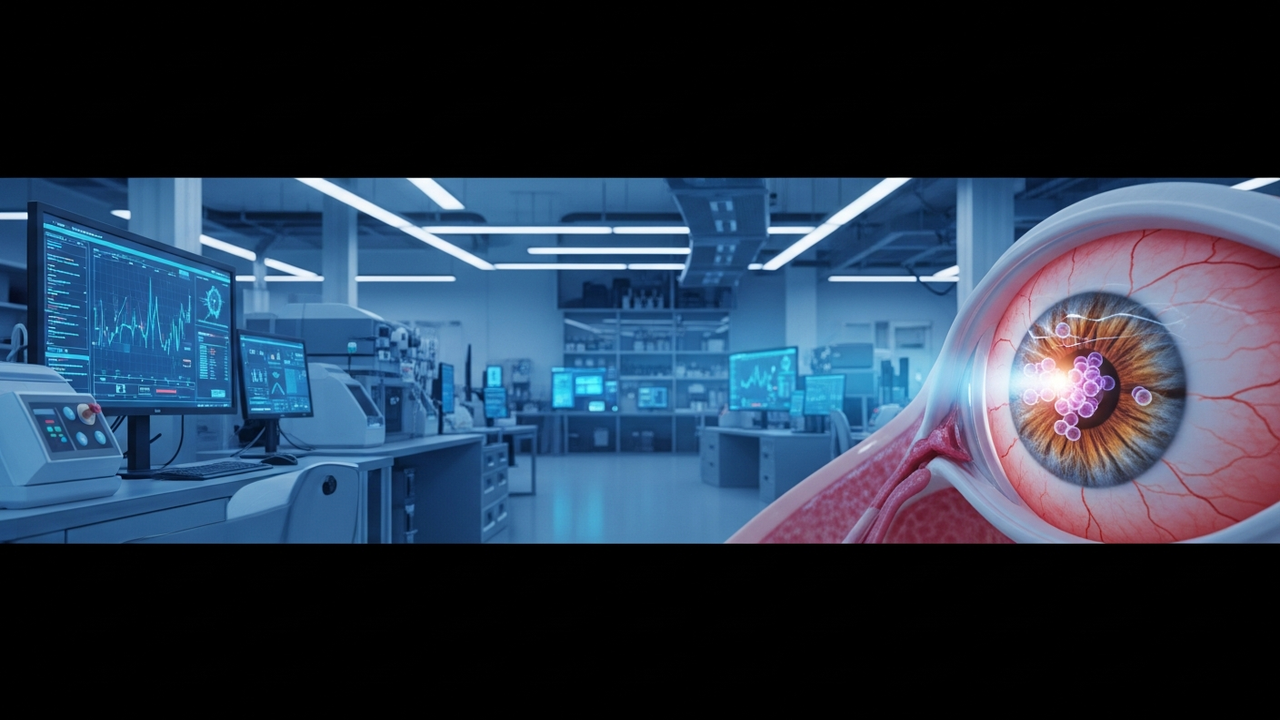
A ground-breaking sustained drug delivery system, employing chitosan-coated PLGA nanoparticles (NPs) for dexamethasone, has been developed, allowing for drug release triggered by near-infrared (NIR) light. This innovative drug delivery system (DDS) achieved a 2.0 to 2.3-fold increase in dexamethasone release upon NIR irradiation, enabling precise, on-demand control over drug administration for posterior eye diseases. Such a system holds significant promise for reducing the frequency of intravitreal injections, thereby improving patient compliance, maximizing therapeutic efficacy, and minimizing potential side effects.
Technical / Clinical Details
The developed nanoparticles are based on biodegradable poly(lactic-co-glycolic acid) (PLGA) polymer, with their surface coated by highly biocompatible chitosan. Chitosan functions as a photoabsorber, generating heat upon NIR irradiation, which induces structural changes in the nanoparticles to release the encapsulated dexamethasone. Dexamethasone is a potent anti-inflammatory corticosteroid widely used in treating posterior eye diseases such as age-related macular degeneration, diabetic retinopathy, and retinal vein occlusion, primarily to reduce inflammation and edema. This light-triggered system is pivotal as it allows for accurate drug delivery to the site of action and non-invasive external control.
Background & Context
Current treatments for posterior eye diseases often necessitate frequent intravitreal injections, imposing substantial physical and psychological burdens on patients and carrying risks of infection. While existing DDS technologies enable sustained drug release, external control over the release kinetics has been limited. Light-responsive DDS offers a promising solution to these challenges, with NIR light being particularly suitable due to its high tissue penetration, allowing for non-invasive application to deep tissues. The success of this technology extends beyond ophthalmology, broadening the possibilities for localized and precise drug delivery in other disease areas.
Strategic Significance & Outlook
This light-responsive chitosan-coated PLGA nanoparticle DDS is expected to have broad applicability beyond dexamethasone, potentially delivering various other drugs, including unstable macromolecular therapeutics such as gene therapies and protein drugs that require specific release timings. While further safety and efficacy evaluations are necessary for clinical translation, this technology could significantly improve patient outcomes and foster personalized treatment approaches. Representing a critical breakthrough in DDS research, it has the potential to contribute significantly to the advancement of precision medicine.
Source: https://pubs.acs.org/doi/10.1021/acsomega.6c02332
Get our weekly technology intelligence — free
Receive an infographic that lets you judge at a glance whether each field’s analysis report is worth reading.
Subscribe Free — Weekly Tech Intelligence
By subscribing, you’ll receive Troy-Technical’s weekly technology intelligence newsletter.
- Your email and selected fields are used only to deliver the newsletter.
- We never share your information with third parties.
- You can unsubscribe anytime via the link in each email.
See our Privacy Policy for details.
Takes about a minute · Unsubscribe anytime