Key Findings
Samsung Electronics’ sales of its next-generation High Bandwidth Memory (HBM4) are projected to surpass an astounding $10 billion (approximately 1.6 trillion JPY) this year, fueled by an explosive increase in demand from artificial intelligence (AI) applications. This forecast clearly demonstrates Samsung’s robust position in the HBM market and the critical importance of memory semiconductors in the AI era.
Technical / Clinical Details
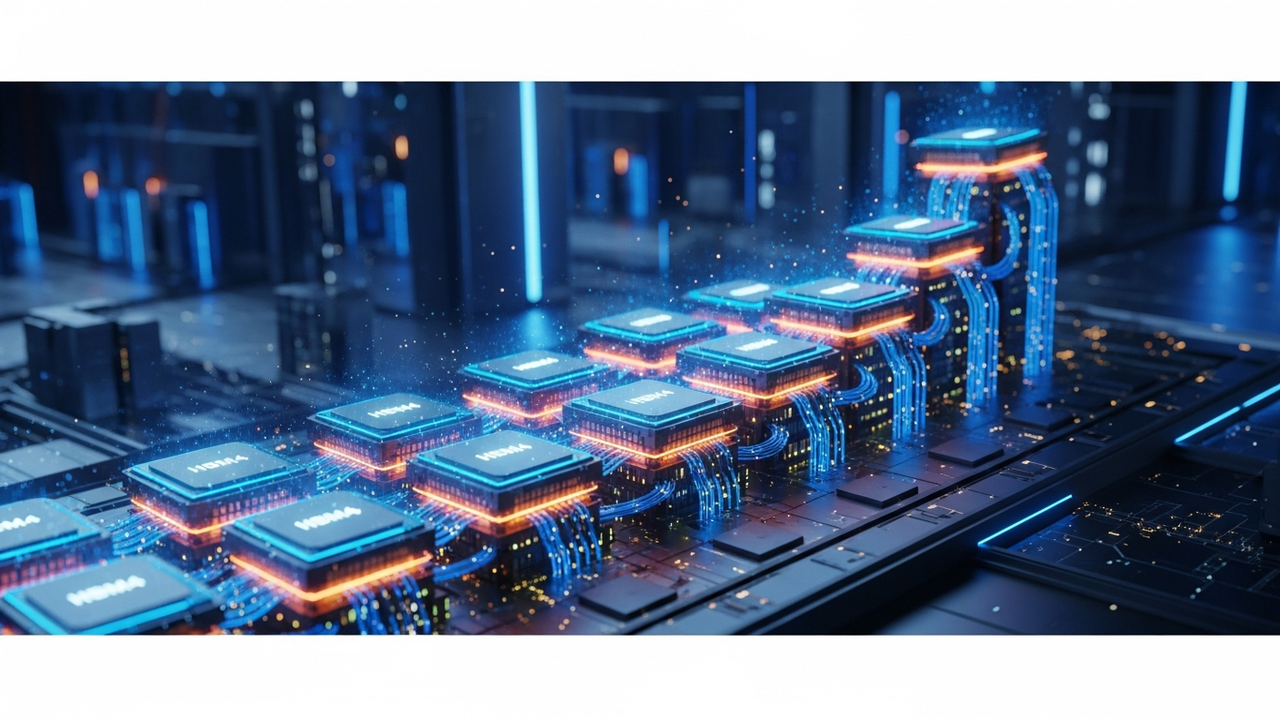
HBM4 is engineered to deliver higher bandwidth, lower power consumption, and superior thermal characteristics compared to its predecessor, HBM3E. Samsung is actively employing advanced packaging technologies, particularly hybrid bonding, to maximize HBM4’s performance. Hybrid bonding drastically reduces the connection pitch between chips, enhancing signal transmission efficiency and significantly boosting data transfer speeds. Furthermore, the company is increasing the number of HBM4 stacks and the capacity per die, providing the immense data processing capabilities required by AI accelerators. Leading AI chip manufacturers, including NVIDIA, are aggressively adopting HBM4 in their GPUs and ASICs, which is a powerful driver of Samsung’s sales.
Background & Context
The evolution of AI, especially large language models (LLMs), demands not only tremendous computational power from AI processors but also immense data processing capabilities from connected memory. Consequently, data bandwidth between the processor and memory has become one of the most critical factors determining overall system performance. HBM stands as the only viable solution to overcome this bottleneck, leading to a rapid expansion of its demand. Samsung, leveraging its longstanding leadership in the DRAM market and aggressive investments in advanced packaging technologies, is driving growth in this HBM market during the AI era. While competitors are also focusing on HBM technology, Samsung has established a strong advantage through early mass production and continuous technological innovation.
Strategic Significance & Outlook
The projection of HBM4 sales exceeding $10 billion clearly positions HBM as a new growth engine for Samsung’s semiconductor business. The company is expected to further ramp up HBM production capacity and actively engage in the development of next-generation technologies like HBM5 and beyond, maintaining its leadership in the high-performance computing market of the AI era. This expansion of the HBM market will also create significant business opportunities for related advanced packaging material and equipment suppliers, contributing to the revitalization of the entire semiconductor ecosystem. Samsung’s HBM technology will continue to solidify its status as indispensable infrastructure supporting the advancement of AI.
Get our weekly technology intelligence — free
Receive an infographic that lets you judge at a glance whether each field’s analysis report is worth reading.
Subscribe Free — Weekly Tech Intelligence
By subscribing, you’ll receive Troy-Technical’s weekly technology intelligence newsletter.
- Your email and selected fields are used only to deliver the newsletter.
- We never share your information with third parties.
- You can unsubscribe anytime via the link in each email.
See our Privacy Policy for details.
Takes about a minute · Unsubscribe anytime