Materials Informatics– category –
-

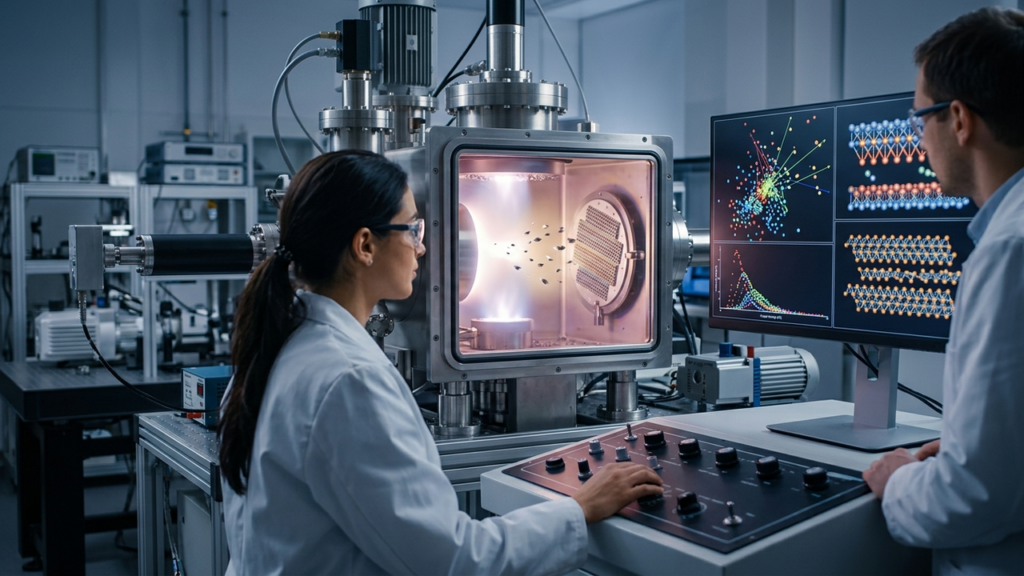
AI and Autonomous Labs Accelerate New Materials Discovery: DeepMind’s GNoME Reduces Months to Days in Development
Facebook (Argonne National Laboratory / ScienceDaily context) USA Overview Leveraging AI, particularly DeepMind's GNoME model and 'self-driving labs,' the new materials discovery process is being dramatically shortened from months to mer... -
UChicago Lab Discovers Climate-Action Materials via ML-Driven Workflow: Creates Methane-Separating MOFs ‘UCHI-1’ and ‘UCHI-2’
UChicago Pritzker School of Molecular Engineering (PME) USA Overview A research lab at the University of Chicago developed a machine-learning-driven, end-to-end workflow to streamline materials discovery from academic concepts to manufac... -
Novel MLIP Developed for Titanium Carbide MXenes: Applied to Ion Irradiation Simulations, Offering New Defect Engineering Guidance
The Royal Society of Chemistry UK Overview A machine-learned interatomic potential (MLIP) has been developed for titanium carbide MXenes, demonstrating successful application in ion irradiation simulations. Trained with density functiona... -
IDTechEx Report: AI Drives Materials Discovery to Design, Focusing on Generative Design and Synthesizability Challenges
IDTechEx UK Overview This article provides an overview of a market research report published by IDTechEx. The report highlights three key applications driving materials informatics: AI-assisted screening, formulation development, and gen... -
Mira Proposes “Fifth Paradigm” of AI in Materials Science: Integrating MatterGen, A-Lab, GNoME for Autonomous Discovery
Mira USA Overview Mira has proposed the "Fifth Paradigm" of AI in materials science, asserting that the integration of generative design (MatterGen), quantum chemistry simulations, and closed-loop laboratories (A-Lab) will accelerate aut... -
MACE and SevenNet Data Efficiency Evaluated for Material-Specific MLIP Construction: Achieving Ab Initio Accuracy with 2,000 AIMD Configurations
arXiv International Overview The amount of ab initio molecular dynamics (AIMD) data required to fine-tune universal machine-learned interatomic potentials (MLIPs) for material-specific applications has been quantified. Research indicates... -
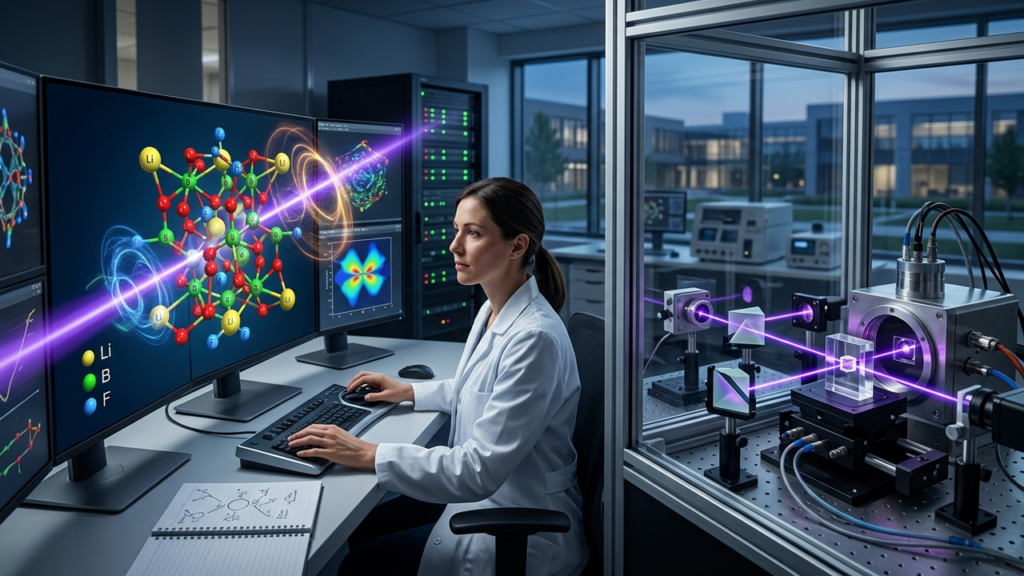
Accelerating Deep-Ultraviolet Nonlinear Optical Material Discovery: Integrated MLIP-First Principles Framework Demonstrated in LiB2O3F
ACS Publications USA Overview An integrated framework for accelerating the discovery of deep-ultraviolet (deep-UV) nonlinear optical materials has been established, demonstrating its efficacy in the LiB2O3F system. This framework combine... -
LAMMPS Accelerates MLIP Integration: Revolutionizing MD Simulations with DeePMD-kit, MACE, CHGNet Foundation Models
LAMMPS Molecular Dynamics Simulator USA Overview The LAMMPS molecular dynamics simulator is enhancing its integration with several machine-learned interatomic potential (MLIP) frameworks, including DeePMD-kit, NequIP, Allegro, MACE, Seve... -
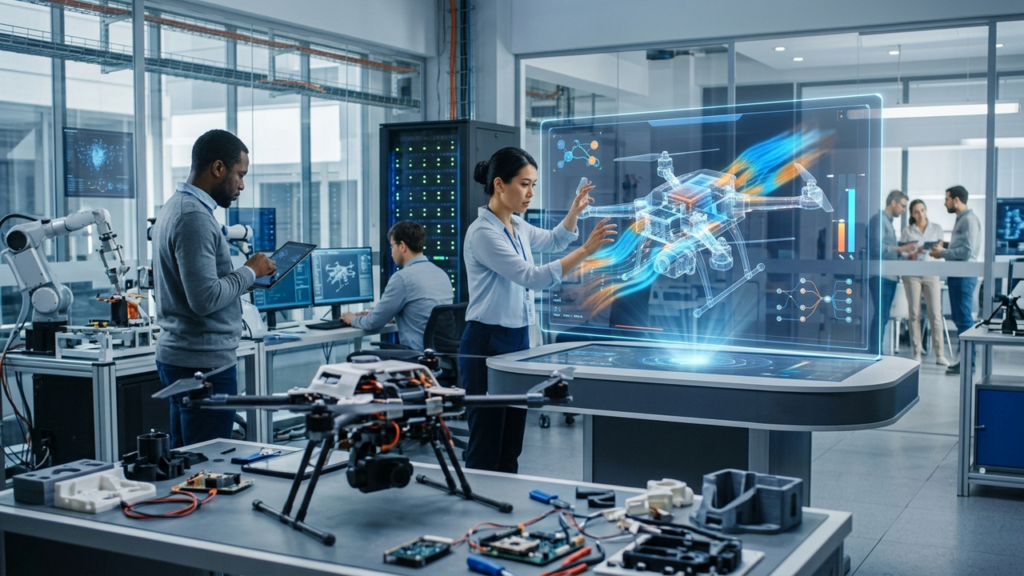
Generative AI Accelerates Product Development: From Ideation to Efficient Digital Twin Prototyping
Atlas Systems USA Overview Generative AI (GenAI) is fundamentally transforming product development, dramatically accelerating every stage from ideation to prototyping and testing. GenAI rapidly generates diverse design proposals and stre... -
Machine-Learned Interatomic Potential Developed for Tungsten-Boron Surface Sputtering via tabGAP Framework, Guiding MXene Defect Engineering
arXiv International Overview A machine-learned interatomic potential (MLIP) has been developed using the tabGAP framework to simulate sputtering behavior of tungsten-boron (W-B) surfaces at large scales. Trained with density functional t...