Background: Driving Environmental Efficiency in Battery Recycling
With the proliferation of electric vehicles (EVs) and various electronic devices, the volume of end-of-life lithium-ion batteries is continuously increasing. Recycling these batteries to recover valuable metal resources is essential, but conventional recycling processes have faced challenges such as high energy consumption for refining and elevated costs due to complex procedures. There is a strong demand for new recycling technologies that can efficiently recover high-quality materials while reducing environmental impact, and ‘direct recycling’ technology is emerging as a promising solution to these issues.
Key Findings / Results: Ascend Elements Dramatically Expands Direct Recycling Capacity in Kentucky
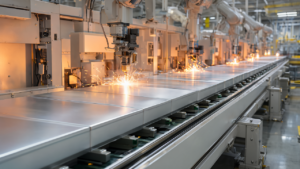
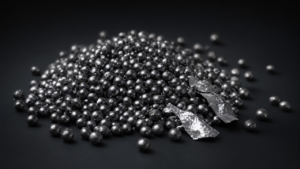
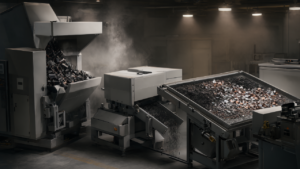
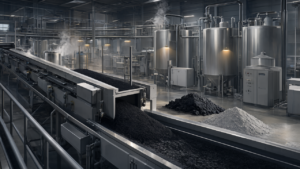
Ascend Elements, a U.S. battery recycling technology company, has announced plans for a significant expansion of its ‘Hydro-to-Cathode’ direct recycling facility in Kentucky. This facility is distinguished by its unique process: it chemically extracts valuable metals such as lithium, nickel, and cobalt from ‘black mass’ (a powdered composite material obtained by crushing used lithium-ion batteries) and then directly manufactures them into new precursor Cathode Active Material (pCAM). Compared to traditional smelting and refining processes, this method substantially shortens the processing steps, resulting in lower environmental impact and higher material recovery efficiency. With this expansion, the facility’s annual black mass processing capacity will reach 30,000 tons, a scale equivalent to tens of thousands of EV batteries.
- Technology Name: ‘Hydro-to-Cathode’ direct recycling technology.
- Expansion Site: Kentucky, USA.
- Target Material: Black mass from used lithium-ion batteries.
- Final Product: Precursor cathode active material (pCAM).
- Expanded Capacity: 30,000 tons of black mass processing annually.
- Contribution: Establishment of a closed-loop supply chain for battery manufacturers.
Technical Significance & Outlook: A Cornerstone of the Circular Economy
Ascend Elements’ expansion of its direct recycling facility marks a significant advancement in both the technological innovation and commercialization of battery recycling. The ‘Hydro-to-Cathode’ process, in particular, offers environmental advantages over conventional hydrometallurgical methods by consuming less energy and significantly reducing carbon emissions. Furthermore, the ability to directly produce pCAM from black mass simplifies the supply chain, contributing to cost reduction and shorter production lead times. The widespread adoption of this technology is crucial for reducing reliance on virgin mining of scarce metals and enhancing the overall sustainability of batteries throughout their lifecycle. In the market, the improved quality and stability of recycled material supply will enable battery manufacturers to pursue more sustainable product development. Future challenges include enhancing adaptability to a wide variety of battery chemistries, ensuring a stable supply of high-quality recycled materials, and further increasing market recognition. Nevertheless, this initiative is a powerful driver towards realizing a circular economy.