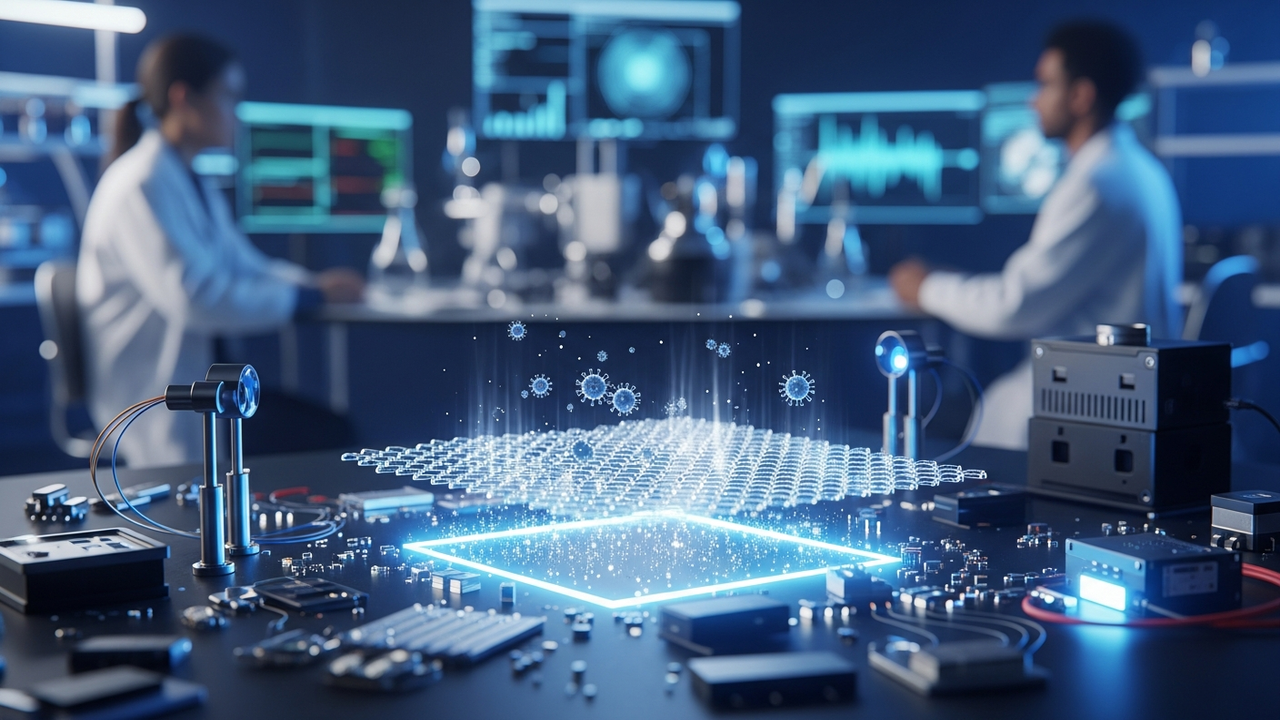
Background and Challenges of Conventional Virus Detection
During infectious disease pandemics, rapid and accurate virus detection technology is crucial. However, conventional label-free biosensors have struggled to distinguish target viruses from numerous contaminant proteins in complex biological samples like saliva. This often leads to false positives or delayed diagnoses, posing a significant public health challenge. A joint research team from Toyohashi University of Technology and the National Institute of Advanced Industrial Science and Technology (AIST) set out to solve this problem.
Innovative Graphene Nanosensor Technology
The core of the developed virus detection IoT biosensor is a graphene nanosensor fabricated using semiconductor MEMS (Micro-Electro-Mechanical Systems) technology. This sensor operates based on a unique detection principle:
- Utilization of Atomic Monolayer Vibration: It detects minute vibrations of the graphene membrane at an atomic level. When virus particles adsorb onto the graphene membrane, their vibrational frequency and amplitude (or electrical resistance) change.
- Multimodal Detection: By simultaneously measuring two physical quantities—changes in vibrational frequency and vibrational amplitude (or electrical resistance)—the sensor can accurately estimate not only the total mass of adsorbed substances but also their particle count. This capability overcomes the previous difficulty of distinguishing between contaminants and target viruses, a challenge for traditional sensors.
The research team successfully demonstrated the specific and highly sensitive detection (zeptogram-level mass detection) of SARS-CoV-2 in saliva samples with high contaminant concentrations.
Clinical Value and Future Prospects
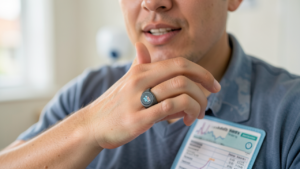
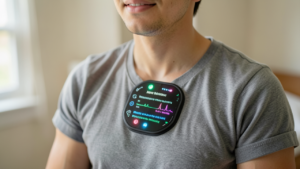
This innovative biosensor technology holds the potential to revolutionize infectious disease diagnostics. Comprising a chip just a few millimeters square, it is expected to become a widespread home-use IoT biosensor in the future. Accurate early virus detection at home will contribute to containing outbreaks and alleviating the burden on healthcare systems. Furthermore, integration with telehealth and personalized health management platforms will enhance public health and individual quality of life. Future challenges include establishing mass production techniques, conducting further clinical trials, and achieving regulatory compliance, but its industrial value as a next-generation diagnostic platform is considered extremely high.




Comments