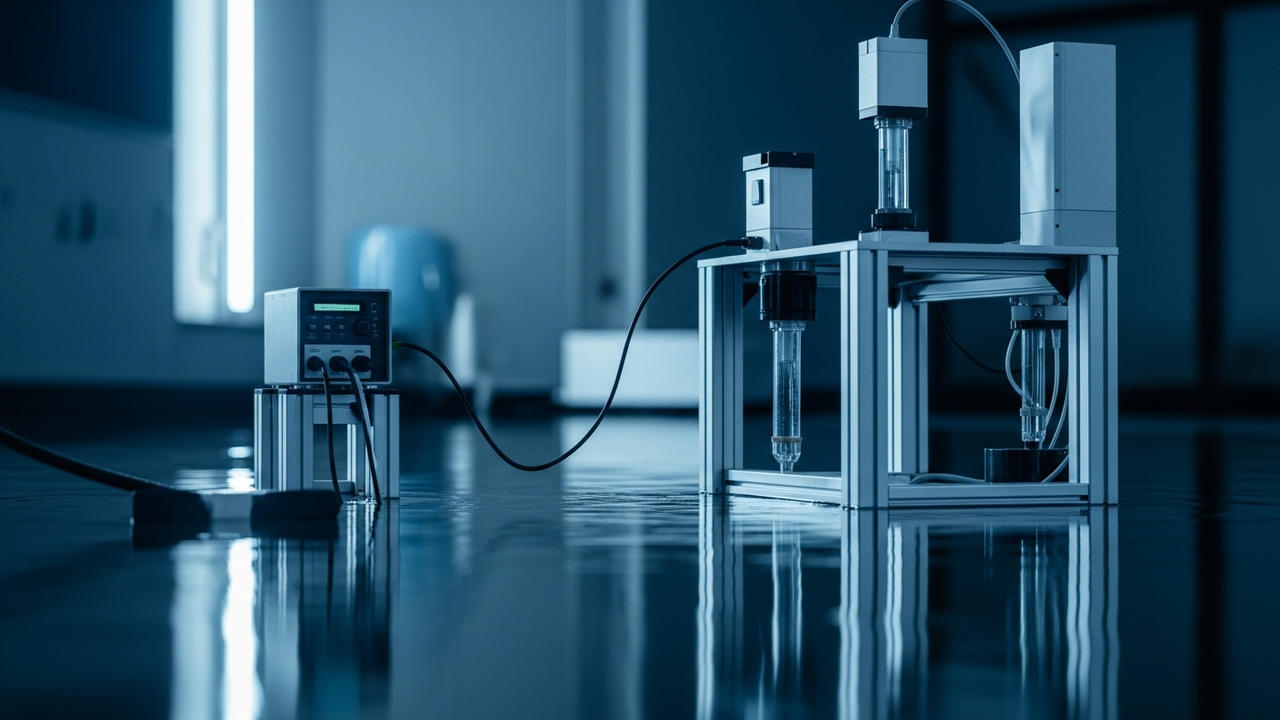
Background
With increasing industrialization and urbanization, heavy metal contamination in water bodies has become a severe global environmental and public health concern. Heavy metals such as lead, mercury, cadmium, and arsenic, once released into the environment, can accumulate in organisms through the food chain, leading to serious health issues in humans. Traditional heavy metal detection methods often require expensive analytical instruments, specialized operators, complex sample preparation, and lengthy analysis times, making them unsuitable for real-time, on-site monitoring. Thus, there is a pressing need for new detection technologies that are faster, simpler, more sensitive, and cost-effective.
Key Findings / Results
Biosensors offer an innovative approach to monitoring heavy metal contamination in water. Their key features and applications include:
- Detection Principle: A biosensor is a device that combines a specific biological recognition element (e.g., enzymes, microorganisms, antibodies, DNA) with a physicochemical transducer. When heavy metals bind to the recognition element, the transducer generates a physical signal—such as an electrochemical, optical, or mass change—which is then measured to quantify the heavy metal concentration.
- Protein-Metal Interactions: A particularly promising approach involves biosensors that exploit the principle where heavy metals bind to the active sites of enzymes or other proteins, causing changes in their structure or function. By measuring alterations in enzymatic activity or changes in capacitance or impedance due to protein conformational changes, these biosensors can label-free evaluate the presence and concentration of bioavailable heavy metals.
- High Sensitivity and Specificity: Through optimized combinations of recognition elements and transducers, biosensors can detect trace amounts of heavy metals and exhibit high specificity, minimizing interference from co-existing ions.
- Miniaturization and Portability: Biosensors can be designed as small, portable devices, eliminating the need to transport expensive, bulky laboratory equipment to the field. This enables in situ real-time or continuous monitoring at locations such as water treatment plants, water sources, and industrial wastewater discharge points.
- Broad Application Areas: Applicable not only to natural waters like drinking water, groundwater, and river water but also for quality control of treated water used in food processing and industrial wastewater before discharge into natural bodies.
Technical Significance & Outlook
Biosensors for heavy metal detection hold significant potential to revolutionize environmental monitoring and public health. Their rapidity, reliability, simplicity, and low cost make them a powerful alternative to conventional analytical techniques. The benefits are particularly immense in developing countries and remote areas where access to sophisticated analytical instruments is limited. By enabling real-time, continuous monitoring, these biosensors facilitate early detection of heavy metal pollution, identification of contamination sources, and prompt intervention, thereby minimizing environmental impact and protecting public health. Future developments are expected to include advanced data analysis through AI integration, further improvements in multiplexing capabilities, and application to wearable devices, leading to smarter and more comprehensive water quality management systems globally.