
Background
Modern healthcare systems face escalating challenges, including the rising incidence of chronic diseases, an an aging global population, and strained medical resources. This necessitates a fundamental pivot towards more efficient and personalized healthcare delivery models. In this context, digital healthcare technologies—which enable continuous patient health monitoring and facilitate proactive early intervention—are gaining significant prominence. Crucially, the concept of ‘sensor fusion,’ integrating and analyzing complex biological information from multiple sensors that a single sensor alone cannot capture, is becoming increasingly vital.
Key Findings / Results
Sensor fusion in digital healthcare provides the capability to integrate diverse sensing modalities, collecting and analyzing comprehensive data about individuals and their environments. Key elements and achievements include:
- Integration of Multiple Sensing Modalities: Sensor fusion combines data from various types of sensors:
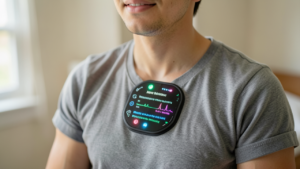
- Wearable Physiological Monitors: Measure direct biological signals such as electrocardiogram (ECG), photoplethysmography (PPG), skin temperature, perspiration, and respiratory rate.
- Environmental Sensors: Provide data on the patient’s surroundings, including air quality, temperature, humidity, and noise levels.
- Depth Cameras: Non-invasively monitor patient posture, movement, and fall risk.
- Inertial Measurement Units (IMUs): Combine accelerometers, gyroscopes, and magnetometers to track body movements, activity levels, and sleep patterns in detail.
- Comprehensive Physiological State Estimation: Integrating these sensor data enables a more accurate and holistic estimation of physiological states (e.g., stress levels, fatigue, disease progression) that cannot be obtained from individual signals alone. For example, combining heart rate variability with activity levels can more accurately assess cardiovascular risk.
- AI-Powered Data Analysis: The vast amount of multi-dimensional sensor data collected is analyzed using Artificial Intelligence (AI) technologies, particularly machine learning algorithms. AI identifies complex patterns within the data, assisting in early anomaly detection, disease prediction, treatment efficacy evaluation, and recommending personalized intervention strategies.
This integrated framework accelerates the discovery of digital biomarkers and opens new avenues for early disease detection, prevention, and post-treatment recovery monitoring.
Technical Significance & Outlook
The convergence of sensor fusion and AI in digital healthcare holds the potential to fundamentally transform healthcare delivery. Its impact and outlook are as follows:
- Advancing Personalized Medicine: Enables more personalized treatment plans and interventions based on each patient’s unique physiological and environmental data.
- Enhancing Remote Patient Monitoring (RPM): Allows healthcare providers to remotely monitor the condition of elderly and chronic disease patients in real-time, intervening quickly when necessary. This reduces the need for hospitalization and lowers healthcare costs.
- Clinical Decision Support: Doctors can make more accurate, evidence-based diagnoses and treatment decisions based on comprehensive patient data analyzed by AI.
- Promoting Preventive Healthcare and Wellness: Healthy individuals can gain a deeper understanding of their health status through continuous monitoring and receive incentives to take preventive actions before illness strikes.
In the future, with further miniaturization of sensor technology, lower power consumption, and continuous improvement of AI models, digital healthcare will become more widespread and offer increasingly sophisticated functionalities. This is expected to significantly contribute to the realization of a society where everyone can lead healthier, higher-quality lives.







Comments