
Background
Sleep disorders are a widespread health problem globally, profoundly impacting quality of life and both physical and mental well-being. The sleep-wake cycle is intricately regulated by two primary hormones: cortisol and melatonin. Cortisol levels tend to be high during the day and low at night, involved in wakefulness and stress response. Melatonin, conversely, increases at night, inducing sleep. Imbalances in these hormone levels can lead to poor sleep quality and disrupted circadian rhythms. However, effective means of continuously and non-invasively monitoring these hormones have been limited until now.
Key Findings / Results
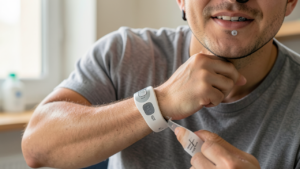
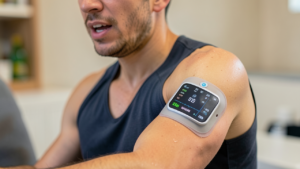
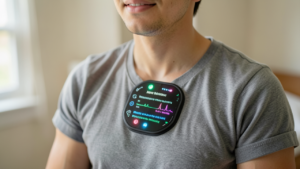
Researchers at The University of Texas at Dallas have developed an innovative wearable electrochemical sensor capable of continuously measuring cortisol and melatonin from passively secreted sweat. Key achievements of this research include:
- Non-Invasive Hormone Measurement: Unlike invasive methods such as traditional blood tests, this sensor measures hormones from naturally secreted sweat on the skin. This allows users to collect data over extended periods without experiencing pain or discomfort.
- Simultaneous and Continuous Detection of Cortisol and Melatonin: A single wearable sensor detects both cortisol and melatonin in real-time and continuously. This enables a deeper understanding of the interplay between both hormones and their temporal variations within the sleep-wake cycle.
- Establishment of Circadian Rhythms: The study using this sensor is the first to demonstrate that sweat cortisol and melatonin levels exhibit typical circadian rhythms, corresponding to daytime and nighttime patterns, respectively. This substantiates sweat as a reliable biomarker source accurately reflecting these hormones.
- Utilization of EnLiSense CORTI Platform: This sensor was developed based on the existing EnLiSense CORTI wearable device platform, suggesting good integrability with existing technologies.
- Electrochemical Detection Principle: When hormone molecules bind to specific recognition elements on the sensor surface, an electrochemical signal is generated, with its intensity proportional to the hormone concentration. This principle enables highly sensitive and selective detection.
Technical Significance & Outlook
This sweat-based wearable sensor holds the potential to revolutionize sleep medicine and health monitoring. Its non-invasiveness and continuous measurement capabilities make it a groundbreaking tool for assessing sleep quality, diagnosing circadian rhythm disorders, and managing psychological stress. Users can gain real-time insights into their hormone fluctuation patterns and, based on this, take concrete steps to improve sleep habits or reduce stress. For example, it could optimize the timing of sleep medication, alleviate jet lag, and aid in health management for shift workers. In the future, widespread integration of this technology into smartwatches and patch-type devices could provide professional sleep monitoring conveniently at home for the general public, significantly contributing to the early detection of sleep-related disorders and the advancement of preventive medicine. This marks a crucial step in personalized health management and the wellness sector.
Source: https://news.utdallas.edu/health-medicine/sensor-sleep-wake-cycle-hormones-2026/




Comments