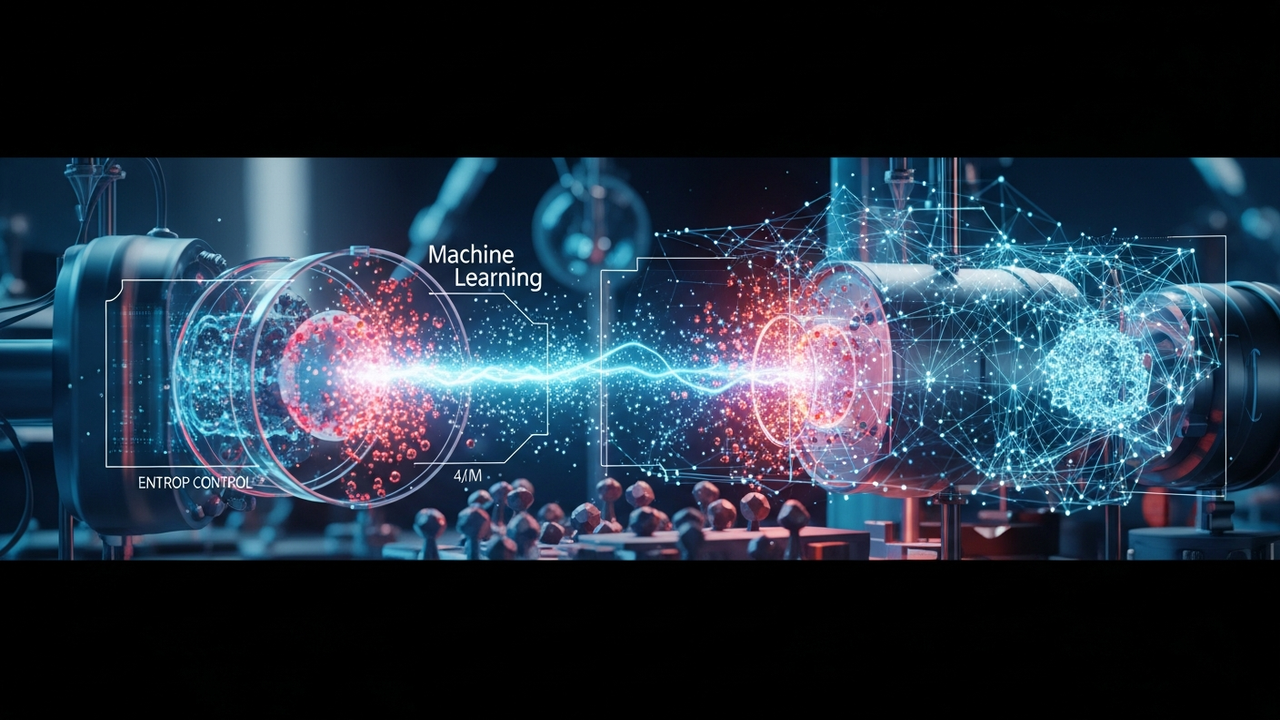
Background: Challenges in Self-Powered Biosensors
Self-powered biosensors, capable of operating without external power, hold immense potential for on-site applications like portable diagnostics and environmental monitoring. However, traditional technologies have struggled to simultaneously achieve high sensitivity, long-term operational stability, and miniaturization. Specifically, new approaches were required to significantly enhance sensitivity and specificity for the accurate detection of trace biomolecules within complex biological matrices.
Integration of Entropy-Controlled Nanocatalysis and Machine Learning
To address these challenges, this research proposes an innovative sensing paradigm. At its core is an approach that integrates entropy-driven DNA nanotechnology, nanocatalysis based on ultrasmall platinum nanoparticles (PtNPs), and machine learning algorithms onto a solid hydrogel electrolyte platform. Entropy-driven DNA nanotechnology provides a mechanism where DNA structures change in response to target biomolecules, amplifying the signal. PtNPs offer high catalytic activity, further enhancing biomolecule detection. By incorporating these into a solid hydrogel, stability and biocompatibility are ensured, while machine learning extracts high-precision information from complex sensor signals.
Technical Significance and Outlook for Next-Generation Diagnostics
This novel platform demonstrated unprecedented ultrasensitive detection of biomolecular targets (e.g., pathogens, cancer biomarkers) in complex matrices. Notably, it achieved a remarkable 263-fold miniaturization compared to enzymatic biosensors while maintaining high sensitivity and stability. This offers significant advantages for multiplexed detection in confined spaces and integration into wearable devices. This research skillfully combines diverse technologies such as molecular engineering, electrocatalysis, and computational intelligence, establishing a generalizable intelligent framework for next-generation self-powered diagnostics. In the future, innovative applications are anticipated across a wide range of fields, including point-of-care diagnostics, environmental monitoring, and personalized healthcare.
Source: https://pubs.acs.org/doi/10.1021/acs.analchem.6c02356






Comments