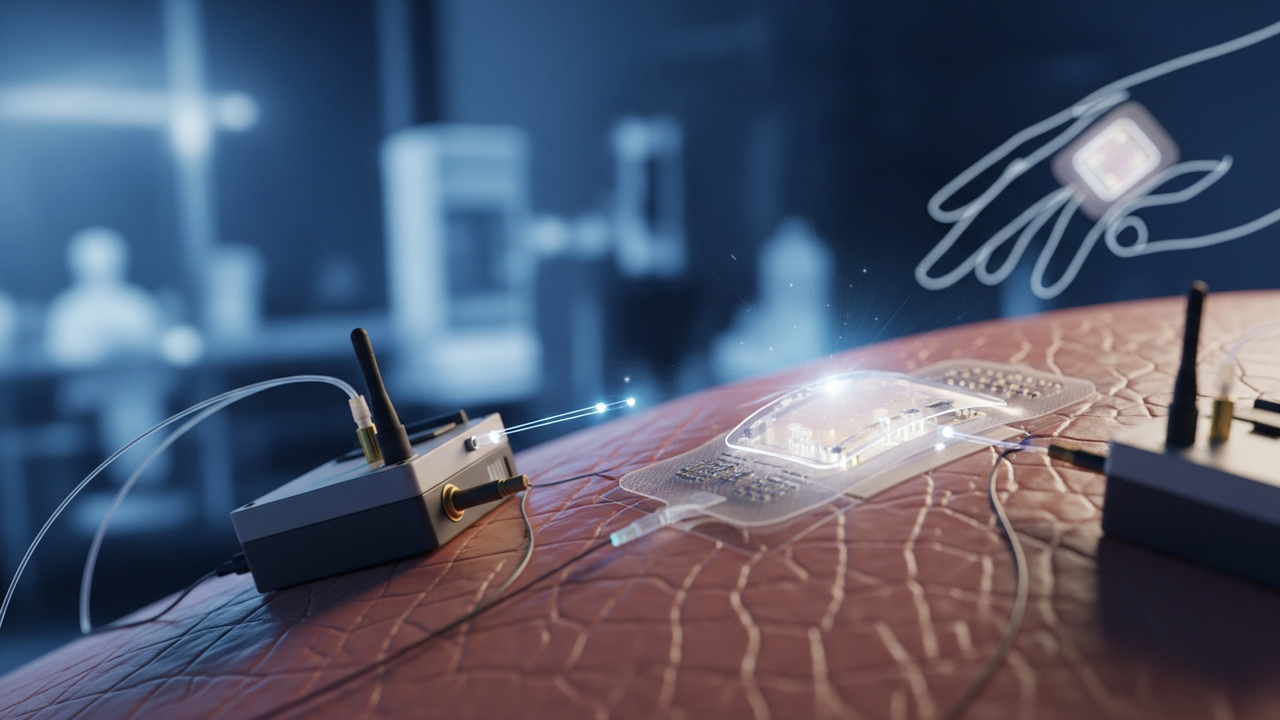
Background: Challenges of Diabetic Wounds and the Need for Smart Monitoring
Diabetic wounds (diabetic ulcers) are serious complications prevalent in patients with diabetes, potentially leading to infections, delayed healing, and, in severe cases, amputation. Their management necessitates continuous monitoring of the wound microenvironment (e.g., temperature, pH, glucose concentration, inflammatory markers) to detect issues early and intervene promptly. However, traditional wound care struggles to continuously monitor these parameters in real-time. Consequently, there is a strong demand for advanced ‘intelligent biosensors’ in this field.
Technology of Nanozyme-Integrated 3D Hydrogel Sensors
This review focuses on the latest advancements in intelligent biosensors for diabetic wound monitoring. Of particular interest is the approach of directly integrating nanozymes into 3D hydrogel networks. Nanozymes are nanomaterials with enzyme-like catalytic activity, and their incorporation into hydrogels enables effective modulation of the deep tissue microenvironment of wounds. This allows for the efficient scavenging of excessive reactive oxygen species (ROS), which impede wound healing, while simultaneously maintaining superhydrophobicity and anti-adhesive properties to prevent bacterial attachment. This significantly contributes to preventing wound infections and promoting healing.
Multimodal Sensing and Future Outlook
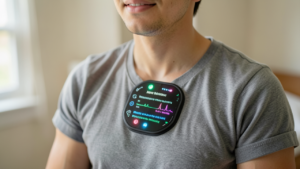
Furthermore, the review references an innovative study reported in 2021, which describes a sandwich-structured sensor system using zwitterionic hydrogels. This system is capable of continuously monitoring multiple parameters: temperature, strain (physical stress), and glucose concentration. A key advantage of this system is its ability to effectively avoid ‘crosstalk,’ where signals from different modalities interfere with each other. Such multimodal sensing capabilities enable a more comprehensive understanding of the complex physiological state of diabetic wounds. In the future, these intelligent biosensors are expected to be integrated with AI, providing automatic adjustment of treatments based on wound status and early warnings to healthcare providers. This promises personalized management of diabetic wounds and a dramatic improvement in patients’ quality of life.

Comments