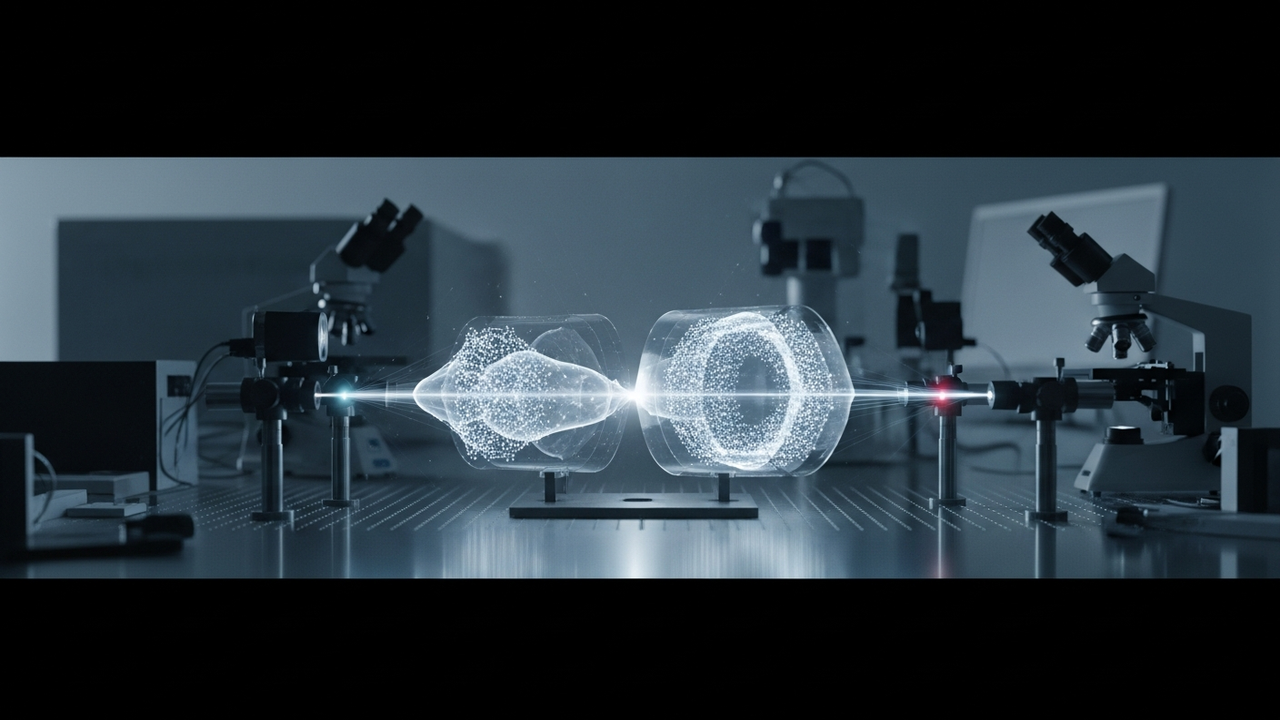
New Horizons for Organic Optoelectronics
The ability to integrate photovoltaic functionality (converting light to electricity) with electroluminescence (converting electricity to light) within a single device has been a long-standing goal in optoelectronics. However, these two functions typically impose conflicting material and device architecture requirements, making high-efficiency dual operation a significant challenge. Particularly in organic semiconductor materials, non-radiative losses during carrier recombination have been a major impediment to achieving such bifunctionality.
Development of Hybrid Functional Devices
A collaborative research team from Tokyo University of Science, Hokkaido University, and Osaka University has addressed this challenge by developing a novel organic semiconductor device with a unique material and structural design. Their innovative device exhibits the following key characteristics:
- Suppression of Non-Radiative Recombination: Through optimized device architecture and material engineering, the team successfully suppressed non-radiative recombination—a process where electron-hole pairs recombine without emitting light, releasing energy as heat instead. This suppression is critical for enhancing both photovoltaic and electroluminescent efficiencies.
- Simultaneous High-Efficiency Performance: The device demonstrated a power conversion efficiency (PCE) exceeding 1% as a solar cell and an external quantum efficiency (EQE) exceeding 1% for electroluminescence. Achieving both functionalities with such efficiencies simultaneously represents a significant breakthrough for hybrid light-harvesting and light-emitting devices.
- Flexibility and Diverse Applications: Leveraging the inherent flexibility of organic materials and their relatively low-temperature processing requirements, this device holds potential for a wide range of applications. These include wearable sensors, flexible displays, smart windows, and even advancements in optical communication technologies, offering significant design freedom.
Comparison with Perovskite Solar Cells and Future Outlook
While this research primarily focuses on organic semiconductors, the article contextualizes its advantages relative to inorganic alternatives like perovskites. Perovskite solar cells are known for their high efficiencies but are often rigid and can face stability issues under certain environmental conditions. In contrast, this new organic device offers superior flexibility and the potential for manufacturing through wet processes at near-room temperatures, leading to reduced production costs and greater design versatility. Future research will likely concentrate on further increasing efficiencies and validating long-term durability. This class of hybrid devices lays the groundwork for future integrated electronics that combine energy harvesting with information display and transmission, potentially revolutionizing how we interact with ambient energy.
Source: https://www.photonics.com/Articles/Organic-Device-for-Optoelectronics-Collects-and/p5/a72284









Comments