
Background: Data Center Bottlenecks in the AI Era
The exponential growth of Artificial Intelligence (AI) and High-Performance Computing (HPC) workloads has placed unprecedented demands on data center infrastructure. A critical bottleneck has emerged in the form of optical connectivity and thermal management. As computational power density increases, so does the heat generated by components, pushing traditional air-cooling systems to their limits. This constraint directly impacts the ability of data centers to scale effectively, limiting rack density and overall processing capacity, especially for bandwidth-intensive AI applications that require massive data movement between GPUs and accelerators.
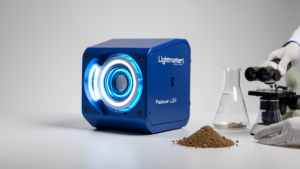
Lightmatter’s Solution: The Guide DR Liquid-Cooled Laser NIC
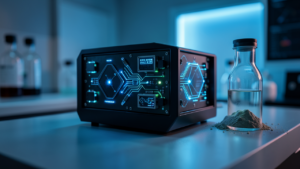
Lightmatter’s “Guide DR” is a groundbreaking response to these challenges, representing the industry’s first laser NIC to incorporate liquid cooling. This innovative design offers several key advantages:
- Integrated Liquid Cooling: By directly cooling the laser components at the source, “Guide DR” efficiently dissipates high thermal loads, ensuring stable and reliable operation even under extreme conditions.
- Quadrupled Rack Density: This enhanced thermal management allows for a dramatic increase in the density of optical interconnections within a server rack, effectively quadrupling the amount of computing resources and bandwidth that can be deployed in a given physical space.
- Improved Optical Connectivity Efficiency: By addressing thermal limitations, “Guide DR” facilitates higher-performance optical links, crucial for alleviating data transfer bottlenecks in AI/HPC clusters where low latency and high throughput are paramount.
The “Guide DR” product is poised to revolutionize data center design, enabling more compact and powerful computing environments without compromising performance or reliability.
Market Impact and Future Prospects
The introduction of “Guide DR” is a significant milestone in the evolution of data center technology. It establishes a new paradigm for optical interconnects in AI/HPC environments, allowing data center operators to substantially boost computing capacity per rack without extensive infrastructure overhauls. This directly translates to optimized capital expenditure and operational efficiency. Furthermore, the embrace of liquid cooling at the NIC level foreshadows a broader industry trend towards more sustainable and power-efficient IT infrastructure, as liquid cooling becomes indispensable for managing the ever-increasing heat flux of future high-density computing systems. Lightmatter’s innovation positions it at the forefront of enabling the next generation of AI superclusters and advanced computing facilities.


Comments