Background: The Limits of Electronics and the Promise of Photonics
As the demand for data processing continues its exponential growth, conventional electronics-based computing faces inherent limitations in terms of speed, power consumption, and heat dissipation. Optical computing, which utilizes photons for information transmission and processing, offers a compelling alternative due to its inherent advantages: ultra-high speed, significantly lower power consumption, and reduced heat generation. The development of integrated photonic circuits, capable of precisely controlling light at the nanoscale, is therefore crucial for realizing this next-generation computing paradigm.
Monash University’s Innovative On-Chip Photonic Circuit
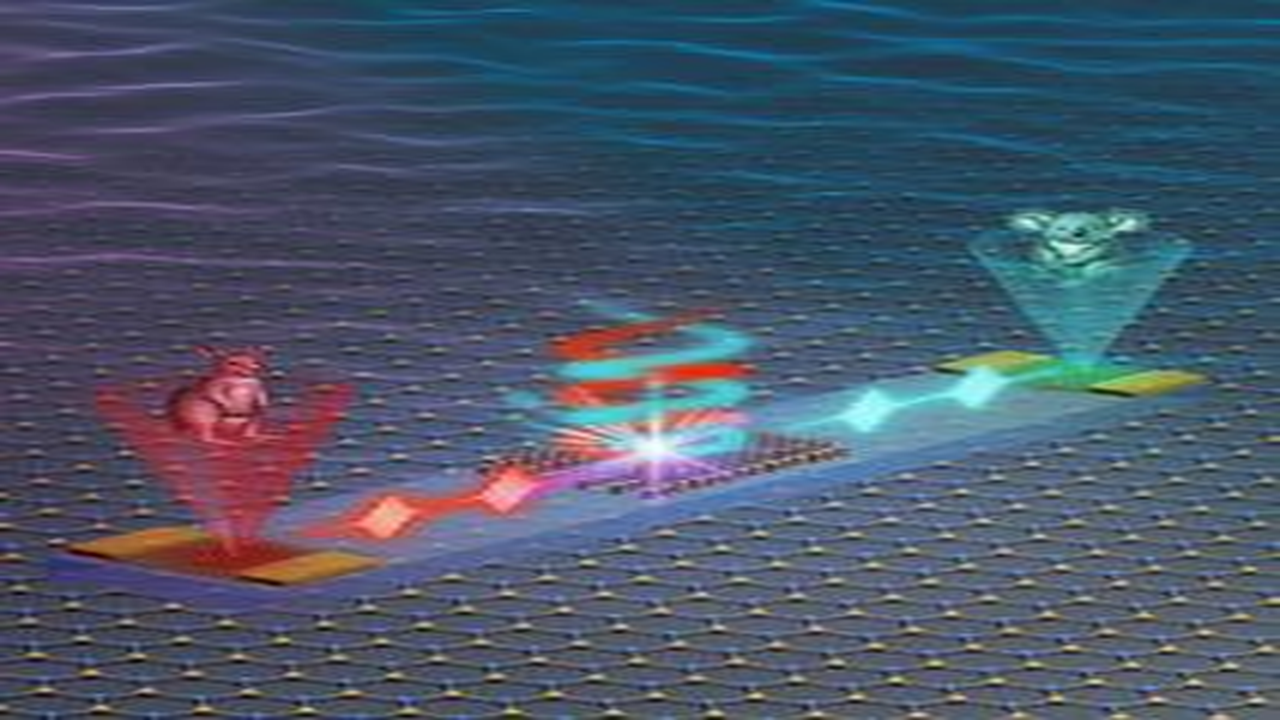
A team of scientists at Monash University has unveiled a revolutionary nanoscale photonic circuit integrated onto a single chip. The core innovation lies in its ability to efficiently “generate,” “route,” and “read” light-based information entirely on-chip. This integrated functionality is achieved through sophisticated nanophotonic structures that precisely manipulate various properties of light, such as phase, intensity, and polarization.
Key features and advantages of this developed circuit include:
- High Integration Density: Miniaturization enables high functionality within a compact footprint, critical for device scaling.
- Exceptional Speed: Information transmission at the speed of light leads to dramatic improvements in computational throughput.
- Superior Energy Efficiency: Utilizing photons for computation significantly reduces power consumption compared to electron movement.
- Multifunctionality: The circuit is versatile, poised for applications in quantum computing, AI acceleration, advanced imaging, and next-generation optical communication systems.
Technical Significance and Future Implications
This on-chip photonic circuit holds immense implications for both quantum and AI technologies. In quantum computing, it could serve as a stable and scalable platform for generating, manipulating, and measuring photon-based qubits, overcoming some of the inherent fragility of quantum states. For AI, it promises to drastically accelerate the training and inference phases of machine learning models while significantly reducing energy footprints, thereby enhancing efficiency from edge AI devices to large-scale cloud AI infrastructure.
Furthermore, in the realm of optical communications, this technology can circumvent the bandwidth and latency bottlenecks of current electronic interconnects, enabling much faster and higher-capacity data transfer. This is a critical development for addressing the escalating demand for bandwidth in data centers and wide-area networks. By bridging fundamental physics with advanced engineering, this circuit is expected to drive a wide array of technological innovations, from smart consumer devices to critical large-scale infrastructure, shaping the future of information processing.









Comments