Evolution of Photodetector Technology and Perovskite Applications
Photodetectors, devices that convert light signals into electrical signals, are essential across a wide range of fields including communications, medicine, security, and imaging. While traditional photodetectors have utilized materials like silicon, the excellent light absorption properties and charge transport capabilities of perovskite materials have recently garnered significant attention, accelerating the research and development of high-performance perovskite photodetectors. Specifically, “self-powered” photodetectors, which do not require an external power source, offer substantial advantages in applications demanding low power consumption, such as IoT devices and wearable sensors.
Innovation in ‘Chocolate-Chip-Cookie’ Architecture
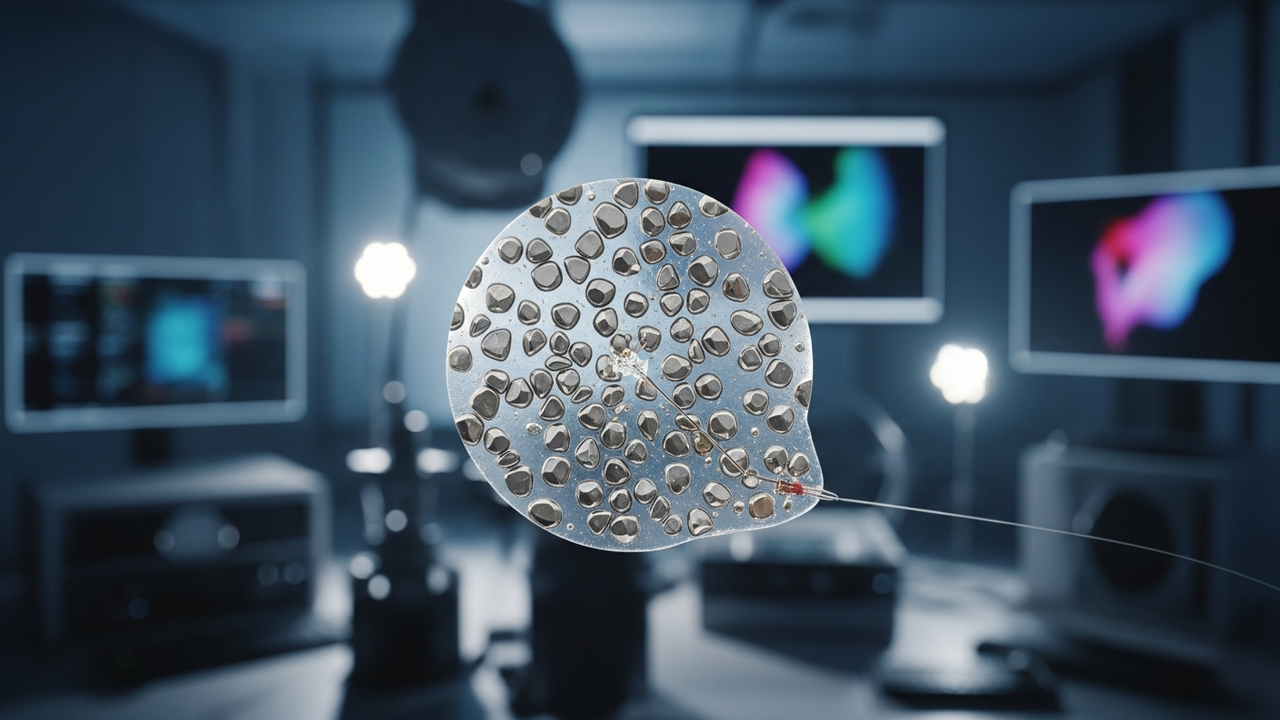
Recent research has led to the development of a self-powered perovskite photodetector with an ingenious ‘chocolate-chip-cookie’ architecture to maximize the potential of perovskite materials. This structure is realized by cleverly combining two different perovskite materials with distinct bandgaps. Specifically, a perovskite material with a lower bandgap is broadly distributed like a “cookie dough,” while a perovskite material with a higher bandgap is interspersed like “chocolate chips.” This unique design offers the following technical advantages:
- Optimized Broad-Spectrum Light Absorption: The combination of materials with different bandgaps enables optimized light absorption across a broad solar spectrum (or specific wavelength ranges) that would be challenging with a single material. The lower bandgap material efficiently absorbs longer wavelength light, while the higher bandgap material absorbs shorter wavelength light.
- Graded Energy Band Structure: The dispersion of “chocolate chips” creates a subtle gradient in the energy band structure within the perovskite layer. This facilitates the selective and efficient movement of photogenerated electrons and holes in specific directions, preventing recombination.
- Smoother Carrier Flow: This architecture reduces carrier traps and optimizes the charge carrier migration pathways, promoting smoother carrier flow. This results in an increase in photocurrent and an improvement in response speed.
Applications and Future Outlook
This self-powered perovskite photodetector with a ‘chocolate-chip-cookie’ architecture, published in ‘Light: Advanced Manufacturing,’ is expected to find diverse applications due to its high-performance characteristics:
- High-Sensitivity Imaging: Its selective response to different wavelengths makes it suitable for multispectral imaging and high-resolution image sensors.
- Environmental Monitoring: Being low-power and highly sensitive, it can be utilized as a sensor to detect faint light signals or luminescence from chemical substances in the environment.
- Wearable and IoT Devices: The combination of self-powering capability and flexibility facilitates integration into devices with battery life constraints.
This innovative design opens new possibilities for perovskite materials and contributes to the next generation of photodetector technology. Future research will likely focus on large-area scaling, further verification of long-term stability, and performance optimization tailored for specific application fields.
Source: https://www.light-am.com/article/10.37188/lam.2026.073









Comments