Key Findings
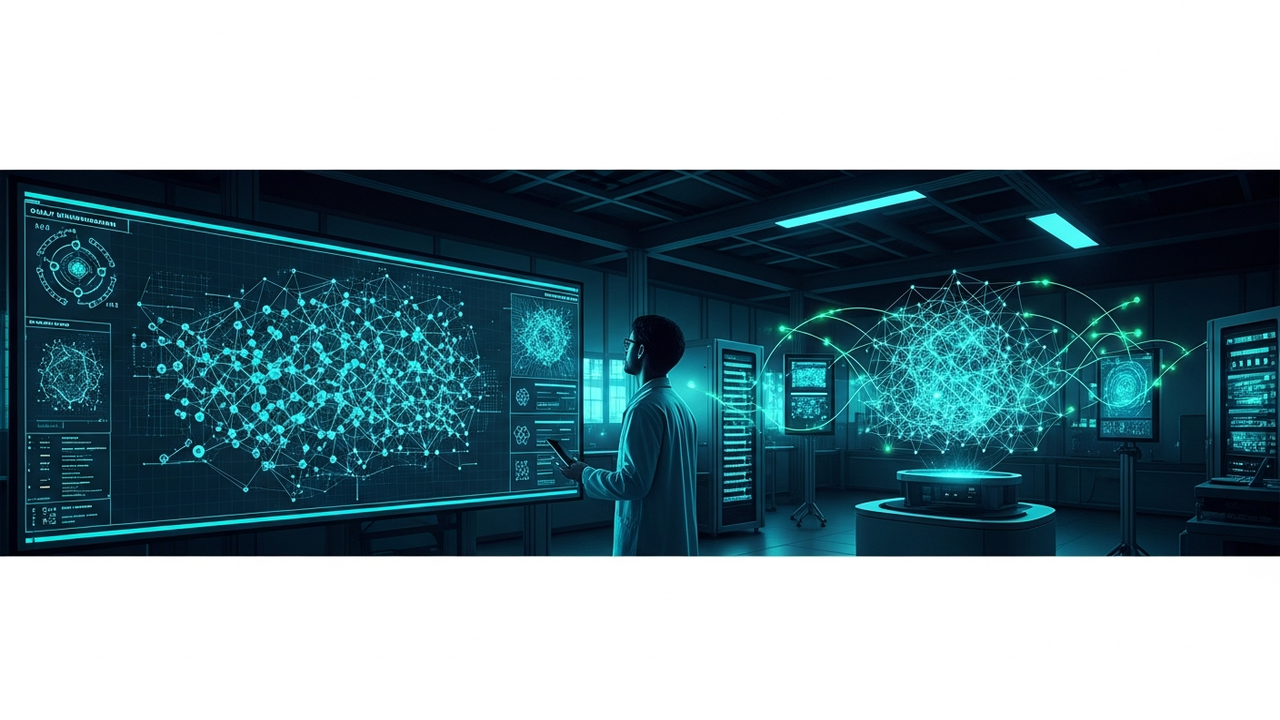
Gulf University researchers are underscoring how Artificial Intelligence (AI) is fundamentally transforming engineering research, particularly in materials science. A cornerstone of this transformation is the application of Graph Neural Networks (GNNs), which enable the high-precision prediction of physical properties—such as hardness, conductivity, and thermal stability—directly from a material’s atomic structure. This capability eliminates the need for physical synthesis or costly experimentation, dramatically reducing both the lead time and expense associated with new material development. Google DeepMind’s GNoME project vividly demonstrated this technology’s profound potential by predicting over 2 million new stable crystal structures, a number exceeding the entire catalog of known materials accumulated over the past century.
Technical Details
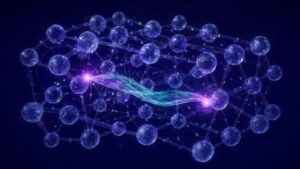
- Graph Neural Networks (GNNs): GNNs are a class of deep learning models designed to process data represented as graphs. In materials science, they model interatomic bonds and interactions as graph structures, leveraging this data to predict material properties. This approach facilitates a comprehensive understanding of a material’s atomic-level characteristics and accurate prediction of its macroscopic behavior, proving particularly effective for crystal and molecular structure analysis.
- Property Prediction without Physical Synthesis: Traditionally, assessing new material properties necessitated laborious physical synthesis and extensive experimentation. GNNs circumvent this by enabling property prediction through advanced computational simulations, drastically cutting down time-consuming and expensive experimental cycles. This presents a significant advantage, particularly during the crucial early stages of material screening and discovery.
- Impact of Google DeepMind’s GNoME: The GNoME project maximized GNN capabilities by integrating them with one of the world’s most extensive material databases. Its prediction of over 2 million new stable crystal structures exponentially broadens the chemical space available for scientific exploration, paving the way for unprecedented breakthroughs. Many of these computationally discovered materials are anticipated to find critical applications in fields such as advanced batteries, efficient catalysts, and next-generation semiconductors.
- Multimodal Data Utilization: GNNs demonstrate a remarkable capacity to integrate and learn from diverse data formats. This includes fundamental structural data (such as atomic coordinates, element types, and bonding information) alongside more complex attributes like electronic properties and chemical reactivity, leading to more robust and accurate predictions.
Background & Context
Engineering research, particularly within materials science, has traditionally been guided by three core paradigms: empirical experimentation, theoretical modeling, and computational simulations. However, the escalating complexity and demand for rapid innovation in modern material development are increasingly straining these conventional approaches. AI, especially data-driven methodologies, is now emerging as a ‘fourth’ or even ‘fifth paradigm’ to address these critical challenges. Gulf University’s strategic focus on this research area not only fosters technological innovation regionally but also underscores its significant contribution to the global scientific community.
Strategic Significance & Outlook
The continued evolution of AI and GNNs is poised to generate significant ripple effects, extending beyond materials science into critical domains like drug discovery, chemical process optimization, and environmental technologies. The accelerated discovery of novel materials will expedite the development of superior-performance batteries, more efficient catalysts, highly durable structural components, and groundbreaking pharmaceuticals. This progression is anticipated to be instrumental in achieving a sustainable society and fostering the creation of entirely new industries. Looking ahead, AI is expected to expand its role as an ‘AI co-scientist,’ working collaboratively with human researchers to tackle increasingly complex problems and unlock unprecedented creative discoveries.