Key Findings
CEA-Leti announced a significant breakthrough at the 2026 IEEE Electronic Components and Technology Conference (ECTC) by demonstrating functional test vehicles utilizing die-to-wafer (D2W) hybrid bonding down to a 1-micrometer (µm) pitch. This advancement addresses critical performance bottlenecks in artificial intelligence (AI) hardware and represents a major milestone in the evolution of 3D integration for high-density computing, advanced smart vision systems, and AI applications.
Technical Details
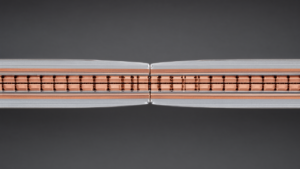
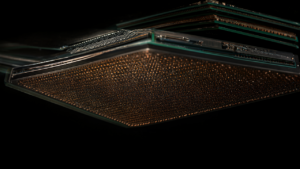
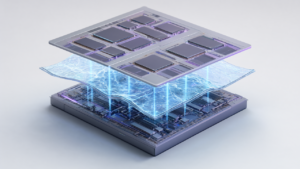
The D2W technology enables ultra-fine-pitch, high-density inter-die connections by vertically stacking device layers. This approach dramatically shortens interconnect paths between chips, resulting in significantly increased data transfer speeds and reduced power consumption. CEA-Leti successfully conducted electrical tests on structures with up to 100,000 links, confirming the technology’s applicability for complex AI accelerator designs that require high-density interconnects. Hybrid bonding combines both metal-to-metal (primarily copper-copper) and dielectric-to-dielectric (oxide-to-oxide) bonding in a single interface, providing both electrical continuity and mechanical integrity without the need for solder or microbumps. This achieves dramatically finer interconnect pitches and reduces parasitic capacitance and inductance compared to traditional packaging.
Background and Context
With the explosive growth of AI, AI chips demand ever-greater data processing capabilities and higher energy efficiency. In conventional 2D architectures, data movement bottlenecks and associated power consumption increases have become severe challenges. 3D integration, particularly D2W hybrid bonding, is one of the most promising solutions to address these issues. The miniaturization of interconnects tackles critical bottlenecks in interconnect density and bandwidth for AI accelerator designs, drastically improving data transmission efficiency. This technological advancement strengthens the foundation for integrating advanced memories like HBM (High-Bandwidth Memory), chiplet-based systems, and ultimately, cutting-edge 3D packaging solutions such as Intel’s Foveros Direct and TSMC’s SoIC.
Strategic Significance and Outlook
The D2W hybrid bonding technology demonstrated by CEA-Leti holds the potential to significantly enhance the scalability and performance of AI hardware. If commercialized, this technology could lead to smaller, faster, and more energy-efficient AI chips, revolutionizing a wide range of AI applications, from edge AI to large-scale data centers. This achievement paves the way for high-performance, energy-efficient, next-generation semiconductor designs that are crucial for shaping the future of AI computing.