Key Findings
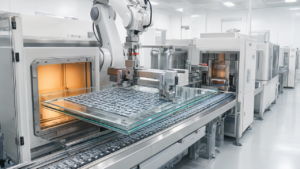
Intel, in collaboration with 3D Glass Solutions (3DGS), is moving forward with plans to invest approximately $3.3 billion in a state-of-the-art manufacturing facility for advanced packaging glass core substrates in Odisha, eastern India. This substantial investment marks a crucial step for Intel to strengthen its supply capabilities for next-generation packaging technologies, essential for artificial intelligence (AI) and high-performance computing (HPC) applications, and to achieve its ambitious goal of integrating one trillion transistors within a single package by 2030.
Technical Details
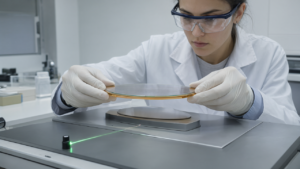
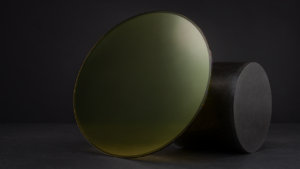
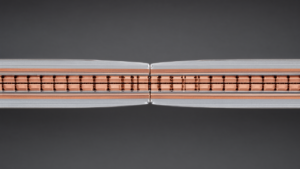
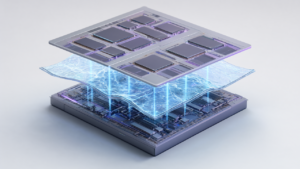
The planned facility will focus on advanced packaging glass core substrates, high-density interconnect (HDI) substrates, and related semiconductor technologies. Glass core substrates offer superior electrical, thermal, and dimensional stability compared to traditional organic substrates. These properties enable larger package sizes, finer interconnect pitches, and lower warpage, thereby resolving critical scalability bottlenecks in heterogeneous integration for AI and HPC. Intel’s advanced packaging roadmap encompasses multiple technology platforms, including EMIB (Embedded Multi-die Interconnect Bridge), Foveros, and Foveros Direct, with Foveros Direct leveraging hybrid bonding to further enhance interconnect density and energy efficiency. Furthermore, Intel has successfully applied its 18A process for the first time in data center processors, the Xeon 6+, which combines Foveros Direct and EMIB technologies to achieve high-density packages with up to 288 energy-efficient cores.
Background and Context
The rise of AI has dramatically increased the importance of advanced packaging technologies for enhancing performance and optimizing power efficiency in the semiconductor industry. Amidst the industry-wide bottleneck caused by TSMC’s CoWoS capacity limitations, Intel is positioning its proprietary advanced packaging technologies like EMIB and Foveros as key drivers for its foundry business revival. Absolics, a subsidiary of SKC, is expected to commence commercial production of the world’s first glass substrates by the end of 2026, and Samsung Electro-Mechanics has also activated its pilot lines. Intel’s investment in India aligns with the rapid growth forecast for the glass core substrate market and also with the broader trend of diversifying geopolitical supply chains and strengthening regional manufacturing capabilities.
Strategic Significance and Outlook
The new manufacturing facility in India, slated for construction over five to six years, will significantly expand Intel’s global manufacturing footprint and enhance its strategic autonomy, particularly in the supply of advanced packaging materials. This initiative positions Intel to boost its competitiveness as a major foundry in the AI era, potentially gaining earlier recognition from external customers. The commercialization of glass core substrates is expected to redefine the performance limits of AI and HPC systems, and enable the integration of next-generation technologies such as co-packaged optics (CPO), thus driving innovation across the entire semiconductor industry.