Key Findings
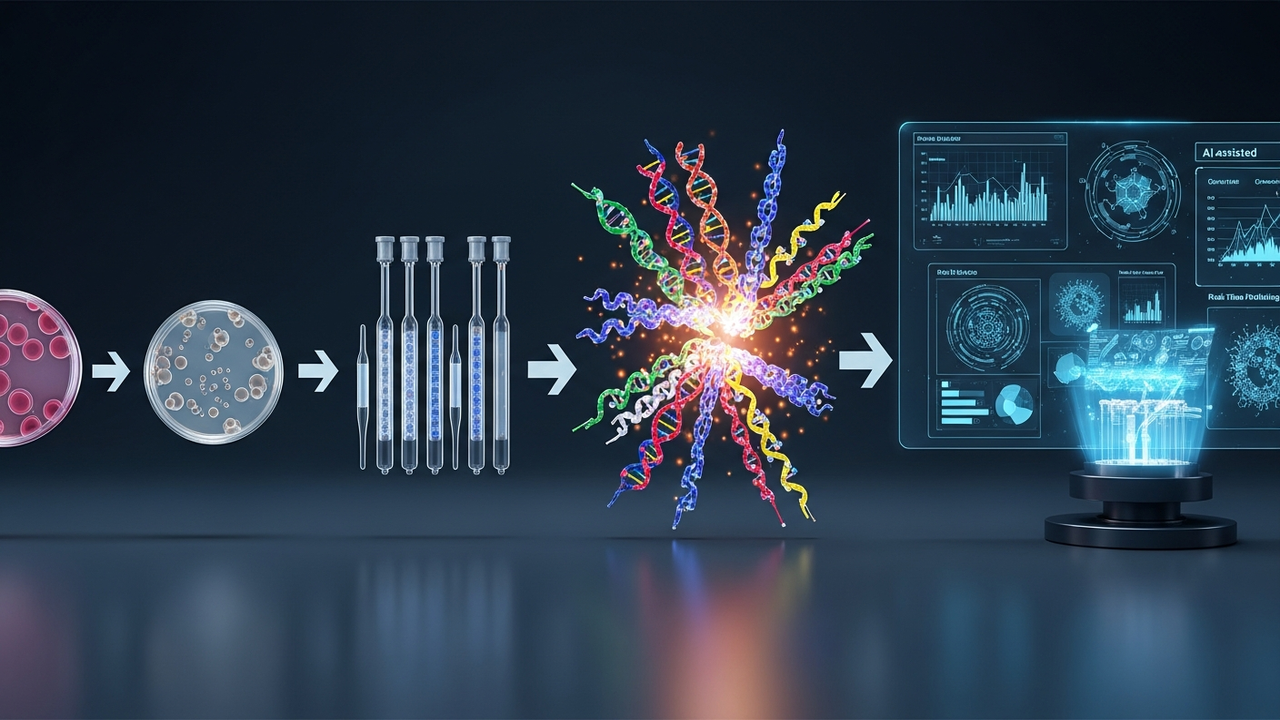
The field of foodborne pathogen detection has undergone a significant evolution, shifting from traditional, time-consuming culture-based methods to more rapid and intelligent platforms that integrate immunological assays, nucleic acid amplification techniques (NAATs), advanced biosensors, microfluidic systems, CRISPR-Cas platforms, and even Artificial Intelligence (AI)-assisted analysis. These new technologies are playing a critical role in ensuring food safety.
Technical / Clinical Details
This review elaborates on the key technological advancements in foodborne pathogen detection:
- Immunological Assays: Antibody-based detection methods such as ELISA and lateral flow immunoassays (LFAs) offer speed and simplicity, making them suitable for on-site screening. Multiplexed LFAs can detect several pathogens simultaneously.
- Nucleic Acid Amplification Techniques (NAATs): NAATs like real-time PCR and LAMP (Loop-mediated Isothermal Amplification) specifically and sensitively detect the genetic material of pathogens. LAMP, being an isothermal reaction, does not require complex thermal cycling equipment, facilitating its integration into POCT devices.
- Biosensors: Electrochemical, optical, and mass-based biosensors directly detect pathogen cells, proteins, or nucleic acids. The integration of nanomaterials (e.g., graphene, gold nanoparticles) has dramatically improved sensitivity and detection limits, enabling detection at even single-bacterium levels.
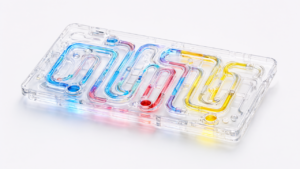
- Microfluidic Systems (Lab-on-a-chip): These systems integrate a series of analytical processes from sample preparation to detection on a single microchip, reducing sample consumption and analysis time. They are well-suited for multiplex detection and automation.
- CRISPR-Cas Platforms: CRISPR-associated enzymes like Cas12 and Cas13 specifically recognize target pathogen DNA/RNA and trigger the cleavage of reporter molecules, enabling highly sensitive and specific detection. This holds immense potential for rapid, on-site diagnostics.
- AI-Assisted Analysis: AI algorithms analyze the vast amounts of data generated by sensors, performing noise reduction, pattern recognition, anomaly detection, and building models for more accurate pathogen identification. This further enhances detection precision and efficiency.
The combination of these technologies has reduced detection times from several days to a few hours, and improved detection limits from CFU/mL levels to single-cell levels. Furthermore, enhanced portability has enabled the development of POCT devices that can be operated by non-specialists.
Background & Context
Foodborne diseases remain a significant public health concern globally, with substantial economic implications. The limitations of conventional detection methods have increased the risk of contaminated food entering the market, leading to large-scale outbreaks. Growing consumer awareness of food safety and increasingly stringent regulatory standards are strongly driving the development of faster and more sensitive detection technologies. The demand for real-time monitoring throughout the food supply chain is accelerating the adoption of these innovative platforms.
Strategic Significance & Outlook
Foodborne pathogen detection technologies will continue to evolve through the convergence of nanotechnology, biotechnology, and information science. Future developments are expected to include real-time monitoring via integration with wearable sensors, predictive analytics using AI and machine learning, and the development of multimodal sensors. These technologies are anticipated to become indispensable tools for food processing, restaurants, retail, and regulatory authorities, creating a robust foundation for enhancing food security and protecting global public health. They will also contribute to improving food safety infrastructure in developing countries.