Key Findings
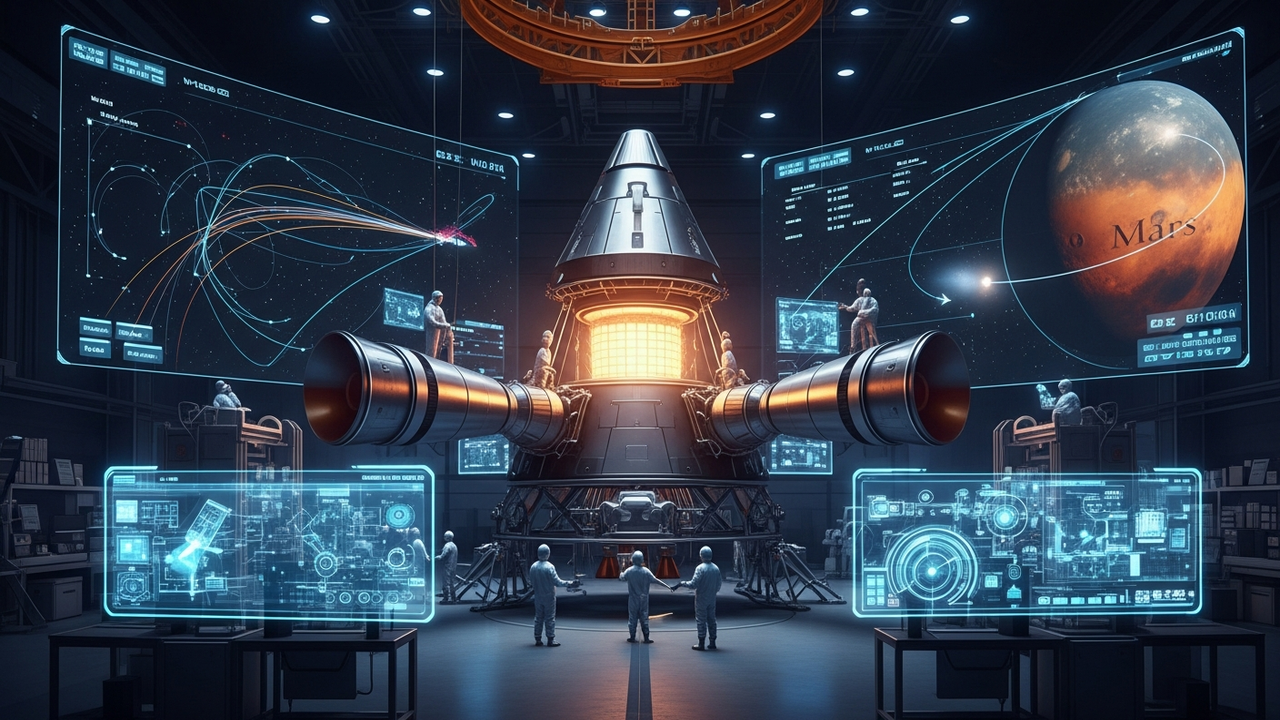
NASA is making substantial investments in nuclear propulsion technologies to dramatically reduce human transit times to Mars from the current six-plus months down to a mere three to four months. This strategic shift is designed to significantly enhance the feasibility of deep-space exploration and accelerate humanity’s journey to Mars.
Technical & Clinical Details
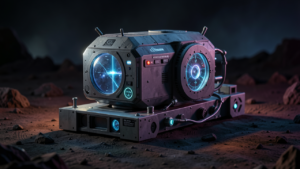
NASA’s space nuclear propulsion program focuses primarily on two approaches. The first is “Nuclear Thermal Propulsion (NTP),” where a nuclear reactor heats a lightweight propellant like hydrogen to extreme temperatures, which is then expelled through a nozzle to generate thrust. NTP offers significantly higher efficiency than chemical rockets, providing greater thrust and longer acceleration periods with the same amount of propellant. The second approach is “Nuclear Electric Propulsion (NEP),” which uses electricity from a nuclear reactor to power electric thrusters (such as ion engines), enabling very high specific impulse and prolonged acceleration. This efficient propulsion system not only shortens travel times to Mars but also reduces the duration of astronaut radiation exposure, thereby enhancing overall mission safety and feasibility. The new NASA Administrator, Jared Isaacman, a strong proponent of nuclear technology since his appointment in December 2025, is overseeing the planned flight demonstration of an uncrewed nuclear electric propulsion mission, “SR-1 Freedom,” in late 2028.
Background & Industry Context
Human missions to Mars face numerous challenges due to the vast distances and prolonged travel times, including astronaut radiation exposure, resupply logistics, and maintaining mental and physical health. As the limitations of chemical propulsion rockets became evident, nuclear propulsion has been theoretically considered the most promising solution for decades. However, its practical implementation has been delayed due to technical complexities, costs, and safety concerns. Recent advancements in small reactor technology and growing international interest in deep-space exploration have reinvigorated and accelerated the development of nuclear propulsion. NASA’s large-scale investment signals a strong commitment from the United States to open new frontiers in space exploration.
Future Outlook
The success of the SR-1 Freedom mission will be a crucial milestone for the practical application of nuclear electric propulsion technology, significantly increasing the feasibility of future human Mars missions. If Mars transit times are reduced to three to four months, mission flexibility will improve, astronaut health risks will diminish, and more scientific payloads can be carried. This will lay the groundwork for humanity to establish permanent bases on Mars and conduct long-term exploration. Nuclear propulsion technologies are also applicable to exploration missions to other celestial bodies in the outer solar system, holding the potential to exponentially expand the scope of human deep-space exploration. Continued investment in this sector is expected to stimulate technological innovation across the space industry and lead to the creation of new industries.
Source: https://www.aru.ac.uk/news/nasa-bets-big-on-nuclear-to-cut-journey-times-to-mars




Comments