Key Findings
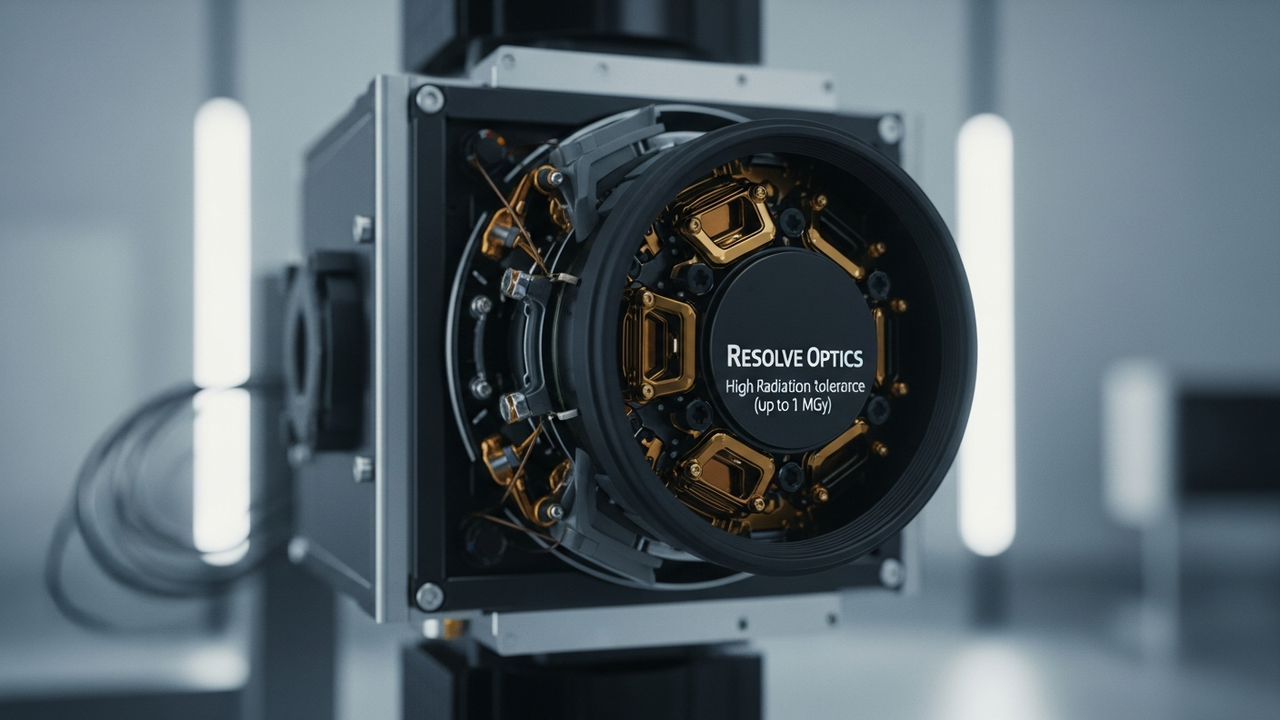
Resolve Optics has announced the shipment of its first batch of flight-ready, radiation-hardened optical lenses designed for small satellite camera cores operating in Low Earth Orbit (LEO). These innovative lenses possess an extraordinary capability to withstand cumulative radiation exposure of up to 1 MGy (100 million rads), effectively preventing the degradation of optical performance in the harsh space environment and significantly enhancing mission reliability.
Technical & Clinical Details
These radiation-resistant lenses are manufactured using a specialized process involving premium cerium-doped glass. Cerium-doped glass effectively mitigates solarization, which is the discoloration of glass caused by exposure to cosmic radiation (including X-rays, gamma rays, protons, and electrons). This property ensures that the lens’s transmittance and image quality do not degrade over long-duration missions. Resolve Optics achieved rapid delivery by repurposing and adapting existing optical designs and manufacturing technologies from the terrestrial nuclear sector to meet stringent aerospace standards, alongside redesigning the mechanical housings. This approach allows small satellite manufacturers to acquire high-performance, robust camera systems more quickly and cost-effectively. The lenses, with a 6mm focal length, also offer versatility for a wide range of applications.
Background & Industry Context
LEO satellite constellations have expanded rapidly in recent years, providing diverse services such as Earth observation, communication, and navigation. The cameras and sensors onboard these satellites are constantly exposed to the unavoidable threat of cosmic radiation, which is a primary cause of reduced equipment lifespan and performance degradation. Especially in small satellites, where Size, Weight, and Power (SWaP) constraints are severe, robust and efficient components are highly demanded. Radiation-hardened optical lenses, supplied by companies like Resolve Optics, are indispensable components for enhancing the reliability of satellite systems and improving mission success rates. Traditional radiation protection often relied on heavy shielding, but material-level solutions like these contribute significantly to weight reduction.
Future Outlook
The introduction of these radiation-resistant lenses represents a crucial step in improving the lifespan and performance of LEO satellites. This will enable the collection of higher-definition Earth observation data over longer periods, more reliable satellite communications, and the execution of more complex space missions. Resolve Optics’ technology will fill a critical gap in the spacecraft component supply chain and contribute to the overall development of the space industry. In the future, this technology may also be applied to deep-space exploration missions and lunar/Mars rovers, where radiation environments are even harsher. Enhancing the reliability of optical technologies in space is a powerful driver for a new era of space commercialization and scientific inquiry.