Key Findings
TSMC’s Chip-on-Wafer-on-Substrate (CoWoS) packaging capacity has emerged as the most critical bottleneck for the production of high-end AI accelerators, effectively slowing down the evolution and market deployment of AI chips. Despite TSMC’s ambitious plans to quadruple its production capacity from approximately 35,000 wafers per month in late 2024 to an estimated 120,000–140,000 wafers per month by the end of 2026, demand from next-generation architectures like Nvidia’s Blackwell (utilizing CoWoS-L) and AMD’s Instinct MI325X is projected to continuously outstrip the available supply.
Technical Details
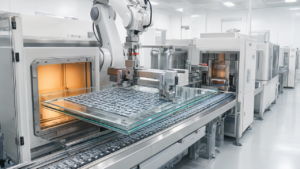
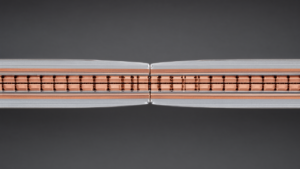
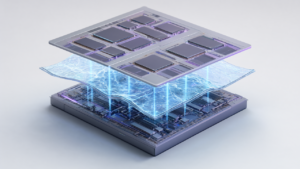
CoWoS is an indispensable technology for Nvidia’s AI accelerators, which integrate GPU logic dies and HBM (High-Bandwidth Memory) stacks side-by-side on a silicon interposer. The bottlenecks in this packaging process are multifaceted, with plasma processing and thin-film deposition steps being particularly critical. Specifically, deep reactive ion etching (DRIE) for Through-Silicon Via (TSV) formation, and physical vapor deposition (PVD) seed layer deposition and sputtering processes for Redistribution Layer (RDL) creation, are identified as primary contributors to the supply constraints. These processes require advanced technology and extended processing times, thereby limiting the rapid scalability of production capacity.
Background and Context
The explosive growth in demand for high-performance AI chips is intrinsically linked to the rapid expansion of AI infrastructure. However, relying solely on miniaturization, as per traditional Moore’s Law, is increasingly insufficient for achieving desired chip performance gains. Consequently, advanced packaging technologies such as CoWoS, which enable chiplet and 3D integration, have become more crucial differentiators. Nvidia CEO Jensen Huang’s visit to TSMC to secure CoWoS capacity for the Vera Rubin platform underscores the severity of this bottleneck. While TSMC is establishing geographically diversified manufacturing sites in Arizona, Kumamoto (JASM), and Dresden, Germany (ESMC), equipment lead times and process qualification present significant hurdles to rapid capacity expansion.
Strategic Significance and Outlook
The CoWoS capacity shortage is expected to persist, with demand outstripping supply through 2025 and into 2026, a forecast reinforced by predictions at Computex 2026 that AI memory shortages will extend until 2030. This situation has prompted massive capital expenditures across the industry, such as AMD’s commitment of over $10 billion to Taiwan’s ecosystem for AI infrastructure and advanced packaging manufacturing. While TSMC anticipates CoWoS capacity to grow at an 80% annual rate through 2027, hyperscaler demand is still projected to exceed this expansion, indicating that the pace of AI industry growth will remain highly dependent on the timely scaling of CoWoS supply.