Key Findings
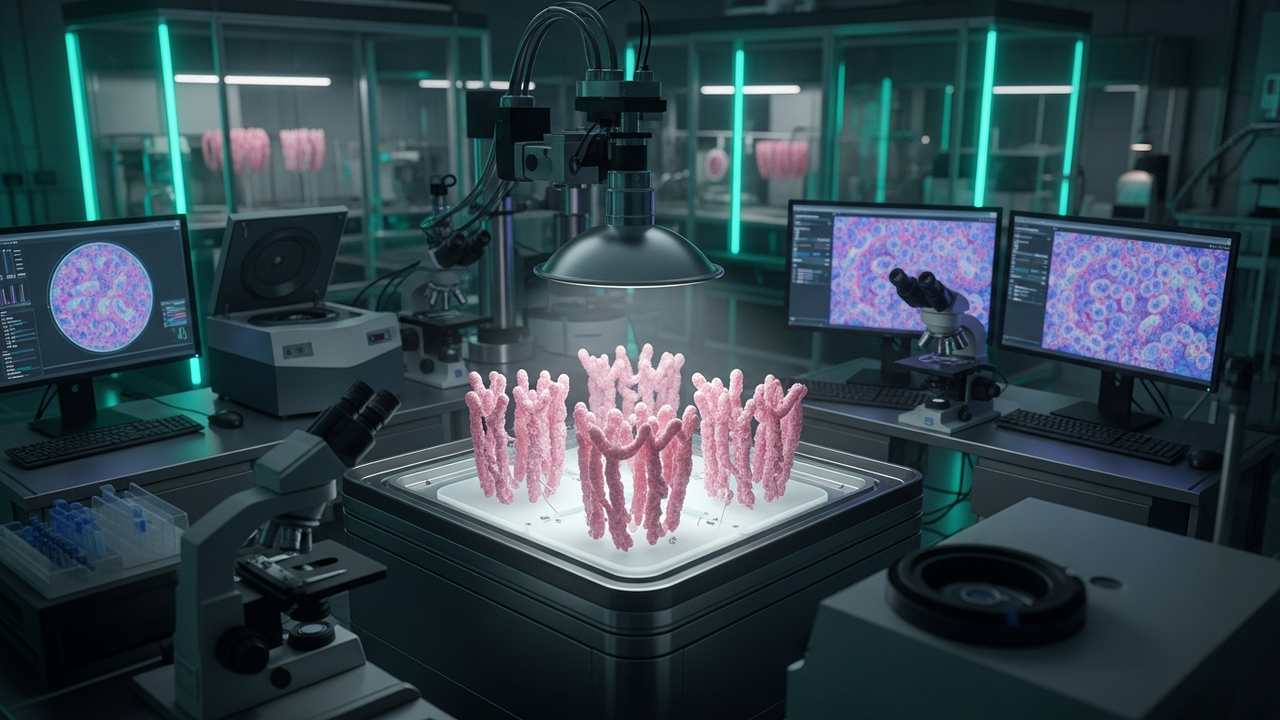
A novel iPSC-derived scar organoid (SCO) model has been successfully established, faithfully recapitulating key pathophysiological features of human hypertrophic scars, such as collagen accumulation and tissue contraction, in vitro. This 3D model overcomes the limitations of conventional 2D cultures and animal models, providing a groundbreaking platform for elucidating scar formation mechanisms and screening novel antifibrotic drugs.
Technical / Clinical Details
- SCO Model Construction: Researchers developed the SCO by culturing iPSCs under specific fibrosis-inducing conditions, thereby mimicking the pathology of hypertrophic scars. This model exhibits characteristic features of scar tissue, including excessive extracellular matrix accumulation (particularly collagen), fibroblast activation, and tissue contractile capabilities.
- Comparison to Traditional Models: Conventional 2D cell cultures fail to reproduce the 3D structure and intercellular interactions of tissues, thus inadequately capturing the complex pathology of scars. Animal models often show biological responses divergent from human scar formation, leading to low predictability in drug development. The SCO model overcomes these limitations, serving as a system that more faithfully reflects human pathophysiology.
- Application in Drug Screening: This SCO model provides an ideal platform for screening novel drug candidates with antifibrotic effects. Its high-throughput capability allows for simultaneous evaluation of multiple compounds, contributing to accelerated development timelines and reduced costs. For instance, the model can quantitatively assess the extent to which a specific drug inhibits collagen production or alleviates tissue contraction.
Background & Context
Hypertrophic scars result from excessive fibrotic reactions in the skin caused by surgery, trauma, or burns, leading to functional impairment, aesthetic concerns, and psychological distress. Current treatments are limited and recurrence rates are high, underscoring an urgent need for more effective therapies. However, the complex mechanisms of scar formation are not fully understood, and the lack of suitable preclinical models has been a significant barrier to new drug development. The establishment of an iPSC-derived SCO model fills this research gap, representing a transformative advance that enables the development of personalized therapeutic strategies.
Strategic Significance & Outlook
The SCO model is poised to not only deepen fundamental research into scar formation mechanisms but also to contribute to the re-evaluation of existing antifibrotic drugs and the rapid identification of novel compounds. In the future, it is anticipated that SCOs derived from patient-specific iPSCs could be used to predict individual scarring tendencies or screen personalized treatment options, advancing ‘precision medicine.’ Furthermore, this model holds potential for application in the study of fibrotic diseases in other organs (e.g., liver fibrosis, pulmonary fibrosis), promising a significant impact on therapeutic development for a wide range of fibrotic conditions. This technology expands the frontiers of regenerative medicine and drug discovery.








Comments