Key Findings
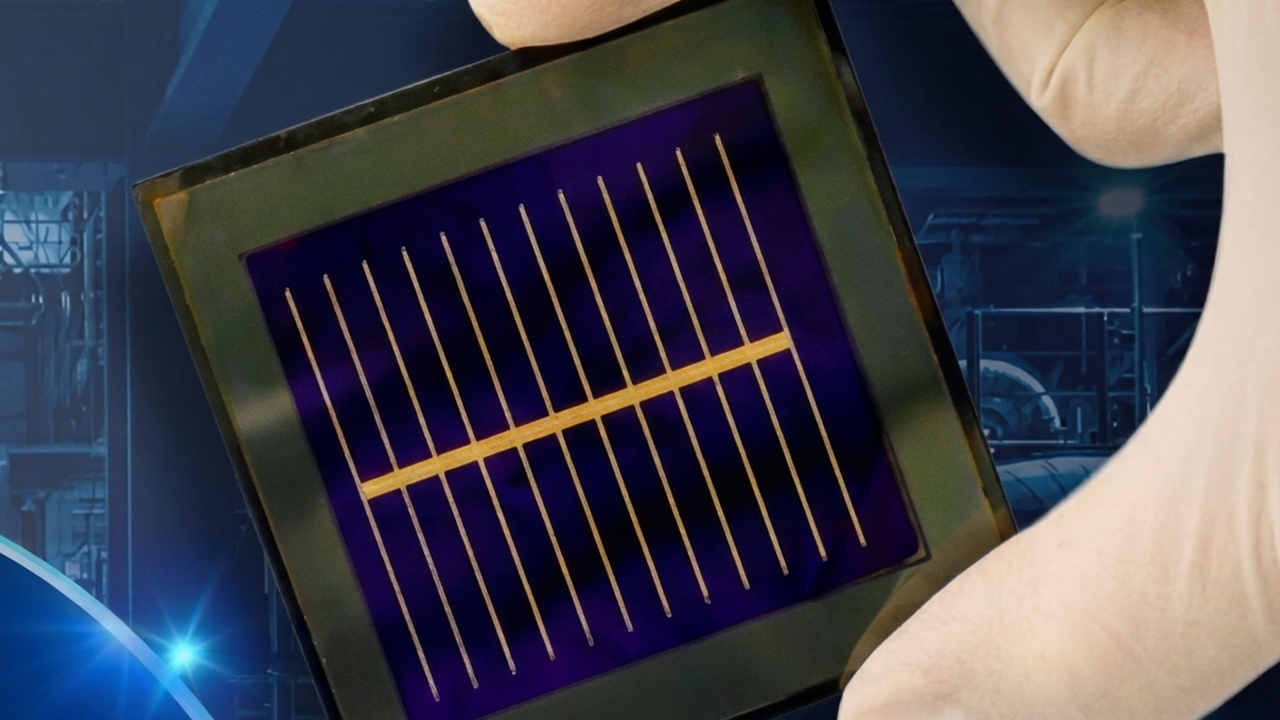
Researchers from France’s IPVF and the Netherlands’ Delft University of Technology (TU Delft) have achieved a remarkable 31% power conversion efficiency for a 4cm² two-terminal perovskite-silicon tandem solar cell. This groundbreaking accomplishment was realized using manufacturing processes compatible with industrial scale-up, marking a crucial step towards the commercialization of next-generation photovoltaic technology. This efficiency significantly surpasses current records for single-junction silicon solar cells.
Technical Details
The achievement of 31% efficiency on a 4cm² two-terminal device is a major milestone. This high performance was realized through a sophisticated device architecture and fabrication approach. The bottom cell utilizes a nanostructured silicon heterojunction design, which enhances light trapping and broadens absorption across the infrared spectrum. The perovskite top cell was manufactured using an ambient air slot-die coating process, a highly scalable solution processing technique. Slot-die coating is particularly advantageous for industrial production due to its ability to deposit uniform thin films over large areas at high speeds and lower costs compared to vacuum-based methods. The compatibility of this fabrication process with industrial scale-up is critical, as it bridges the gap between laboratory-level efficiencies and commercial viability. The combination of efficient light harvesting in the nanostructured silicon and optimized perovskite absorption layers, coupled with a scalable manufacturing method, underscores the maturity of this tandem technology.
Background & Context
In the field of photovoltaics, as the efficiency of single-junction silicon solar cells approaches its theoretical limits, tandem structures are increasingly seen as the next major breakthrough. Perovskite-silicon tandem solar cells are particularly promising because perovskites efficiently absorb short-wavelength light, while silicon excels at absorbing long-wavelength light, thereby utilizing a broader range of the solar spectrum and achieving higher efficiencies. While high-efficiency tandem cells have been reported previously, many were small-area laboratory devices, posing challenges for industrial-scale manufacturing. IPVF is a leading French photovoltaic research institute, and TU Delft is a globally recognized university for materials science and energy technology. Their collaboration demonstrates Europe’s commitment to driving innovation in this field, focusing not just on high efficiency but also on developing commercially viable manufacturing processes.
Strategic Significance & Outlook
The achievement of 31% efficiency on a 4cm² device, particularly when realized through an industrially compatible process, strongly indicates the rapid progression towards commercialization of perovskite-silicon tandem solar cells. Should this technology be widely adopted, it could significantly increase the power generation per unit area of current photovoltaic systems, leading to improved land-use efficiency and relative reductions in installation costs. In the future, this high-efficiency technology will likely form the foundation for more sustainable and economical energy solutions across a wide range of applications, including residential, commercial, and even space-based power systems. This accomplishment therefore carries profound significance in shaping the future of solar energy, highlighting the accelerating pace of innovation in advanced PV technologies.
Get our weekly technology intelligence — free
Receive an infographic that lets you judge at a glance whether each field’s analysis report is worth reading.
Subscribe Free — Weekly Tech Intelligence
By subscribing, you’ll receive Troy-Technical’s weekly technology intelligence newsletter.
- Your email and selected fields are used only to deliver the newsletter.
- We never share your information with third parties.
- You can unsubscribe anytime via the link in each email.
See our Privacy Policy for details.
Takes about a minute · Unsubscribe anytime