Key Findings
This article provides an in-depth explanation of the fundamental distinctions between solid-state batteries (SSBs) and conventional lithium-ion batteries, with a particular focus on the pivotal role of the solid electrolyte in SSBs. SSBs are highlighted as a next-generation battery technology that promises substantial improvements in safety and energy density by replacing flammable liquid electrolytes with solid-state alternatives.
Technical / Clinical Details
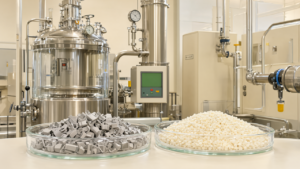
The article delineates the primary solid electrolyte materials employed in SSBs, including ceramics, sulfides, oxides, halides, and polymers, each possessing unique characteristics:
- Ceramic Electrolytes: Known for high ionic conductivity and excellent thermal stability, but typically brittle and prone to high interfacial resistance with electrodes.
- Sulfide Electrolytes: Offer high ionic conductivity and good electrode contact due to their softness, but are often unstable in air and carry a risk of hydrogen sulfide generation.
- Oxide Electrolytes: Exhibit high chemical stability but generally suffer from lower ionic conductivity and complex manufacturing processes.
- Halide Electrolytes: Emerging with promising high ionic conductivity and good electrode compatibility, yet still an early-stage technology requiring further research and optimization.
- Polymer Electrolytes: Provide high flexibility and excellent electrode contact, but typically show lower ionic conductivity at room temperature, which is a major area of research for improvement.
These material advancements are critical to enhancing the energy density and safety of SSBs, particularly through their non-flammable nature, a key differentiator from liquid electrolyte systems.
Background & Context
Conventional lithium-ion batteries, which utilize liquid electrolytes, are susceptible to risks of thermal runaway, fire, or explosion under conditions of overcharging or external damage, driving an urgent demand for safer battery technologies. Concurrently, the proliferation of electric vehicles (EVs) and portable electronic devices necessitates batteries with higher energy density and longer lifespans. Solid-state batteries are being aggressively developed as the ultimate solution to these challenges. However, the commercialization of SSBs faces significant hurdles, including high interfacial resistance between the solid electrolyte and electrodes, high manufacturing costs, and technical complexities in scaling up production.
Strategic Significance & Outlook
Despite being in an early stage of development, solid-state battery technology carries immense promise for revolutionizing various sectors due to its superior safety and performance potential. It is expected to enable advancements such as extended range and faster charging times for EVs, as well as crucial applications in aerospace and other high-demand fields. Future progress hinges on continuous breakthroughs in materials science and manufacturing innovation, specifically in improving the ionic conductivity of solid electrolytes, reducing interfacial resistance, and developing cost-effective large-scale production techniques. Once these challenges are overcome, SSBs are poised to establish themselves as a mainstream battery technology, significantly enhancing the safety and sustainability of energy storage systems globally.
Source: https://www.ankersolix.com/blogs/battery/solid-state-battery-vs-lithium-ion
Get our weekly technology intelligence — free
Receive an infographic that lets you judge at a glance whether each field’s analysis report is worth reading.
Subscribe Free — Weekly Tech Intelligence
By subscribing, you’ll receive Troy-Technical’s weekly technology intelligence newsletter.
- Your email and selected fields are used only to deliver the newsletter.
- We never share your information with third parties.
- You can unsubscribe anytime via the link in each email.
See our Privacy Policy for details.
Takes about a minute · Unsubscribe anytime