Key Findings
Beam Therapeutics has secured U.S. Food and Drug Administration (FDA) Investigational New Drug (IND) approval for BEAM-304, an in vivo base editing therapy designed to treat phenylketonuria (PKU). This regulatory clearance represents a pivotal milestone, allowing the company to advance its innovative base editing approach into clinical trials and significantly expanding the potential for one-time cures for genetic diseases.
Technical / Clinical Details
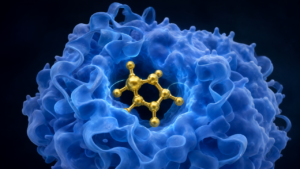
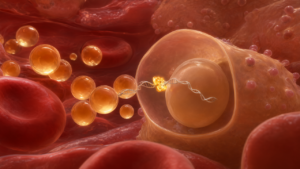
BEAM-304 employs adenine base editing (ABE) technology to precisely correct single base pairs in the DNA, specifically converting adenine to guanine. The therapeutic is delivered to the liver using lipid nanoparticles (LNPs) as the primary delivery vehicle. The liver is the central organ implicated in PKU pathophysiology, and LNP-mediated targeted delivery is intended to maximize therapeutic efficacy while minimizing off-target effects. The core objective of BEAM-304 is to directly correct mutations in the PAH (phenylalanine hydroxylase) gene, which are responsible for the disease, thereby providing a durable therapeutic benefit. This program is part of Beam’s broader platform strategy to develop multiple mutation-specific editors within a unified clinical framework, hinting at the potential to scale personalized therapeutic approaches for diseases caused by diverse genetic mutations like PKU.
Background & Context
Phenylketonuria (PKU) is an inherited metabolic disorder caused by mutations in the PAH gene, leading to the inability to metabolize phenylalanine. Untreated, it can result in severe neurological damage. Current standard of care involves strict dietary restrictions, which significantly impair quality of life and are challenging to maintain. Gene editing technologies offer the promise of a curative approach, and in vivo base editing, by directly correcting genes within the patient’s body, simplifies the treatment process compared to traditional ex vivo methods. The FDA’s IND approval signals a growing confidence in the safety and efficacy of base editing technology by regulatory bodies, representing a significant stride forward for the entire field of gene therapy.
Strategic Significance & Outlook
With IND clearance, Beam Therapeutics is poised to initiate clinical trials for BEAM-304 in the near future. The outcomes of these trials will be crucial in establishing the safety and efficacy of in vivo base editing, potentially transforming the treatment paradigm for PKU patients. Moreover, the success of this approach could pave the way for applying LNP-delivered base editing technology to a multitude of other inherited liver diseases and beyond. Investors and patient communities alike are keenly awaiting further developments in this groundbreaking therapeutic area.
Get our weekly technology intelligence — free
Receive an infographic that lets you judge at a glance whether each field’s analysis report is worth reading.
Subscribe Free — Weekly Tech Intelligence
By subscribing, you’ll receive Troy-Technical’s weekly technology intelligence newsletter.
- Your email and selected fields are used only to deliver the newsletter.
- We never share your information with third parties.
- You can unsubscribe anytime via the link in each email.
See our Privacy Policy for details.
Takes about a minute · Unsubscribe anytime