Key Findings
Researchers from IPVF in France and TU Delft in the Netherlands have jointly achieved a certified 31% power conversion efficiency for a 4 cm² two-terminal (2T) monolithic perovskite/silicon tandem solar cell. This remarkable efficiency not only pushes the boundaries of photovoltaic performance but crucially, it was achieved through a manufacturing process—slot-die coating in ambient air—that is highly compatible with industrial-scale production. This represents a major leap towards making high-efficiency tandem solar cells economically viable and widely accessible.
Technical Details
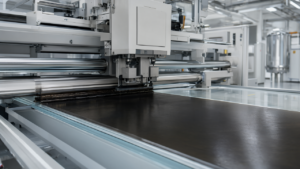
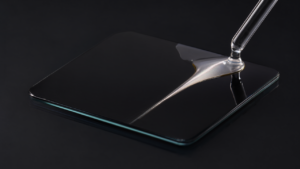
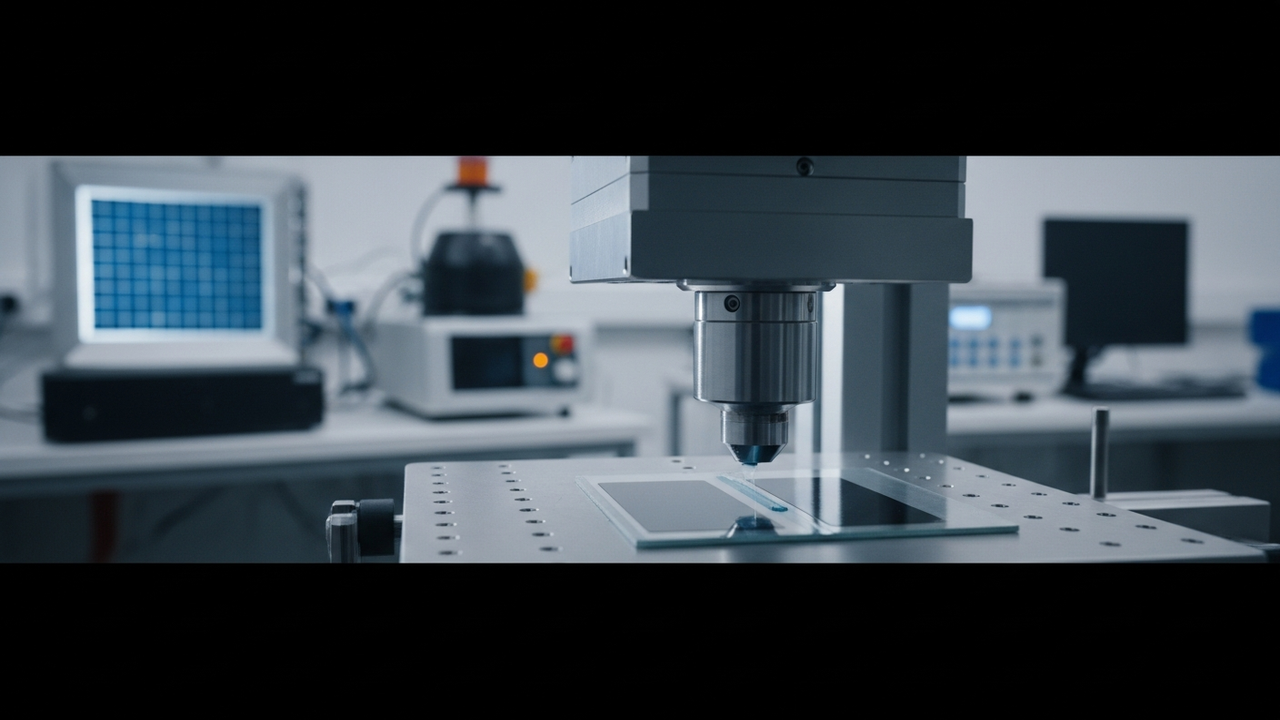
The high-performance device integrates a nanostructured silicon heterojunction bottom cell, fabricated at TU Delft, with a perovskite top cell deposited at IPVF using slot-die coating under ambient air conditions. Slot-die coating is a solution-based deposition technique known for its high speed, excellent film uniformity, and compatibility with roll-to-roll manufacturing, making it ideal for large-scale, low-cost production. Crucially, performing this process in ambient air eliminates the need for expensive inert gas environments, such as nitrogen, significantly reducing manufacturing costs, energy consumption, and overall process complexity. This combined approach addresses critical challenges in traditional perovskite manufacturing, mitigating the necessity for high vacuum or specialized gas environments and establishing a more sustainable and economic production pathway.
Background & Context
Perovskite/silicon tandem solar cells are among the most intensely researched and promising next-generation technologies, poised to exceed the theoretical efficiency limits of conventional single-junction silicon solar cells. While various research groups and companies have reported efficiencies exceeding 30%, many of these achievements have been on small-area cells or under highly controlled, lab-specific conditions. The work by IPVF and TU Delft stands out by demonstrating high efficiency (31%) on a practical cell area (4 cm²) using an industrially relevant, ambient-air slot-die coating process. This dual focus on both record efficiency and scalable, cost-effective manufacturing is particularly significant for the industry, distinguishing it from purely academic records.
Strategic Significance & Outlook
This pioneering achievement holds immense potential for accelerating the mass production of high-efficiency, low-cost perovskite/silicon tandem solar cells. The validation of ambient-air slot-die coating technology removes a major hurdle for scaling production from kilowatt to gigawatt levels. This advancement is expected to further drive down the Levelized Cost of Energy (LCOE) for solar photovoltaics, fostering broader market adoption. Furthermore, the compatibility with flexible substrates opens up diverse application areas, including building-integrated photovoltaics (BIPV), portable devices, and electric vehicles, thereby significantly contributing to the global penetration of renewable energy technologies.
Get our weekly technology intelligence — free
Receive an infographic that lets you judge at a glance whether each field’s analysis report is worth reading.
Subscribe Free — Weekly Tech Intelligence
By subscribing, you’ll receive Troy-Technical’s weekly technology intelligence newsletter.
- Your email and selected fields are used only to deliver the newsletter.
- We never share your information with third parties.
- You can unsubscribe anytime via the link in each email.
See our Privacy Policy for details.
Takes about a minute · Unsubscribe anytime