Key Findings
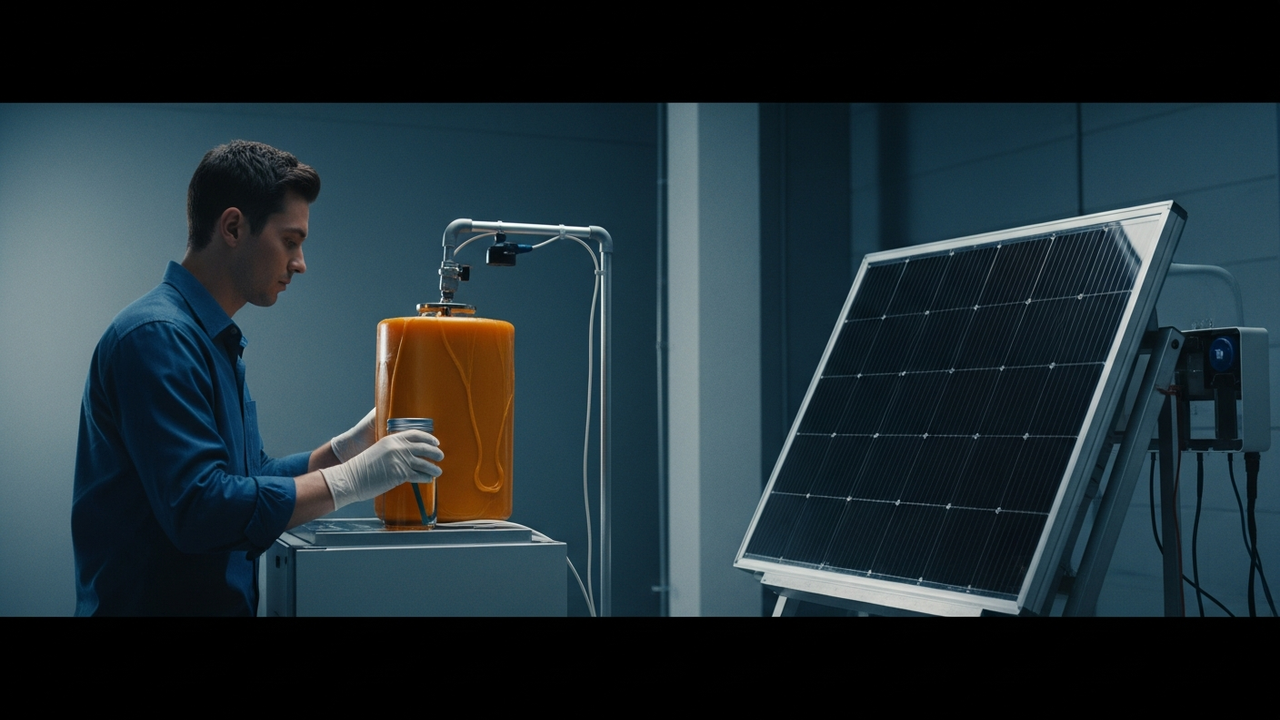
Researchers at MIT World Peace University have developed a groundbreaking solar thermal battery that ensures a consistent hot water supply even after sunset. This innovative system incorporates paraffin wax as a phase change material (PCM) within thermal storage capsules, overcoming the intermittency inherent in solar energy and holding significant potential to drastically reduce reliance on electricity and fossil fuels for hot water provision.
Technical / Clinical Details
The solar thermal battery efficiently stores solar thermal energy collected by a solar concentrator. The core of its heat storage mechanism is the paraffin wax enclosed within. Paraffin wax functions as a phase change material (PCM) by absorbing and releasing large amounts of heat during its phase transition (from solid to liquid) at specific temperatures. During the day, it absorbs solar heat and liquefies, storing this energy as latent heat. After sunset or during periods of insufficient sunlight, the wax solidifies, releasing the stored heat to provide continuous hot water.
The research involved careful design of the thermal storage capsules and selection of the paraffin wax. Materials and structures were optimized to enhance thermal conductivity and minimize heat loss, allowing the system to retain thermal energy for extended periods and utilize it efficiently when needed. Compared to conventional sensible heat storage systems using water or rocks, PCMs offer higher energy density storage, leading to a more compact and efficient overall system. This technology is particularly promising for regions with underdeveloped electrical infrastructure and areas demanding sustainable energy solutions.
Background & Context
The expansion of renewable energy, especially solar energy, is a pressing global imperative for climate change mitigation and energy security. However, solar power generation and thermal utilization inherently face challenges due to supply intermittency during nighttime or adverse weather conditions. To address this ‘intermittency’ problem, the development of efficient energy storage technologies is urgently needed. Thermal energy storage, distinct from electrical energy storage (batteries), plays a crucial role in meeting thermal demands such as hot water supply and heating. Breakthroughs from research institutions like MIT World Peace University are vital for extending the applicability of solar energy and enhancing the resilience of overall energy systems.
Strategic Significance & Outlook
The developed solar thermal battery has the potential to bring about significant transformations in both domestic and industrial hot water supply systems. Future efforts will focus on further improving efficiency, reducing costs, and validating long-term reliability. If commercialized, this technology could contribute to improved energy access, particularly in developing countries, and help reduce greenhouse gas emissions by lessening reliance on fossil fuels. Furthermore, based on this technology, applications in heating and cooling systems, as well as integration into larger district heating networks, are envisioned, marking an important step towards realizing a sustainable society.
Get our weekly technology intelligence — free
Receive an infographic that lets you judge at a glance whether each field’s analysis report is worth reading.
Subscribe Free — Weekly Tech Intelligence
By subscribing, you’ll receive Troy-Technical’s weekly technology intelligence newsletter.
- Your email and selected fields are used only to deliver the newsletter.
- We never share your information with third parties.
- You can unsubscribe anytime via the link in each email.
See our Privacy Policy for details.
Takes about a minute · Unsubscribe anytime