Background
Investment in space development is recognized not just as scientific exploration but also as a powerful engine for innovation and economic growth. Technologies developed for the space industry often “spin off” into terrestrial industries, creating new markets and jobs. The European Union (EU), through research and development programs like Horizon Europe, actively promotes collaboration between space technologies and ground industries, aiming to strengthen overall European competitiveness. Such cross-sector innovation is key to addressing challenges faced by modern manufacturing, including sustainability, resource efficiency, and industrial digitalization.
Key Findings
Aerospace and space technologies are no longer niche domains but powerful drivers of innovation across Europe’s advanced manufacturing sector. Advanced materials like high-performance composites and heat-resistant alloys, developed for spacecraft to endure extreme temperatures, radiation, and mechanical stress, are now widely applied in terrestrial industries such as automotive, energy systems, and industrial equipment, pushing the technological boundaries of manufacturing. Furthermore, the rise of additive manufacturing (3D printing) techniques, refined for space component production, further reinforces this cross-sector synergy and accelerates manufacturing transformation.
Key Technologies and Terrestrial Applications
- High-Performance Composite Materials: In space applications, lightweight, high strength, and heat resistance are paramount. Carbon fiber reinforced polymers (CFRP) and ceramic matrix composites (CMC) were developed to meet these requirements and are now utilized in diverse fields such as high-performance automotive body structures, aircraft engine components, wind turbine blades, and sports equipment. These materials contribute to improved fuel efficiency and extended product lifespans.
- Heat-Resistant Alloys: To withstand the extreme high-temperature environments of rocket engines and re-entry capsules, heat-resistant alloys like nickel-based superalloys and titanium alloys have been developed. These alloys are now repurposed for components in terrestrial energy industries (gas turbines, nuclear power), oil and gas industries, and even medical implants, where exposure to high temperatures and corrosion is common.
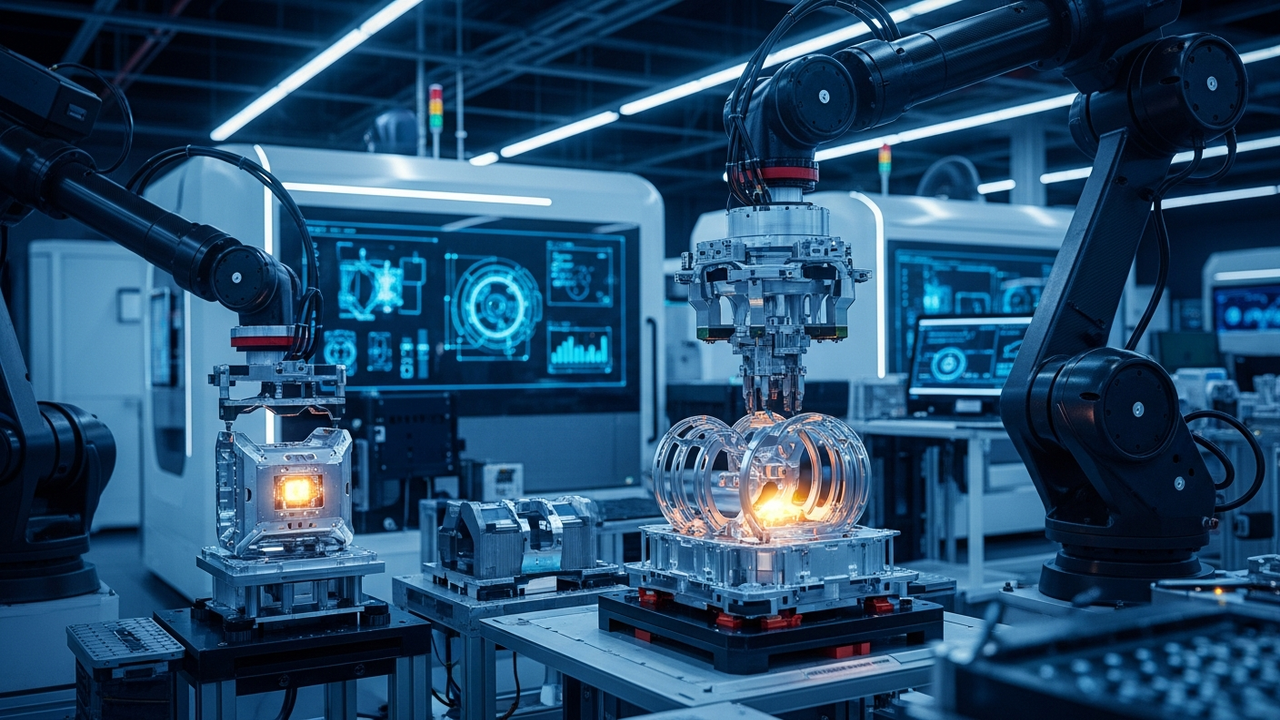
- Additive Manufacturing (3D Printing): Space components demand complex geometries, lightweighting, and improved reliability through monolithic integration. Metal 3D printing technologies such as Selective Laser Melting (SLM) and Electron Beam Melting (EBM) have evolved to meet these demands. Today, they are adopted across all stages of manufacturing, including automotive prototyping, custom medical implants, and high-performance industrial machine parts, contributing to increased design freedom and reduced production lead times.
- Extreme Environment Technologies: Sensors, electronic components, and coating technologies developed for the vacuum, radiation, and thermal cycling of space are increasingly being applied in special terrestrial environments (e.g., nuclear facilities, deep-sea exploration, medical devices).
Strategic Significance & Outlook
The synergy between space technology and manufacturing is expected to deepen further, creating new opportunities for value creation. Particularly, with the advancement of commercial manufacturing and materials testing in Low Earth Orbit (LEO), a future where ultra-high-performance materials and products, difficult to manufacture on Earth, are produced in space and supplied to terrestrial industries is becoming a reality. This trend has the potential to revolutionize manufacturing processes themselves and enrich our lives and society by providing more advanced and sustainable products.
Source: https://www.effra.eu/news/did-you-know-manufacturing-is-moving-closer-to-space-technologies/
Get our weekly technology intelligence — free
Receive an infographic that lets you judge at a glance whether each field’s analysis report is worth reading.
Subscribe Free — Weekly Tech Intelligence
By subscribing, you’ll receive Troy-Technical’s weekly technology intelligence newsletter.
- Your email and selected fields are used only to deliver the newsletter.
- We never share your information with third parties.
- You can unsubscribe anytime via the link in each email.
See our Privacy Policy for details.
Takes about a minute · Unsubscribe anytime