Background
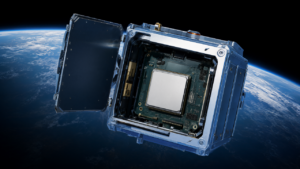
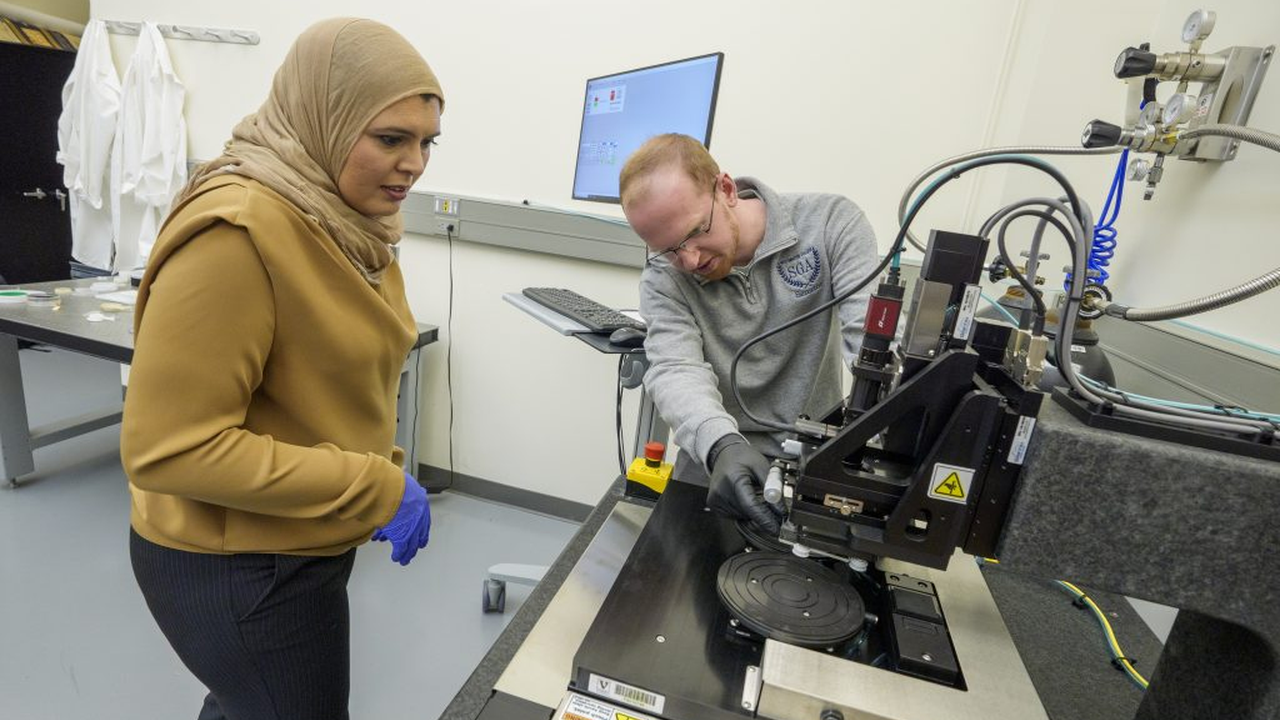
The rapidly expanding frontier of space, marked by ambitions for space-based data centers and extended human missions to the Moon and Mars, underscores the escalating importance of reliable power supply and management. Terrestrial power technologies, proven for Earth’s relatively benign environment, are largely inadequate for the unique and harsh conditions of space. This critical gap necessitates breakthroughs in new materials science and device engineering specifically tailored for off-world applications. Professor Mona Ebrish’s pioneering research at Vanderbilt University directly addresses this imperative, laying a foundational path for next-generation space infrastructure.
Key Findings
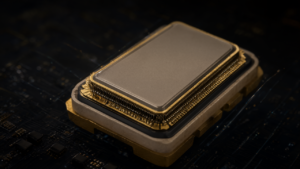
Professor Ebrish, with significant backing from the Defense Advanced Research Projects Agency (DARPA), is spearheading the development of highly resilient, wide-bandgap (WBG) power devices. This foundational work focuses on dramatically improving the radiation tolerance of power conversion devices, which are indispensable for enabling efficient power generation and distribution within future space-based data centers and long-duration human habitats beyond Earth.
In the unforgiving vacuum of space, particularly beyond Earth’s protective Van Allen belts, electronics face a relentless barrage of high-energy radiation from galactic cosmic rays (GCRs) and solar proton events (SPEs). This radiation is a leading cause of damage, failure, and premature performance degradation in conventional silicon-based electronic devices, rendering them unreliable for critical applications like space data centers and long-duration crewed missions where power system reliability is paramount.
To overcome this, Professor Ebrish’s team is focused on wide-bandgap (WBG) semiconductor materials like silicon carbide (SiC) and gallium nitride (GaN). These advanced materials inherently offer superior voltage tolerance, temperature resistance, and, crucially, significantly higher radiation hardness compared to traditional silicon. Their unique electronic properties allow for the suppression of charge carrier generation induced by radiation and minimize structural damage, ensuring stable and robust device operation in the extreme space environment.
The research entails the meticulous design and optimization of critical power conversion devices—such as power converters and inverters—using these WBG materials. These devices are essential for efficiently transforming electricity, whether from solar arrays or future fission reactors, into the precise voltages and frequencies required by spacecraft systems and sophisticated data center electronics. This enhanced radiation tolerance is projected to drastically reduce failure rates over extended space missions, thereby lowering maintenance costs and mitigating significant mission risks.
The DARPA grant is instrumental in accelerating this high-risk, high-reward endeavor. Robust and reliable electronic devices are a strategic priority for defense agencies, vital for next-generation communication and reconnaissance satellites, as well as future space defense architectures.
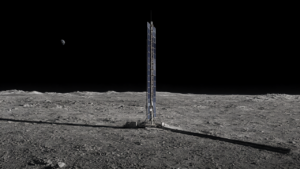
This pioneering work by Vanderbilt University is poised to provide foundational technology for sustainable computational and life support capabilities in space. The commercialization of these radiation-hardened WBG power devices promises to profoundly enhance the efficiency and reliability of space-based data centers, dramatically increasing the safety and feasibility of deep space exploration. Looking ahead, this technology is anticipated to become a cornerstone of the energy infrastructure for lunar bases and crewed Mars missions, significantly expanding the horizons of human activity in the cosmos.
Get our weekly technology intelligence — free
Receive an infographic that lets you judge at a glance whether each field’s analysis report is worth reading.
Subscribe Free — Weekly Tech Intelligence
By subscribing, you’ll receive Troy-Technical’s weekly technology intelligence newsletter.
- Your email and selected fields are used only to deliver the newsletter.
- We never share your information with third parties.
- You can unsubscribe anytime via the link in each email.
See our Privacy Policy for details.
Takes about a minute · Unsubscribe anytime