Key Findings
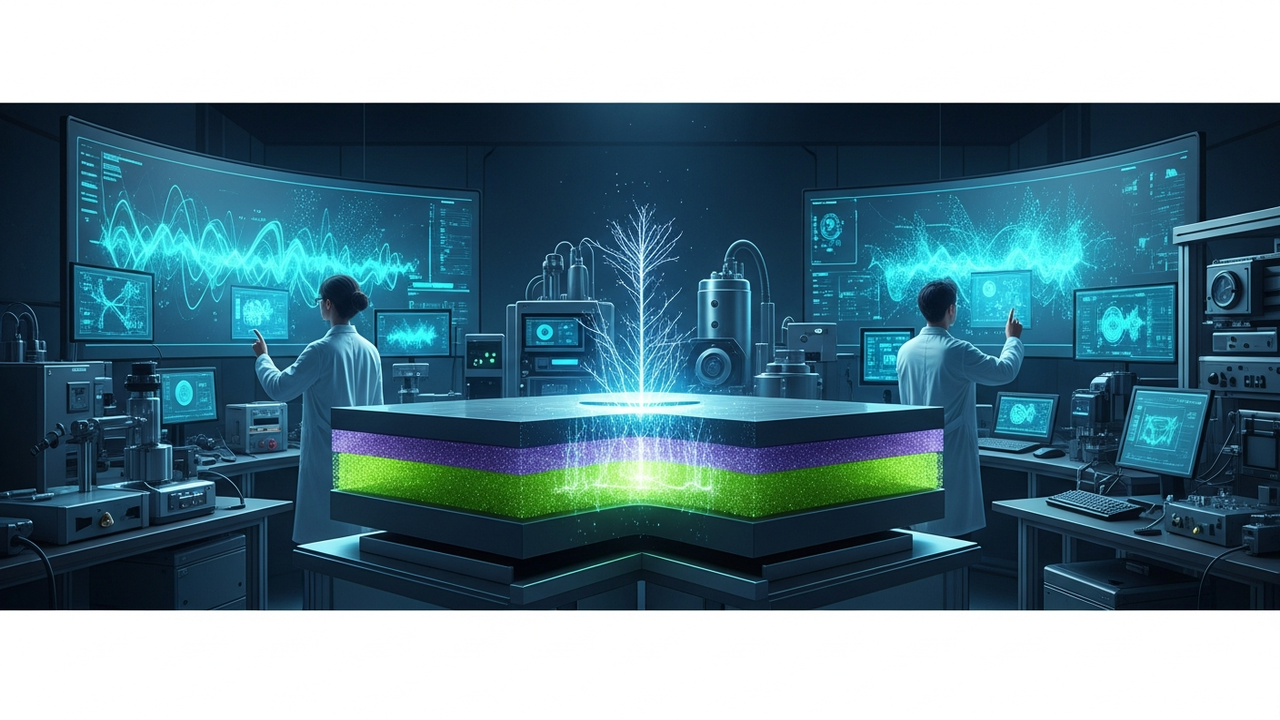
Scientists have definitively identified that the primary cause of short-circuits in solid-state batteries (SSBs) is not the accumulation of stress at the tip of growing lithium dendrites, but rather the internal pressure buildup within the dendrites themselves. This groundbreaking discovery, substantiated by advanced simulations and precise measurements, fundamentally alters our understanding of how soft lithium metal can penetrate robust ceramic solid electrolytes, opening new avenues for dendrite suppression strategies critical for SSB commercialization.
Technical / Clinical Details
The research team employed a combination of sophisticated computational modeling and experimental validation to unravel the intricate mechanisms of lithium dendrite growth and subsequent short-circuiting. Previous hypotheses largely focused on the mechanical stress exerted by the dendrite tip against the solid electrolyte. However, this study revealed a more complex interplay:
- Internal Pressure Dominance: The critical insight is that as lithium ions deposit and form metallic lithium within the growing dendrite structure, significant internal pressure accumulates. This internal pressure then acts as a driving force, localizing and amplifying stress within the solid electrolyte, eventually leading to its fracture and penetration, even in stiff ceramic materials like lithium lanthanum zirconium oxide (LLZTO).
- Lithium’s Plasticity: The inherent softness and plastic deformability of lithium metal enable it to flow and exert this internal pressure effectively, exploiting microscopic defects or grain boundaries within the solid electrolyte matrix.
- Experimental Verification: The findings were corroborated through meticulous experiments and characterization techniques, providing concrete evidence that challenges previous assumptions and offers a more accurate mechanistic understanding.
Based on this refined understanding, the research team is now actively pursuing novel solutions:
- Enhanced Crack Resistance: Developing solid electrolytes with intrinsically higher fracture toughness and mechanical strength.
- Microscopic Void Integration: Engineering specific micro-voids within the electrolyte to strategically guide dendrite growth into non-critical pathways, thereby preventing short circuits.
- Protective Coatings: Applying advanced protective coatings to lithium electrodes to suppress the nucleation and early growth of dendrites at the interface.
These strategies aim to tackle the root cause of dendrite-induced failures, promising significant advancements in SSB reliability and safety.
Background & Context
Solid-state batteries are widely considered the future of energy storage for applications ranging from electric vehicles (EVs) to grid-scale systems, primarily due to their promise of dramatically enhanced safety (by eliminating flammable liquid electrolytes) and higher energy densities (by enabling lithium metal anodes). However, lithium dendrite formation has been a formidable barrier to their widespread adoption, causing internal short circuits and significantly reducing battery lifespan and safety. The previous focus on tip-induced stress has yielded limited success in fully eradicating the problem. This new paradigm—identifying internal pressure within dendrites as the main culprit—represents a crucial scientific breakthrough, providing the necessary fundamental knowledge to design more effective and durable ASSBs. It is a critical development that could accelerate the commercialization timeline for these next-generation batteries.
Strategic Significance & Outlook
This discovery holds immense strategic significance, as it provides a clearer roadmap for engineers and material scientists developing solid-state batteries. By understanding the precise failure mechanism, researchers can now design solid electrolytes and electrode interfaces with targeted properties to resist internal dendrite pressure more effectively. This could lead to the development of more robust solid electrolytes, innovative protective interlayers, and improved cell architectures that ensure long-term, dendrite-free operation. The impact of this research is expected to accelerate the commercial deployment of safer, higher-performance ASSBs, ultimately contributing to a more sustainable and electrified future across various industries globally. The next phase will involve translating these mechanistic insights into practical, scalable solutions.
Get our weekly technology intelligence — free
Receive an infographic that lets you judge at a glance whether each field’s analysis report is worth reading.
Subscribe Free — Weekly Tech Intelligence
By subscribing, you’ll receive Troy-Technical’s weekly technology intelligence newsletter.
- Your email and selected fields are used only to deliver the newsletter.
- We never share your information with third parties.
- You can unsubscribe anytime via the link in each email.
See our Privacy Policy for details.
Takes about a minute · Unsubscribe anytime