Key Findings
Taiwan Semiconductor Manufacturing Company (TSMC), the world’s leading semiconductor foundry, has substantially expanded its CoWoS (Chip-on-Wafer-on-Substrate) advanced packaging capacity. This expansion has effectively resolved a critical supply bottleneck for AI-driven GPUs, which had severely constrained procurement in 2025. As a direct consequence of this breakthrough, the latest NVIDIA B300 servers are now available with a significantly reduced lead time of 8-16 weeks, requiring only a 10-20% upfront payment. This pivotal development removes a major impediment to AI infrastructure deployment, promising to accelerate the growth and accessibility of AI computing capabilities.
Technical / Clinical Details
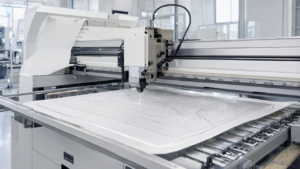
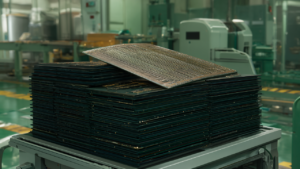
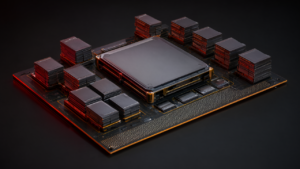
CoWoS is a sophisticated 2.5D packaging technology that integrates high-performance logic chips (such as GPUs) with multiple High Bandwidth Memory (HBM) dies onto a silicon interposer, which is then mounted onto a package substrate. This technology is paramount for achieving the ultra-high bandwidth and low-latency data transfer essential for AI chips. The production of CoWoS requires specialized, costly equipment and advanced technical expertise, and its limited capacity had previously been a primary constraint on the supply of AI accelerators, including NVIDIA’s GPUs.
TSMC’s capacity expansion is believed to have been achieved through a combination of new factory construction, optimization of existing lines, and enhanced collaboration with equipment suppliers. This scaling up of production has dramatically increased the output of integrated GPU-HBM packages, thereby accelerating the market availability of cutting-edge AI hardware like the NVIDIA B300 servers. The reduction in GPU procurement lead times from over six months to 8-16 weeks represents a profound advantage for AI development companies, enabling faster innovation cycles and deployment.
Background & Context
The rapid advancement of generative AI technologies has created unprecedented demand for AI accelerators, with GPUs at their core. Throughout 2023 and 2025, NVIDIA’s H100 and subsequent generation GPUs were among the most sought-after and supply-constrained products in the market, primarily due to their superior performance and limited manufacturing capacity. The CoWoS packaging bottleneck, in particular, was a significant inhibitor of AI infrastructure investments, causing numerous companies to struggle in scaling up their AI computing capabilities.
TSMC holds an exceptionally strategic position within the AI-era semiconductor supply chain, and its expansion of CoWoS capacity is indispensable for the healthy growth of the entire AI market. The resolution of these supply constraints is expected to improve the cost-efficiency and accessibility of AI chips, enabling a broader range of companies and research institutions to leverage AI technologies. This development could accelerate the investment cycle in AI infrastructure and potentially democratize access to advanced AI computing.
Strategic Significance & Outlook
The dramatic expansion of TSMC’s CoWoS packaging capacity marks a decisive turning point in the deployment of AI infrastructure. The shortened lead times for NVIDIA B300 servers mean that cloud service providers, enterprises, and startups can now scale up their AI computing capabilities more rapidly and efficiently. This will undoubtedly accelerate the training and deployment of AI models, fostering further innovation across the spectrum of AI technologies.
For researchers and engineers, easier access to high-performance GPUs will create opportunities to accelerate large-scale AI research and development projects that were previously hampered by resource limitations. For investors, it signals a revitalization of the AI infrastructure investment cycle and a strong indication that the semiconductor industry, particularly the back-end and AI-related hardware markets, is poised for sustained growth. This supply improvement is expected to have widespread positive impacts across the entire AI economy, contributing to the acceleration of next-generation technologies.
Source: https://research.contrary.com/report/why-20-of-neoclouds-wont-survive-the-ai-boom
Get our weekly technology intelligence — free
Receive an infographic that lets you judge at a glance whether each field’s analysis report is worth reading.
Subscribe Free — Weekly Tech Intelligence
By subscribing, you’ll receive Troy-Technical’s weekly technology intelligence newsletter.
- Your email and selected fields are used only to deliver the newsletter.
- We never share your information with third parties.
- You can unsubscribe anytime via the link in each email.
See our Privacy Policy for details.
Takes about a minute · Unsubscribe anytime