Key Findings
Organoids fabricated using 3D bioprinting technology are making groundbreaking strides in oncology, regenerative medicine, and drug discovery, presenting a new paradigm for disease modeling and therapeutic development. These advanced organoids overcome the limitations of conventional 2D cell cultures and animal models by precisely mimicking complex in vivo tissue structures and functions, thereby significantly advancing their path toward clinical application.
Technical / Clinical Details
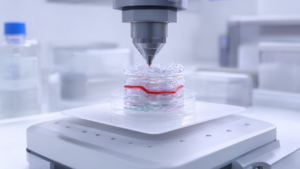
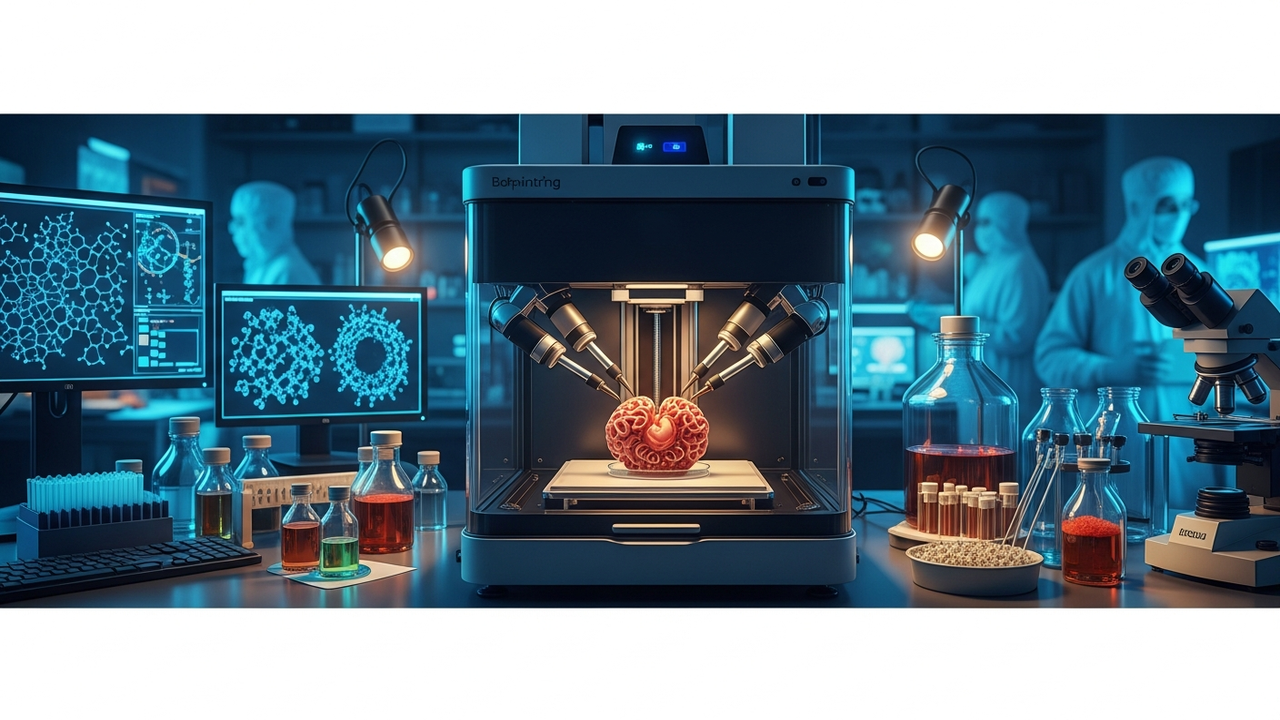
This review elaborates on how cutting-edge 3D bioprinting techniques, including extrusion, inkjet, and laser-assisted methods, are enhancing the morphological and functional characteristics of organoids. Crucially, the development of high-performance bioinks—such as hydrogels and extracellular matrix-derived materials optimized for biocompatibility, mechanical properties, and cell adhesion—is essential for long-term culture and precise differentiation of organoids. Applications span personalized cancer treatment screening using tumor organoids, regenerative medicine for repairing damaged tissues (e.g., liver, kidney, heart), and platforms for drug discovery in neurodegenerative diseases and infectious diseases. These organoids provide physiologically relevant experimental models by replicating cell-cell interactions and tissue-specific microenvironments, thereby improving the predictive accuracy of drug responses.
Background & Context
While organoid research has seen rapid advancements, traditional self-assembled organoids have faced challenges such as variability in size and shape, and a lack of vascular structures. 3D bioprinting offers a sophisticated solution by precisely controlling cell placement, bioink selection, and external stimuli, enabling the construction of more uniform and complex organoids. This technology represents a crucial step toward realizing personalized medicine, where patient-derived iPSCs can be used to generate organoids for developing therapies optimized for individual patients. From a drug development perspective, it promises to reduce animal testing and enhance the accuracy of human-specific drug toxicity assessments, potentially significantly cutting the cost and duration of new drug development.
Strategic Significance & Outlook
The future outlook for 3D bioprinted organoids includes the integration of AI and machine learning, which will streamline the automated discovery of optimal bioprinting conditions and improve organoid quality assessment. Furthermore, the development of ‘organ-on-chip’ systems, connecting multiple organoids, will enable researchers to replicate complex inter-organ interactions within the body, allowing for more accurate modeling of systemic drug responses and disease progression. Establishing clear regulatory guidelines for the clinical application of this innovative technology will also be vital for its widespread adoption and accessibility. These advancements collectively hold the potential to address unmet needs in treating intractable diseases, advancing regenerative medicine, and revolutionizing drug discovery.
Source: https://academic.oup.com/rb/advance-article/doi/10.1093/rb/rbag142/8722305
Get our weekly technology intelligence — free
Receive an infographic that lets you judge at a glance whether each field’s analysis report is worth reading.
Subscribe Free — Weekly Tech Intelligence
By subscribing, you’ll receive Troy-Technical’s weekly technology intelligence newsletter.
- Your email and selected fields are used only to deliver the newsletter.
- We never share your information with third parties.
- You can unsubscribe anytime via the link in each email.
See our Privacy Policy for details.
Takes about a minute · Unsubscribe anytime