Key Findings
Next-generation alternative protein startups are increasingly relying on strategic partnerships and access to existing infrastructure, rather than solely on scientific innovation, to overcome critical manufacturing shortages in the precision fermentation sector. Companies like Aux Labs are collaborating with breweries, while Helaina has secured a significant partnership with Nestlé for the production of precision fermentation-derived lactoferrin.
Technical / Clinical Details
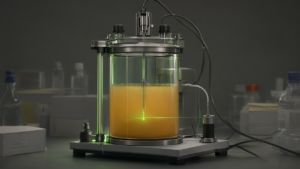
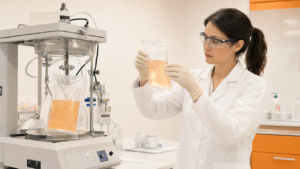
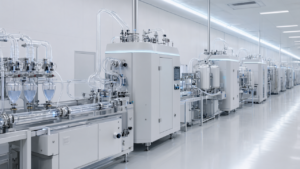
Precision fermentation involves programming microorganisms to produce specific proteins or complex organic molecules efficiently in controlled bioreactor environments. While the scientific principles are robust, scaling these processes from laboratory to commercial volumes (e.g., thousands of liters) requires substantial capital investment in large-scale bioreactors, purification facilities, and specialized operational expertise. The US currently faces a deficit in such manufacturing infrastructure, creating a significant bottleneck for many startups.
To address this, startups are adopting several strategies:
- Leveraging Existing Infrastructure: Aux Labs is partnering with breweries and other existing bioproduction facilities to design ingredients and scale up manufacturing. This approach significantly reduces the time and capital expenditure associated with building new, dedicated facilities from scratch.
- Strategic Corporate Partnerships: Helaina’s collaboration with Nestlé for lactoferrin, an ingredient for the infant formula market, exemplifies how alliances with major food companies provide access to necessary technical expertise, funding, market channels, and regulatory navigation support for commercialization.
- Hybrid Funding Models: Combining private investment with public funding and commercial partnerships helps de-risk the costly and complex scale-up phase, enabling simultaneous advancement in technology development and manufacturing capacity expansion.
Background & Context
The alternative protein market is experiencing rapid growth, driven by increasing consumer demand for sustainable and health-conscious food options. Precision fermentation is a key enabling technology within this sector. However, the transition from proof-of-concept to commercial viability is often fraught with challenges, commonly referred to as the ‘valley of death.’ Scaling up bioreactor operations from small pilots to industrial production demands different approaches than traditional biotechnology and food production.
Strategic Significance & Outlook
The success of precision fermentation startups hinges not only on innovative science but also on their ability to efficiently and strategically secure manufacturing infrastructure and market access. This trend suggests a future where more companies will adopt collaborative development and partnership models, fostering deeper cooperation across the entire supply chain. Such integration is expected to enable precision fermentation-derived alternative proteins to achieve cost competitiveness and widespread adoption in mainstream food markets, potentially having a profound impact on global food security and sustainability.
Get our weekly technology intelligence — free
Receive an infographic that lets you judge at a glance whether each field’s analysis report is worth reading.
Subscribe Free — Weekly Tech Intelligence
By subscribing, you’ll receive Troy-Technical’s weekly technology intelligence newsletter.
- Your email and selected fields are used only to deliver the newsletter.
- We never share your information with third parties.
- You can unsubscribe anytime via the link in each email.
See our Privacy Policy for details.
Takes about a minute · Unsubscribe anytime