Key Findings
PepGel is playing a pivotal role in accelerating the shift towards human-based 3D cell culture models, moving away from traditional animal models in biomedical research. This initiative is closely aligned with the new Office of Research Innovation, Validation, and Application (ORIVA) recently established by the National Institutes of Health (NIH), which promotes the development and adoption of New Approach Methodologies (NAMs).
Technical / Clinical Details
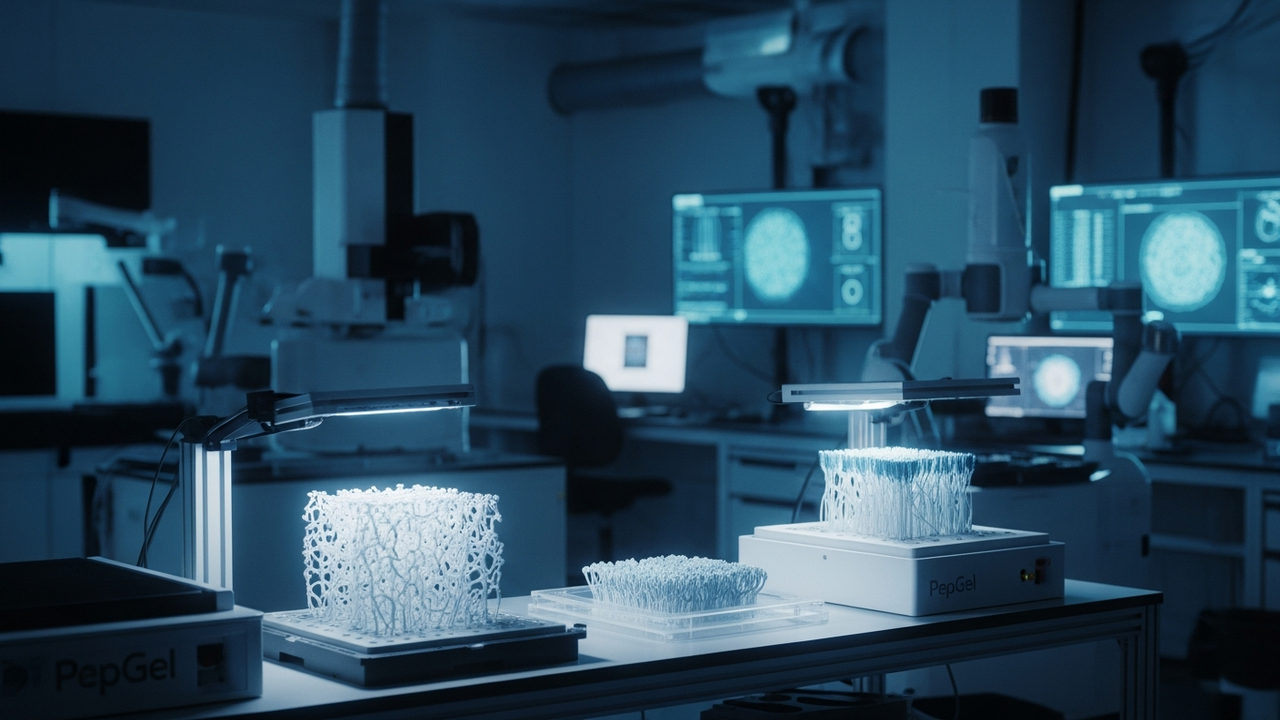
PepGel’s core contribution lies in its innovative synthetic hydrogels:
- Precisely Controlled Microenvironments: Synthetic hydrogels like PGmatrix™ offer tunable biochemical and biophysical properties, allowing researchers to create highly controlled and reproducible 3D cellular microenvironments. These environments accurately mimic the native human extracellular matrix (ECM), which is critical for cell behavior, differentiation, and interaction in a manner more reflective of in vivo conditions than traditional 2D cultures or even complex animal models.
- Enhanced Reproducibility and Translatability: A key limitation of animal models is their often-poor translatability to human physiology due to species differences. PepGel’s platforms provide more predictive and reproducible human-centric models, generating data that is more clinically relevant for drug screening, disease modeling, and understanding complex biological mechanisms.
- Support for NAMs: ORIVA’s mission is to foster NAMs that replace, reduce, and refine animal testing. PepGel’s scalable and robust 3D culture platforms directly address the infrastructure needs for these new methodologies, facilitating a significant paradigm shift towards research focused on human biology.
Background & Context
Globally, there is increasing pressure and scientific rationale to reduce reliance on animal testing due to ethical concerns and the recognized limitations in predicting human responses. Regulatory bodies and research institutions, including the NIH, are actively advocating for and investing in human-relevant alternative models. 3D cell culture technologies represent a significant advancement in this direction, allowing cells to grow in complex, physiologically relevant structures that more closely resemble native tissues compared to conventional 2D cultures.
Strategic Significance & Outlook
PepGel’s technology is set to improve the accuracy of efficacy and toxicity assessments in early drug discovery, potentially reducing R&D costs and shortening development timelines for new therapeutics. As the transition to human-based 3D models gains momentum, it is expected to foster the development of more personalized medicines and deepen our understanding of specific diseases. This trend is a critical driver shaping the future of biomedical research and drug development.
Source: https://pepgel.com/advancing-human-based-research-beyond-animal-models/
Get our weekly technology intelligence — free
Receive an infographic that lets you judge at a glance whether each field’s analysis report is worth reading.
Subscribe Free — Weekly Tech Intelligence
By subscribing, you’ll receive Troy-Technical’s weekly technology intelligence newsletter.
- Your email and selected fields are used only to deliver the newsletter.
- We never share your information with third parties.
- You can unsubscribe anytime via the link in each email.
See our Privacy Policy for details.
Takes about a minute · Unsubscribe anytime