Key Findings
Recent advancements in bioprocess engineering, particularly in continuous bioprocessing, intensified feeding strategies, and perfusion-based cultivation technologies, are dramatically enhancing the efficiency and productivity of biopharmaceutical manufacturing. These innovations are critical for reducing manufacturing costs and accelerating product time-to-market.
Technical / Clinical Details
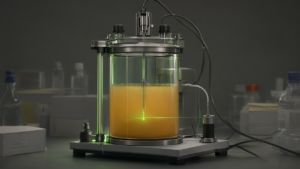
**Continuous bioprocessing** involves operating the manufacturing process continuously, which reduces variability between batches and maximizes equipment utilization. This significantly increases production output and can lead to substantial reductions in manufacturing costs. **Intensified Feeding Strategies** optimize nutrient supply tailored to cellular metabolic needs, boosting cell culture productivity. For instance, precise adjustment of amino acid and glucose concentrations at specific stages can maximize cell density and target protein production. **Perfusion-based cultivation** is a technique where cells are retained in the bioreactor while media is continuously supplied and removed. This enables high-density cell culture, allowing for a 5 to 10-fold increase in cell density and more than a twofold improvement in volumetric productivity compared to traditional fed-batch cultures. In monoclonal antibody (mAb) production, for example, perfusion culture can dramatically increase grams per liter per day production while shortening overall production duration.
Background & Context
With the expanding biopharmaceutical market, resolving manufacturing bottlenecks and improving cost-efficiency are urgent industry-wide challenges. For expensive therapies like antibody drugs and cell and gene therapy products, manufacturing costs significantly impact product pricing. Continuous bioprocessing and perfusion culture are emerging as promising solutions to these issues, enabling high-efficiency production with lower capital investment while maintaining quality consistency. This opens up possibilities for providing biopharmaceuticals at more affordable prices to a wider patient population.
Strategic Significance & Outlook
These advanced bioprocess technologies hold the potential to become the standard for future biopharmaceutical manufacturing. They will play a crucial role in addressing challenges related to quality, cost, and scalability, especially for new modalities such as cell and gene therapy products. Ongoing research and development are expected to further advance automation in process control, enhance real-time analytics, and integrate manufacturing platforms, thereby improving global supply and accessibility of biopharmaceuticals.
Source: https://www.raspapharma.com/blog/recent-advancements-in-the-field-of-bioprocess-engineering
Get our weekly technology intelligence — free
Receive an infographic that lets you judge at a glance whether each field’s analysis report is worth reading.
Subscribe Free — Weekly Tech Intelligence
By subscribing, you’ll receive Troy-Technical’s weekly technology intelligence newsletter.
- Your email and selected fields are used only to deliver the newsletter.
- We never share your information with third parties.
- You can unsubscribe anytime via the link in each email.
See our Privacy Policy for details.
Takes about a minute · Unsubscribe anytime