Key Findings
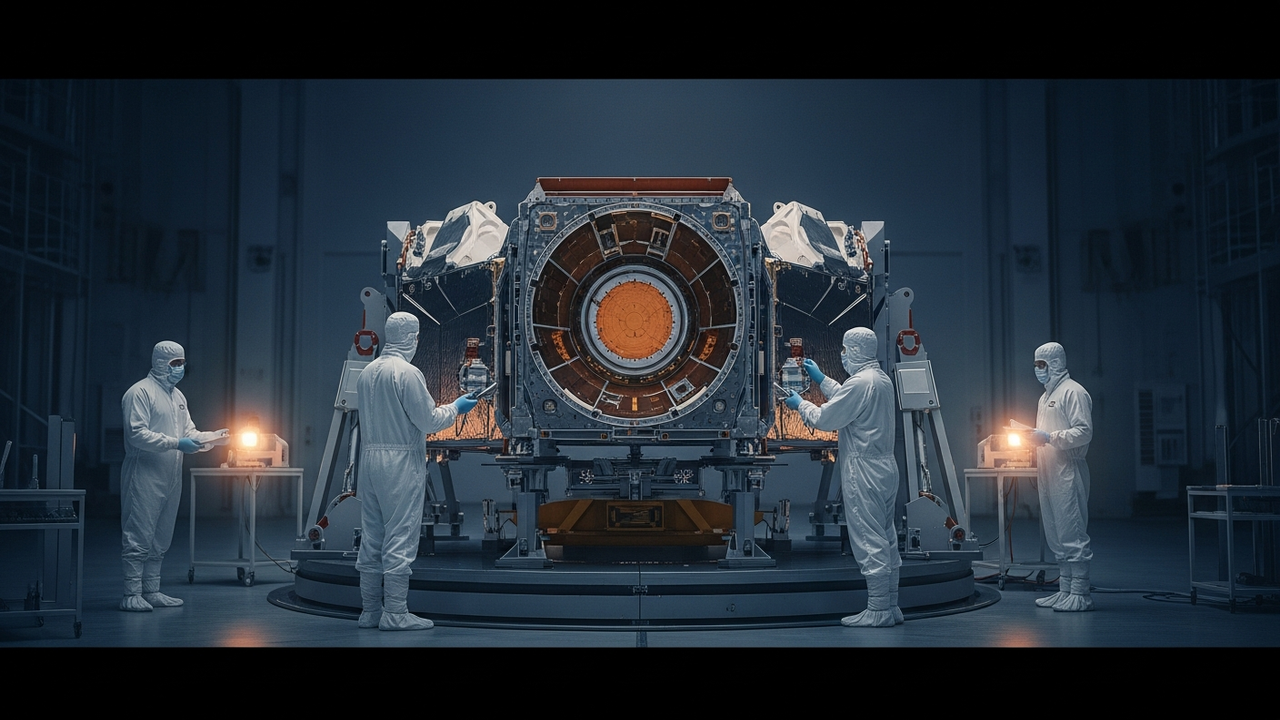
Engineers at NASA Ames Research Center have announced the confirmation of the safety of the heat shield design for the Orion spacecraft, which will carry astronauts on the Artemis II mission. This decision is based on detailed data analysis from the uncrewed Artemis I flight, validating that the heat shield can reliably protect the crew from extreme temperatures during atmospheric re-entry. This achievement represents a critically important step for the Artemis program’s goal of safely transporting humans to deep space and returning them to Earth.
Technical and Testing Details
The Orion spacecraft’s heat shield is designed to protect the crew and internal systems from the scorching temperatures, reaching several thousand degrees Celsius, generated during Earth re-entry. Its main technical features and the validation process are as follows:
- PICA (Phenolic Impregnated Carbon Ablator) Material: Orion’s heat shield utilizes PICA material, developed by NASA. This ablative material dissipates heat by charring and eroding during re-entry, minimizing heat transfer to the spacecraft’s interior.
- Data Analysis from Artemis I: The uncrewed Artemis I mission, conducted in 2022, orbited the Moon and re-entered Earth’s atmosphere at high speed. Extensive data, including temperature, pressure, and heat flux measurements from sensors strategically placed on the heat shield, were collected. Ames researchers meticulously analyzed this data to assess the material’s performance, ablation behavior, and structural integrity.
- Safety Confirmation: The analysis confirmed that the heat shield’s performance matched predictive models and fully met the safety margins required for a crewed re-entry during Artemis II. This validates the reliability of the material selection, design, and manufacturing processes.
Background and Industry Context
Atmospheric re-entry is one of the most perilous and complex phases of spaceflight. Since the Apollo program, NASA has been a world leader in re-entry thermal management technologies. For the Artemis program, the Orion spacecraft will re-enter at higher speeds from farther deep space than Apollo, demanding even greater performance and reliability from its heat shield. This safety confirmation is the culmination of years of intensive research, development, and stringent testing.
NASA Ames Research Center is a crucial facility with expertise in thermal protection systems, aerodynamics, and planetary atmospheric entry. Through partnerships with commercial companies, it also contributes to establishing safety standards for commercial spaceflight. This validation signifies the maturation of a key foundational technology for future lunar and Martian exploration missions.
Strategic Significance and Outlook
The confirmation of the Artemis II heat shield design’s safety instills significant confidence for the upcoming Artemis II mission, planned for 2026 or later, which will see astronauts orbit the Moon. The success of the heat shield dramatically enhances the feasibility of future Artemis III (lunar landing) and subsequent crewed Mars missions. Safe and reliable re-entry technology is an indispensable element for expanding human activity in deep space and protecting astronaut lives. This achievement also contributes to advancements in safety technology across space tourism and the broader space industry, marking a critical step towards making the dream of space travel a reality for more people.
Source: https://www.nasa.gov/ames-partnerships/annual-report-2025/
Get our weekly technology intelligence — free
Receive an infographic that lets you judge at a glance whether each field’s analysis report is worth reading.
Subscribe Free — Weekly Tech Intelligence
By subscribing, you’ll receive Troy-Technical’s weekly technology intelligence newsletter.
- Your email and selected fields are used only to deliver the newsletter.
- We never share your information with third parties.
- You can unsubscribe anytime via the link in each email.
See our Privacy Policy for details.
Takes about a minute · Unsubscribe anytime