Key Findings
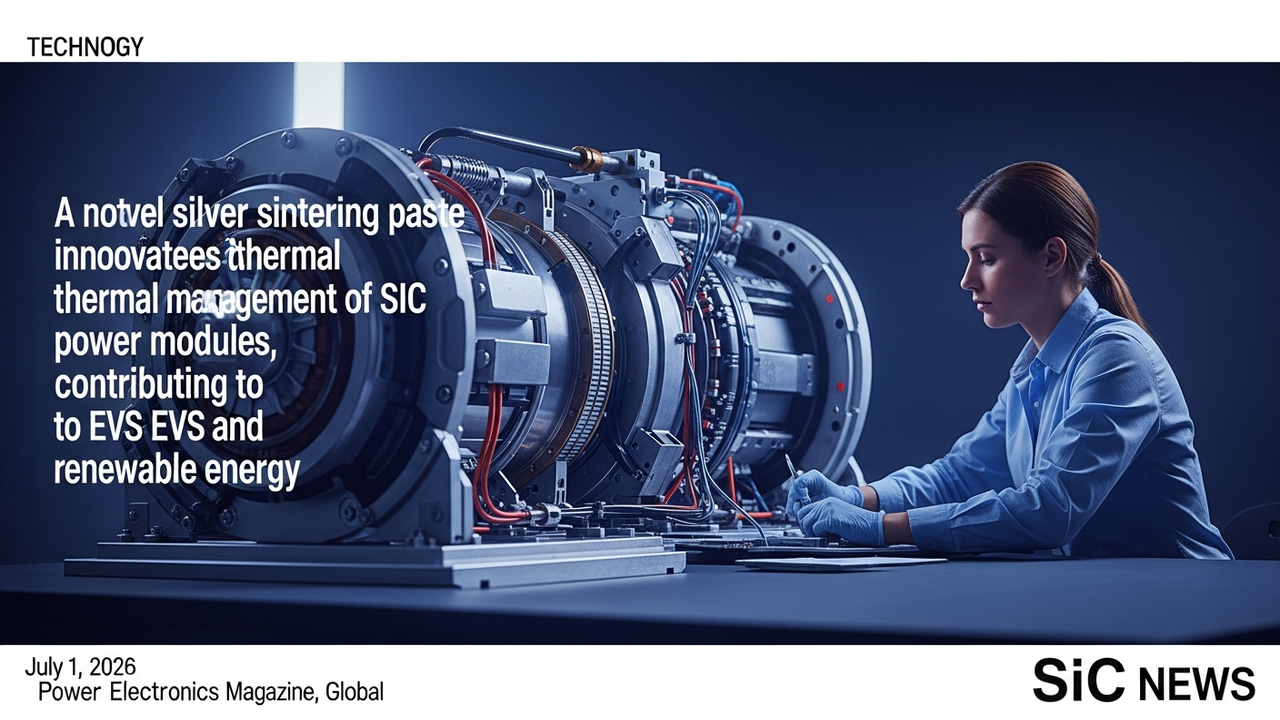
A groundbreaking new silver sinter paste has been introduced, poised to dramatically elevate the performance and reliability of SiC (silicon carbide) power modules. This innovative sintering material is characterized by exceptionally high thermal conductivity and superior long-term reliability, enabling highly efficient thermal management even under the high operating temperatures intrinsic to SiC devices. This is expected to lead to significant improvements in both efficiency and lifespan for high-power applications, including electric vehicle (EV) inverters and renewable energy power conversion systems.
Technical Details
- High Thermal Conductivity: Achieves several times higher thermal conductivity compared to conventional solder materials, efficiently transferring heat generated by the SiC chip to the heatsink. This minimizes junction temperature rise and reduces thermal stress on the SiC device.
- Superior Reliability: Suppresses void formation at high temperatures, maintaining stable bond strength over extended periods. It also demonstrates excellent fatigue characteristics under thermal cycling, ensuring reliability in demanding operating conditions.
- Maximizing SiC Device Potential: While SiC power devices are capable of high-temperature operation, thermal management often dictates their performance limits. This silver sinter paste unlocks the full potential of SiC chips, enabling high-frequency and high-efficiency operation.
- Process Optimization: Although sintering processes typically require high temperatures, the new paste allows for reliable joint formation with optimized process temperatures, reducing thermal loads during manufacturing.
Background & Context
SiC power devices are rapidly being adopted in EVs, industrial equipment, and renewable energy sectors due to their high breakdown voltage, low loss, and superior high-temperature operating characteristics. However, harnessing their full potential necessitates highly efficient thermal management to cope with increased heat generation. The die-attach material, in particular, often acts as a bottleneck in the thermal conduction path. Conventional solder materials have been limited by their melting points and thermal conductivity, preventing full utilization of SiC’s high-temperature capabilities and driving a strong demand for superior bonding materials.
Strategic Significance & Outlook
The advent of this new silver sinter paste opens up new possibilities for SiC power module design and performance. It will contribute to solving critical challenges faced by power electronics, such as extending EV range, shortening charging times, and further optimizing renewable energy systems. Especially in the automotive market, where high performance, miniaturization, and weight reduction are paramount, this technology is expected to establish a significant competitive advantage. Future expansion into aerospace and high-reliability industrial applications is also anticipated.
Source: #
Get our weekly technology intelligence — free
Receive an infographic that lets you judge at a glance whether each field’s analysis report is worth reading.
Subscribe Free — Weekly Tech Intelligence
By subscribing, you’ll receive Troy-Technical’s weekly technology intelligence newsletter.
- Your email and selected fields are used only to deliver the newsletter.
- We never share your information with third parties.
- You can unsubscribe anytime via the link in each email.
See our Privacy Policy for details.
Takes about a minute · Unsubscribe anytime