Key Findings
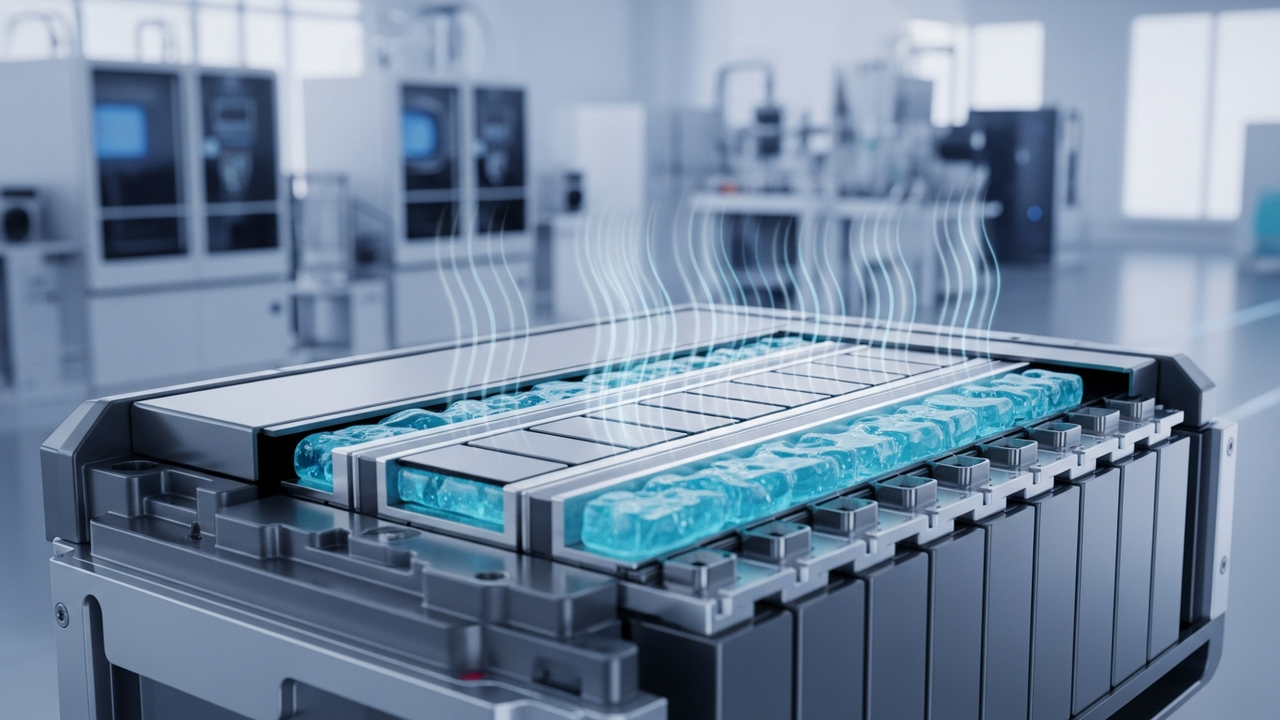
Dow has announced the introduction of a groundbreaking silicone-free thermal gap filler, designed to significantly enhance the safety and performance of electric vehicle (EV) battery packs. This new product ensures highly efficient heat transfer between battery cells and the cooling system, maintaining optimal battery operating temperatures and substantially reducing the risk of thermal runaway. It addresses concerns regarding outgassing and contamination associated with traditional silicone-based materials, offering a distinct advantage in environments requiring coexistence with sophisticated electronics.
Technical Details
- High Thermal Conductivity: Rapidly transfers heat from battery cells to the cooling plate, preventing hot spots and improving overall temperature uniformity within the battery pack. This suppresses battery degradation and contributes to extended lifespan.
- Silicone-Free Composition: Completely eliminates the risk of adjacent component contamination by volatile organic compounds (VOCs) that can originate from silicone materials. This is crucial for ensuring long-term reliability in EV systems, especially where optical sensors and specific electronic components are densely integrated.
- Excellent Conformability: Reliably fills irregular gaps between cells and the cooling system, enhancing contact and minimizing thermal resistance in the heat transfer path.
- Enhanced Battery Safety: Effectively suppresses heat propagation during a thermal runaway event, preventing its spread to adjacent cells. This plays a vital role in enhancing EV safety.
Background & Context
With the rapid expansion of the EV market, battery safety and performance have become paramount concerns. Particularly in high-energy-density battery packs, increased heat generation and the resulting complexity of thermal management are escalating challenges. Thermal runaway can be a major cause of serious EV accidents, making effective cooling and thermal protection indispensable. While silicone materials offer excellent properties, their outgassing can potentially affect nearby electronic and optical components, leading to a strong demand from some OEMs for silicone-free alternatives.
Strategic Significance & Outlook
Dow’s silicone-free thermal gap filler provides a new option for EV battery pack design, potentially raising the safety and performance standards for next-generation EVs. Specifically, in EVs with advanced sensor and display technologies integrated into smart cockpits, this material will increase design flexibility and offer new inspiration to design engineers. This technology is expected to find applications not only in the automotive industry but also in other high-reliability electronic devices and energy storage systems.
Source: #
Get our weekly technology intelligence — free
Receive an infographic that lets you judge at a glance whether each field’s analysis report is worth reading.
Subscribe Free — Weekly Tech Intelligence
By subscribing, you’ll receive Troy-Technical’s weekly technology intelligence newsletter.
- Your email and selected fields are used only to deliver the newsletter.
- We never share your information with third parties.
- You can unsubscribe anytime via the link in each email.
See our Privacy Policy for details.
Takes about a minute · Unsubscribe anytime