
Key Findings
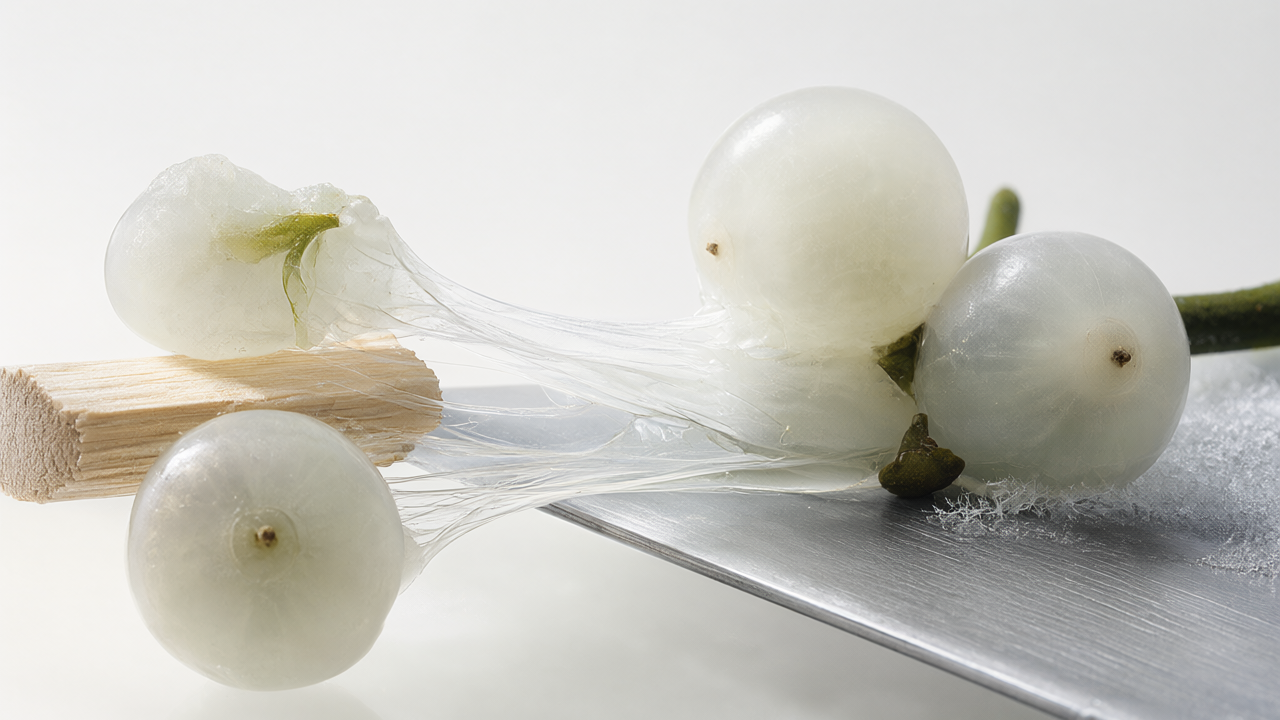
A team of researchers at the Technical University of Munich (TUM) has developed a high-performance, fully bio-based adhesive derived from mistletoe berries, demonstrating exceptional shear strengths exceeding 10 megapascals (MPa) and stable bonding performance even at cryogenic temperatures as low as -150°C. This breakthrough adhesive is notably re-activatable multiple times by heating to approximately 90°C, which profoundly simplifies the repair and recycling processes for electronic devices and opens new avenues for sustainable material solutions.
Technical / Clinical Details
The novel adhesive, formulated from natural components extracted from mistletoe berries, exhibits robust adhesion to a wide array of materials, including wood, metal, glass, and even the notoriously difficult-to-bond Teflon. Rigorous testing has confirmed shear strengths comfortably above 10 MPa, a performance metric comparable to or surpassing many conventional industrial adhesives. A particularly innovative feature is the adhesive’s ability to be repeatedly reactivated at a relatively low temperature of approximately 90°C. This permits components to be separated without damage and subsequently re-bonded, facilitating cost-effective repairs and extending product lifecycles. Furthermore, its sustained performance at -150°C highlights its potential for specialized applications in extreme environments, such as space technology and superconducting systems.
Background & Context
Amidst growing global emphasis on sustainability and environmental impact reduction, the development of high-performance bio-based alternatives to petroleum-derived adhesives has become an urgent priority. The electronics industry, in particular, faces increasing demand for debondable adhesives that can facilitate easier repair and recycling of increasingly complex devices. While many bio-based adhesives have historically struggled to meet industrial performance requirements, the mistletoe berry adhesive, with its strong bonding capability and thermal re-activatability, promises to bridge this gap. This technology is poised to play a pivotal role in reducing the environmental footprint throughout a product’s lifecycle and promoting efficient resource utilization.
Strategic Significance & Outlook
The mistletoe berry adhesive is expected to find diverse applications in sectors such as flexible electronics, medical devices, automotive components, and cryogenic storage systems. Its re-activatability, in particular, could revolutionize the modular design of electronic devices like smartphones and tablets, making repairs and component replacements more accessible and thereby contributing significantly to the reduction of electronic waste. Key next steps for commercialization include establishing scalable production techniques, optimizing cost-effectiveness, and conducting comprehensive evaluations of long-term durability and stability. This innovative material represents a significant step towards a more sustainable future in adhesive technology.
Get our weekly technology intelligence — free
Receive an infographic that lets you judge at a glance whether each field’s analysis report is worth reading.
Subscribe Free — Weekly Tech Intelligence
By subscribing, you’ll receive Troy-Technical’s weekly technology intelligence newsletter.
- Your email and selected fields are used only to deliver the newsletter.
- We never share your information with third parties.
- You can unsubscribe anytime via the link in each email.
See our Privacy Policy for details.
Takes about a minute · Unsubscribe anytime