

Key Findings
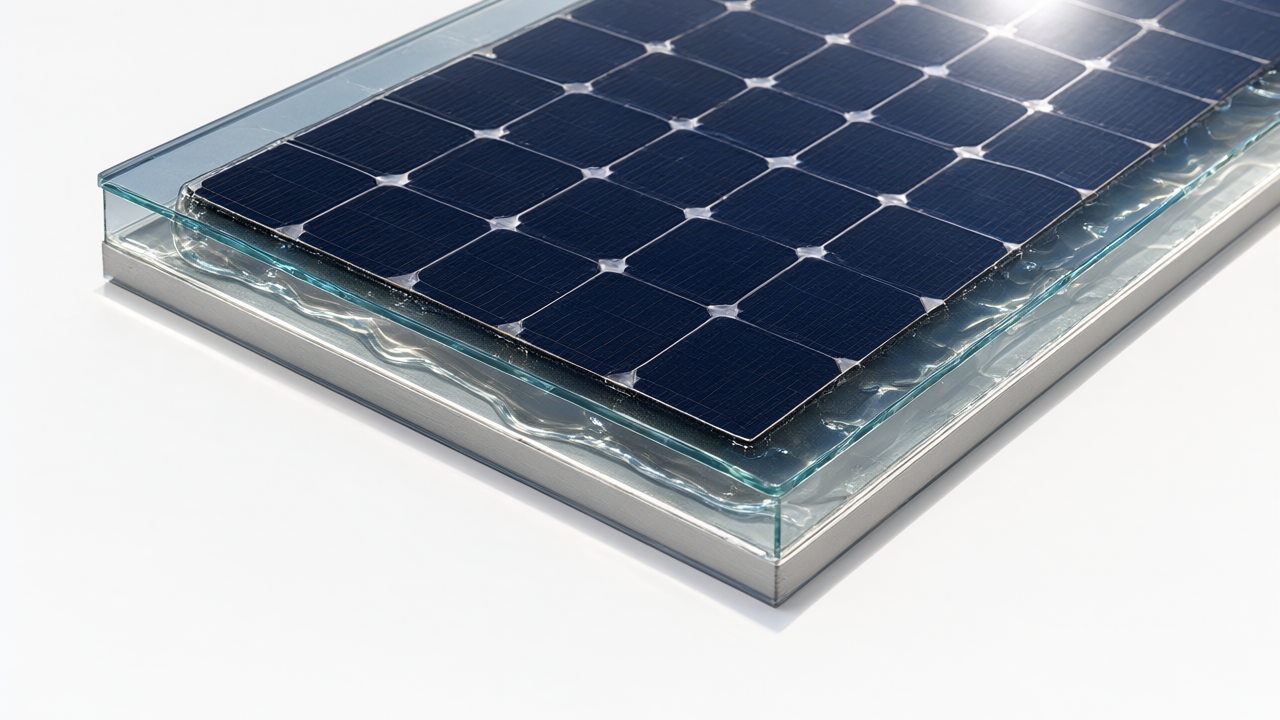
An innovative solar panel design has been developed that replaces traditional cured adhesives with silicone oil as an encapsulant, achieving a 22.6% conversion efficiency. This performance is comparable to conventional EVA (ethylene-vinyl acetate) encapsulated modules. This liquid-filled approach dramatically enhances the sustainability and recyclability of solar panels, as it allows for the panel to be opened for material recovery and recycling without requiring high-energy pyrolysis or hazardous solvents.
Technical / Clinical Details
The developed solar panel employs a fundamentally different encapsulation strategy, using liquid silicone oil to encase the photovoltaic cells, as opposed to conventional solid adhesives. This silicone oil offers excellent light transparency and long-term stability while effectively protecting the cells from environmental degradation. This method resolves issues associated with traditional EVA encapsulants, such as permeability, degradation via hydrolysis, and the significant challenges during recycling (requiring high-temperature pyrolysis or chemical treatment). The research demonstrated that these new liquid-filled panels achieved a high conversion efficiency of 22.6%, matching the performance of current mainstream EVA-encapsulated panels. A key advantage is the ease with which the panels can be opened, enabling the recovery of high-value materials like silicon, silver, and copper through less energy-intensive mechanical processes or low-cost solvent-based methods.
Background & Context
While solar power rapidly expands as a clean energy source, the disposal and recycling of end-of-life solar panels pose significant sustainability challenges. Traditional panels, sealed with rigid and strongly adhered materials like EVA, are extremely difficult to disassemble for efficient material recovery. This often necessitates energy-intensive and environmentally burdensome processes such as high-temperature pyrolysis or acid baths, leading to low recycling rates and high costs. This new silicone oil encapsulation technology offers a direct solution to these challenges, robustly advancing the photovoltaic industry towards a true circular economy.
Strategic Significance & Outlook
Silicone oil encapsulated solar panels are expected to significantly reduce solar power recycling costs and improve the recovery rates of precious metals and semiconductor materials, thereby promoting circular resource utilization. Widespread adoption of this technology could contribute to solving the global solar panel waste problem and further reducing the environmental footprint of solar power generation. Future efforts are anticipated to focus on further evaluating the durability, long-term performance stability, and scalability for manufacturing. This represents a crucial step towards achieving a sustainable energy future.
Source: https://www.ecoportal.net/en/22-6-percent-filling-solar-panel/39242/
Get our weekly technology intelligence — free
Receive an infographic that lets you judge at a glance whether each field’s analysis report is worth reading.
Subscribe Free — Weekly Tech Intelligence
By subscribing, you’ll receive Troy-Technical’s weekly technology intelligence newsletter.
- Your email and selected fields are used only to deliver the newsletter.
- We never share your information with third parties.
- You can unsubscribe anytime via the link in each email.
See our Privacy Policy for details.
Takes about a minute · Unsubscribe anytime