


Key Findings
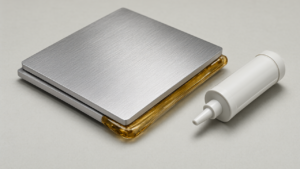
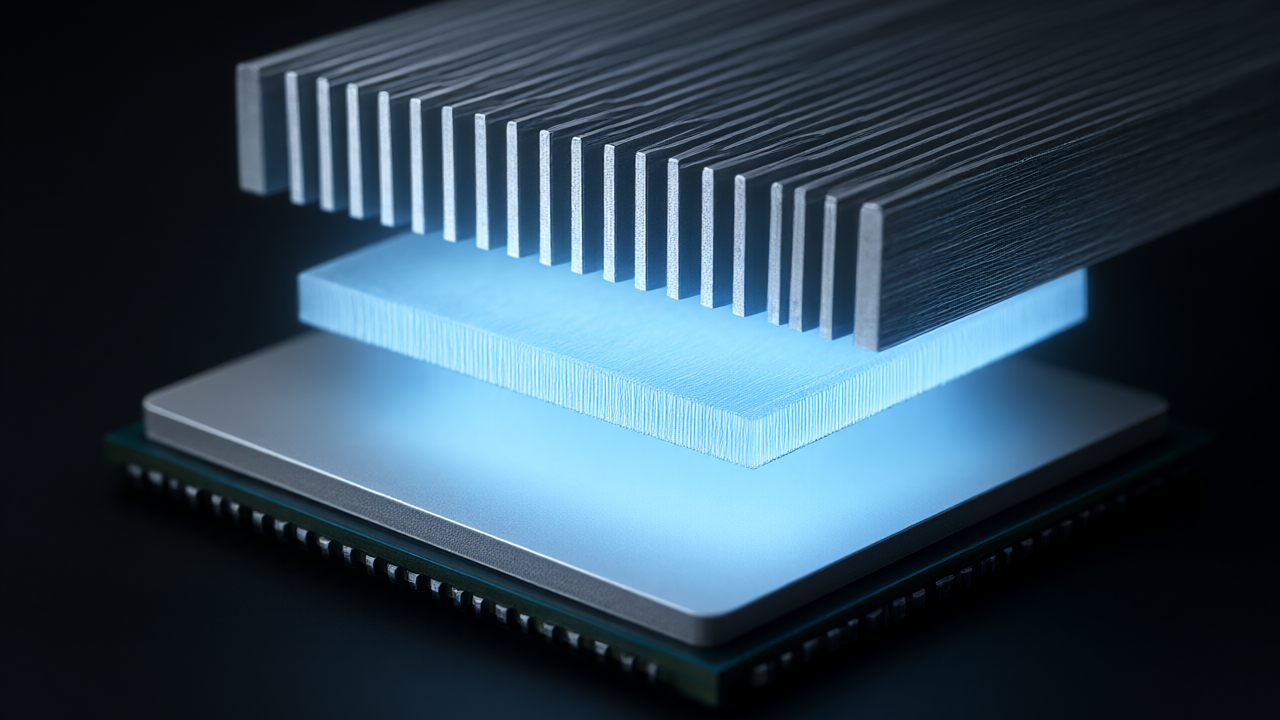
The epoxy-based polymer fiber forest achieved a 25% reduction in temperature compared to a commercially available ceramic-filled silicone thermal pad, keeping the heated surface 17 degrees Celsius cooler at a heating power of approximately 1.2 watts. The material architecture enables efficient heat transfer from electronic components to cooling systems while maintaining electrical insulation to prevent short circuits.
Technical Details
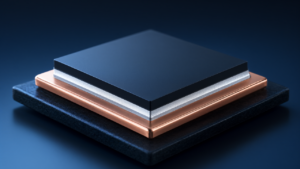
The architecture consists of thousands of microscopic Zylon polymer fibers arranged vertically. Zylon was selected for its high thermal conductivity along its length. The manufacturing process involves packing Zylon fiber bundles into a mold, building the structure horizontally layer by layer, and filling the gaps with a polymer material. Once hardened, the material is rotated 90 degrees to ensure the fibers stand vertically.
The team tested two different surrounding materials to adjust mechanical properties:
- Epoxy-based: Achieved a thermal conductivity of 16.8 watts per meter-kelvin.
- PDMS (silicone-like polymer): Achieved a thermal conductivity of 12.0 watts per meter-kelvin and offered a softer mechanical profile.
Background & Context
Thermal interface materials must fill gaps between computer chips, heat spreaders, and heat sinks. Traditionally, materials that conduct heat efficiently also conduct electricity, while insulating polymers typically conduct heat poorly. While aligning molecular chains in polymers can improve heat transfer, translating this property into a scalable format for electronics has been a challenge. A 2025 study by Zhiting Tian’s group used stretched bulk polymer bars, but their square millimeter cross-sectional areas limited the heat transfer area.
Significance & Outlook
The “forest” design allows for the multiplication of fibers to increase the heat transfer area and can be manufactured in various dimensions to fit specific devices. Because the architecture is tunable, engineers can potentially integrate other heat-conducting fibers and surrounding materials to customize properties for different industrial applications.
Get our weekly technology intelligence — free
Receive an infographic that lets you judge at a glance whether each field’s analysis report is worth reading.
Subscribe Free — Weekly Tech Intelligence
By subscribing, you’ll receive Troy-Technical’s weekly technology intelligence newsletter.
- Your email and selected fields are used only to deliver the newsletter.
- We never share your information with third parties.
- You can unsubscribe anytime via the link in each email.
See our Privacy Policy for details.
Takes about a minute · Unsubscribe anytime