Key Findings
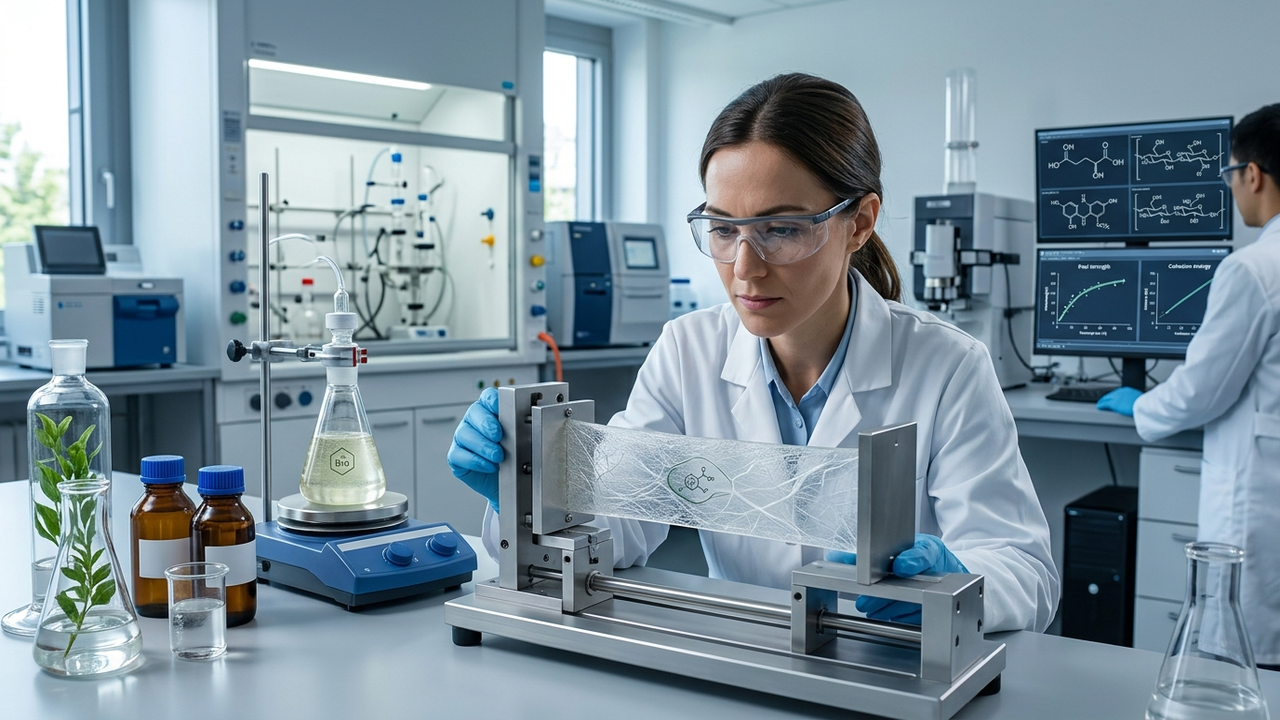
Recent research reports a groundbreaking method to optimize the adhesion-cohesion balance in high bio-content waterborne pressure-sensitive adhesives (PSAs) by combining two innovative approaches: itaconate chemistry and nanocellulose reinforcement. This resolves the long-standing challenge of enhancing the performance of environmentally friendly bio-based adhesives to rival or even surpass conventional petroleum-derived adhesives. This achievement significantly accelerates the practical implementation of sustainable adhesive solutions.
Technical Details
Waterborne PSAs have garnered attention for their lower environmental impact, but a key challenge has been that increasing bio-based content often leads to an imbalance between adhesive strength (tack) and cohesive strength (internal strength), resulting in compromised performance. The research team first introduced itaconate derivatives into the main chain of the adhesive polymer, precisely controlling the polymer’s molecular design to tune its adhesive properties. Itaconates, synthesizable from bio-derived raw materials, contribute to improving the adhesion-cohesion balance through their chemical characteristics while maintaining the adhesive’s bio-content. Furthermore, by incorporating nanocellulose (cellulose nanocrystals or cellulose nanofibrils) into the adhesive matrix, a nanoscale reinforcement effect was achieved. Nanocellulose, with its high aspect ratio and excellent mechanical strength, plays a crucial role in enhancing the cohesive strength of the adhesive and improving overall adhesive performance. The synergistic effect of these two approaches successfully led to the development of a waterborne PSA that combines excellent tack and cohesive strength while maintaining a high bio-content.
Background and Industry Context
The adhesive industry faces an urgent imperative to shift towards sustainability. Reducing the environmental impact of adhesives, which are widely used in packaging, medical, automotive, and construction sectors, is crucial from the perspective of resource efficiency and waste reduction. While waterborne adhesives offer advantages such as lower volatile organic compound (VOC) emissions, they sometimes underperform compared to solvent-based adhesives. This research contributes to achieving the industry’s sustainability goals by focusing on developing waterborne adhesives that increase the use of bio-derived raw materials without sacrificing performance. This advancement aligns with trends in bioplastics and biodegradable materials, supporting broader green chemistry initiatives.
Strategic Significance and Outlook
These research findings will serve as foundational technology to accelerate the commercialization of environmentally friendly, high-performance bio-based waterborne PSAs. Future efforts are expected to focus on further evaluating the durability of the developed adhesives, including long-term stability, moisture resistance, and heat resistance, as well as assessing their applicability to various substrates and scalability for large-scale production. This technology holds significant market potential as a substitute for conventional petroleum-derived adhesives, particularly in disposable products and applications requiring recyclability. It is expected to be adopted in a wide range of products, including packaging materials, labels, medical tapes, and construction materials, contributing to the realization of a more sustainable society.
Get our weekly technology intelligence — free
Receive an infographic that lets you judge at a glance whether each field’s analysis report is worth reading.
Subscribe Free — Weekly Tech Intelligence
By subscribing, you’ll receive Troy-Technical’s weekly technology intelligence newsletter.
- Your email and selected fields are used only to deliver the newsletter.
- We never share your information with third parties.
- You can unsubscribe anytime via the link in each email.
See our Privacy Policy for details.
Takes about a minute · Unsubscribe anytime


Comments