Key Findings
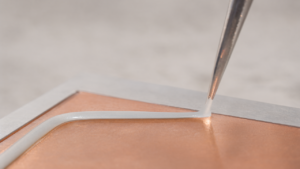
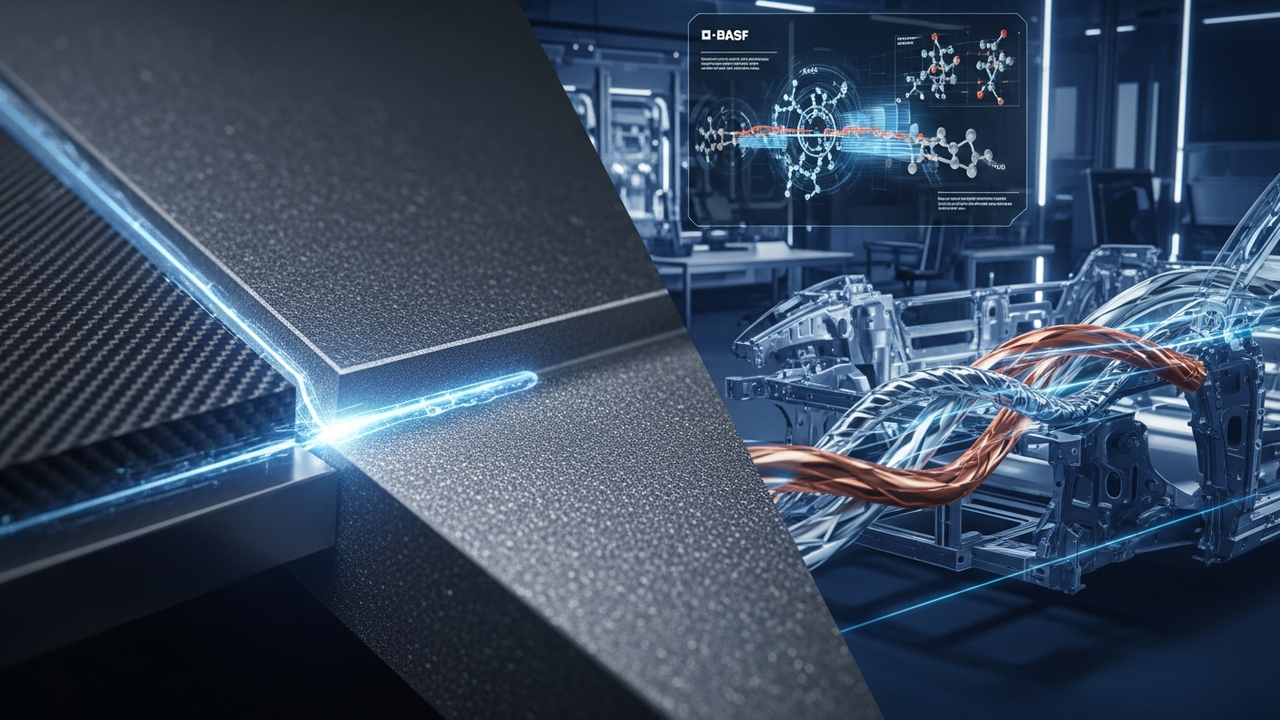
BASF has introduced an innovative toughened structural adhesive to meet the automotive industry’s growing demand for lightweighting and dissimilar material joining. This new product enables robust bonding between materials such as aluminum alloys and Carbon Fiber Reinforced Plastics (CFRP), which are typically challenging to weld. Crucially, it significantly enhances vehicle crash durability compared to traditional welding or riveting methods. This technology paves new avenues for both safety and efficiency, particularly in the body structure design of electric vehicles (EVs).
Technical Details
- Dissimilar Material Bonding Performance: Provides high adhesive strength for materials like aluminum and CFRP that are difficult to weld. This allows designers greater freedom to combine multiple lightweight materials, contributing significantly to overall vehicle weight reduction.
- Enhanced Crash Durability: The adhesive disperses and absorbs impact energy, preventing localized stress concentrations. This allows the body structure to more effectively absorb energy during a collision, improving occupant safety. Reports indicate an approximately 15-20% improvement in energy absorption capability in specific crash tests compared to conventional joining methods.
- Fatigue Durability: Demonstrates excellent resistance to fatigue from vibrations and thermal cycling over long periods of use, ensuring long-term vehicle reliability.
- Process Compatibility: Designed with automotive manufacturing lines in mind, featuring rapid cure times and excellent workability. This allows for high-quality bonding while maintaining production efficiency.
Background & Context
The automotive industry faces pressing challenges in vehicle lightweighting to meet stringent fuel efficiency regulations for internal combustion engine (ICE) vehicles and extend the range of EVs. Consequently, the adoption of multi-material body structures combining high-strength steel, aluminum, and CFRP is accelerating. However, efficient and robust joining technologies for these dissimilar materials have been limited, with traditional mechanical joining methods posing issues such as weight addition and stress concentration. Structural adhesives have thus been gaining attention as a crucial solution to bridge this gap.
Strategic Significance & Outlook
BASF’s toughened structural adhesive has the potential to revolutionize next-generation automotive design, particularly for EV chassis and body structures. It contributes to solving the inherent dilemma of EVs: simultaneously extending range through lightweighting and enhancing crash safety. Furthermore, it simplifies manufacturing processes and improves cost-efficiency, making it an attractive option for automotive manufacturers. Future applications are anticipated in other transportation sectors, such as aerospace and rail vehicles, to improve lightweighting and safety.
Source: #
Get our weekly technology intelligence — free
Receive an infographic that lets you judge at a glance whether each field’s analysis report is worth reading.
Subscribe Free — Weekly Tech Intelligence
By subscribing, you’ll receive Troy-Technical’s weekly technology intelligence newsletter.
- Your email and selected fields are used only to deliver the newsletter.
- We never share your information with third parties.
- You can unsubscribe anytime via the link in each email.
See our Privacy Policy for details.
Takes about a minute · Unsubscribe anytime