Key Findings
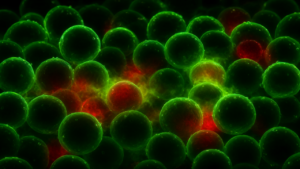
Researchers at Osaka University have successfully developed a pioneering biosensor capable of real-time tracking of the accumulation of the rare lipid PI(3,5)P2 (phosphatidylinositol-3,5-bisphosphate) within cell membranes during periods of cellular stress. The core innovation of this study is the introduction of the CLiB (cell surface liposome binding) assay. This novel high-throughput method combines yeast cells with a fluorescence readout, enabling the visualization and quantification of the dynamics of this elusive lipid, which was previously extremely challenging to detect. This breakthrough is expected to significantly contribute to elucidating the role of PI(3,5)P2 in cellular responses.
Technical / Clinical Details
PI(3,5)P2 is known to be involved in crucial physiological processes such as intracellular vesicle trafficking, autophagy, and ion channel regulation. However, its extremely low abundance and short half-life have limited tools for real-time tracking of its dynamics within cells. The newly developed biosensor employs a fluorescent protein-based probe designed to specifically bind to PI(3,5)P2. By presenting this probe as liposomes on the surface of yeast cells, localized concentration changes of PI(3,5)P2 in the cell membrane can be detected as changes in fluorescence intensity. This assay significantly enhances sensitivity compared to conventional methods, capable of capturing changes in PI(3,5)P2 at nanomolar concentrations. This allows for detailed analysis of the dynamic behavior of PI(3,5)P2 when cells are subjected to various stressors (e.g., nutrient starvation, oxidative stress, drug exposure), providing invaluable information for deepening the understanding of disease mechanisms.
Background & Context
Aberrant PI(3,5)P2 metabolism has been implicated in various human diseases, including cancer, diabetes, and neurodegenerative disorders. However, due to its scarcity and complex metabolic pathways, its precise role in disease pathogenesis has not been fully elucidated. The development of this biosensor addresses this research gap by providing a novel tool to better understand the pathophysiology of these diseases. Furthermore, in the field of drug discovery, this technology has the potential to accelerate the development of new therapeutics targeting PI(3,5)P2. Specifically, when combined with AI-driven drug discovery platforms, it could enable efficient screening of vast compound libraries for candidates that influence PI(3,5)P2 dynamics.
Strategic Significance & Outlook
The advent of this PI(3,5)P2 biosensor offers a new perspective in cell biology and medical research. In the future, its application to more complex mammalian cells and in vivo models is expected to advance the understanding of PI(3,5)P2’s functions in living systems. This will expand research frontiers in areas such as cancer cell proliferation control, mechanisms of insulin resistance, and neuronal dysfunction. Moreover, this technology could lead to the discovery of novel diagnostic biomarkers and the development of innovative therapies targeting the PI(3,5)P2 pathway, significantly contributing to expanding diagnostic and treatment options for patients.
Get our weekly technology intelligence — free
Receive an infographic that lets you judge at a glance whether each field’s analysis report is worth reading.
Subscribe Free — Weekly Tech Intelligence
By subscribing, you’ll receive Troy-Technical’s weekly technology intelligence newsletter.
- Your email and selected fields are used only to deliver the newsletter.
- We never share your information with third parties.
- You can unsubscribe anytime via the link in each email.
See our Privacy Policy for details.
Takes about a minute · Unsubscribe anytime