Key Findings
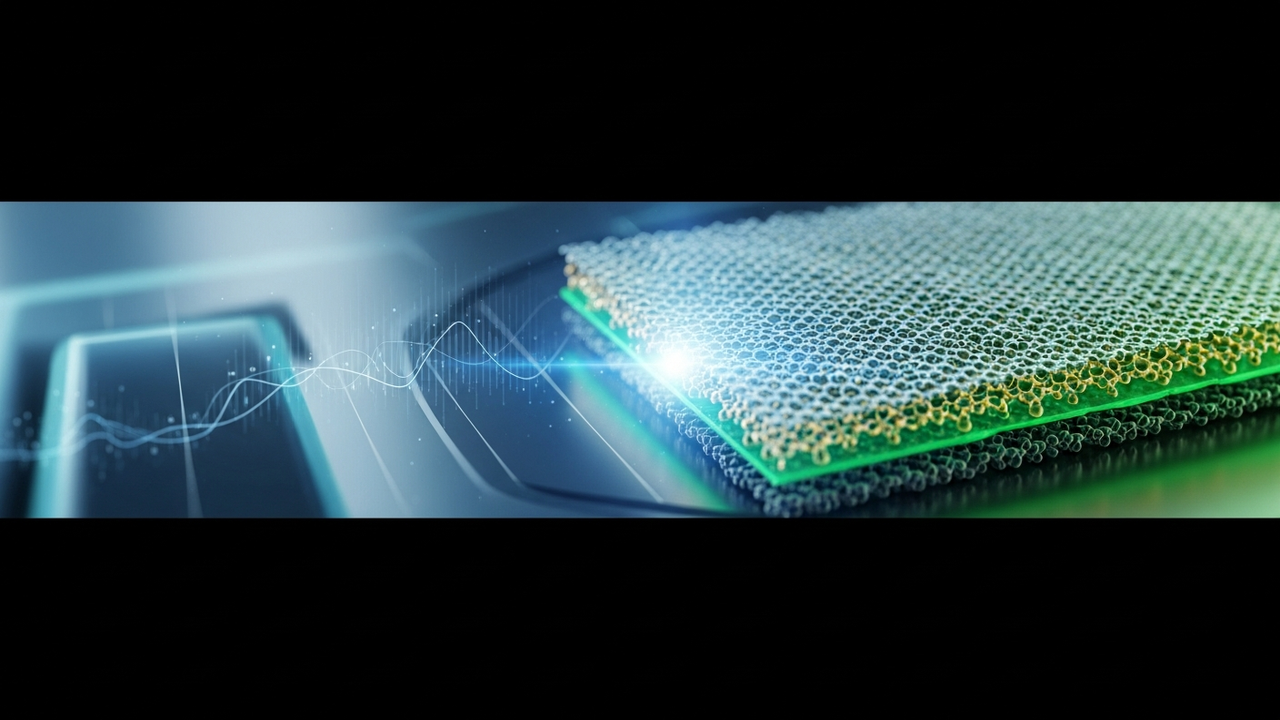
A groundbreaking technology has been developed to significantly improve the surface stability of composite solid electrolytes. By effectively coating Li1.3Al0.3Ti1.7(PO4)3 (LATP) solid electrolytes with reduced graphene oxide (rGO), researchers successfully suppressed the reduction of Ti⁴⁺ ions in LATP that occurs upon contact with lithium metal anodes. This improved composite solid electrolyte maintained an ionic conductivity of 6.02 × 10⁻⁵ S cm⁻¹ at 25°C, enabled stable lithium plating/stripping cycling for over 1000 hours, and achieved a capacity of 125 mAh/g at a 0.3C rate in a Li-LFP (lithium iron phosphate) full cell.
Technical Details
LATP is considered a promising oxide-based solid electrolyte candidate for all-solid-state batteries due to its high Li-ion conductivity and air stability. However, when in direct contact with a lithium metal anode, Ti⁴⁺ at the interface tends to be reduced, compromising LATP’s stability and increasing interfacial resistance. The research team effectively inhibited this side reaction by uniformly coating the LATP particle surfaces with rGO. The rGO, being electrically conductive yet chemically stable, forms a protective layer between the LATP and the lithium metal anode. This protective layer not only prevents Ti⁴⁺ reduction but also promotes uniform lithium-ion transport and suppresses dendrite growth. As a result, stable lithium cycling for over 1000 hours was achieved while maintaining practical ionic conductivity at room temperature. The 125 mAh/g capacity achieved in the Li-LFP full cell demonstrates the practical battery performance contributed by this technology.
Background & Context
All-solid-state batteries are anticipated as next-generation batteries that will significantly improve the safety, energy density, and lifespan of electric vehicles (EVs) and portable electronic devices. The introduction of lithium metal anodes is key to dramatically increasing energy density, but ensuring interfacial stability with solid electrolytes remains the biggest challenge. While LATP is a promising solid electrolyte, its insufficient interfacial stability has been a barrier to practical application. This rGO coating technology offers a practical approach to solve this interfacial problem, holding significant implications for accelerating the commercialization of oxide-based all-solid-state batteries.
Strategic Significance & Outlook
The enhanced surface stability of LATP composite solid electrolytes via rGO coating is a crucial step towards the commercialization of high-energy-density all-solid-state batteries. Future work will focus on optimizing the rGO coating layer, establishing large-scale production techniques, and evaluating compatibility with various electrode materials. If this technology succeeds, it is expected to contribute to extending EV range, enhancing electronic device performance, and improving the reliability of renewable energy storage systems, thereby accelerating the transition to a sustainable energy society. Specifically, it significantly boosts the feasibility of all-solid-state batteries utilizing oxide-based solid electrolytes.
Source: https://pubs.acs.org/doi/10.1021/acsami.6c05700
Get our weekly technology intelligence — free
Receive an infographic that lets you judge at a glance whether each field’s analysis report is worth reading.
Subscribe Free — Weekly Tech Intelligence
By subscribing, you’ll receive Troy-Technical’s weekly technology intelligence newsletter.
- Your email and selected fields are used only to deliver the newsletter.
- We never share your information with third parties.
- You can unsubscribe anytime via the link in each email.
See our Privacy Policy for details.
Takes about a minute · Unsubscribe anytime







Comments