Key Findings
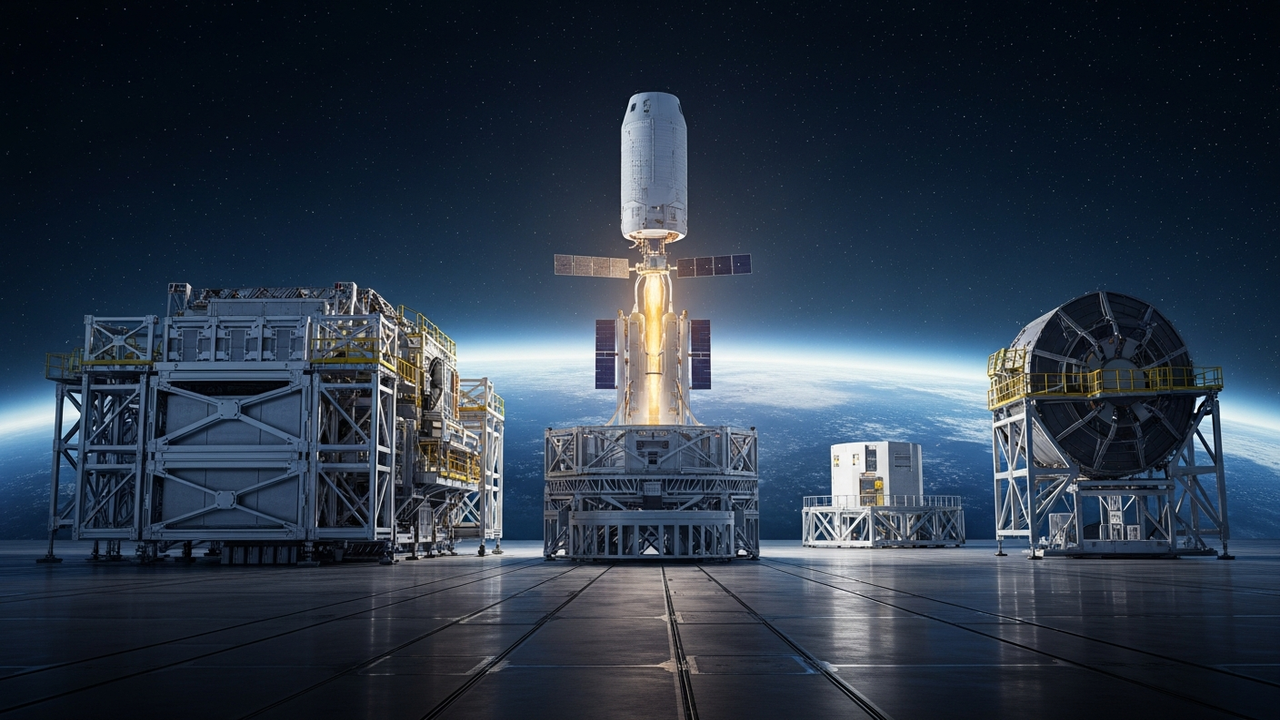
Rocket Lab announced an abort of the launch of ‘QPS-SAR-13’ (Mikura-I), the Synthetic Aperture Radar (SAR) satellite from Japanese Earth observation company iQPS, during the final moments of the countdown. The launch was scheduled from Rocket Lab’s Launch Complex 1B on New Zealand’s Mahia Peninsula, but the cause of the abort has not yet been officially announced.
Mission and Abort Details
QPS-SAR-13 was intended to be the 13th satellite in iQPS’s expanding SAR satellite constellation. iQPS aims to provide data across various sectors, including agriculture, disaster monitoring, and infrastructure monitoring, by operating a large number of small SAR satellites capable of high-frequency and high-resolution Earth observation.
- Satellite Purpose: ‘Mikura-I’ was set to enhance the QPS-SAR constellation’s all-weather observation capabilities, monitoring specific regions of Earth every few hours, irrespective of daylight or weather conditions, as a crucial part of the network.
- Launch Provider: Rocket Lab has previously launched multiple iQPS satellites using its Electron rocket, and this mission was slated as the eighth launch out of a planned total of 15. Previous launches had been successfully completed.
- Abort Circumstances: The launch was aborted at a stage very close to T-0 (liftoff). Such last-minute aborts typically occur when an anomaly is detected in the rocket system, ground systems, or due to adverse weather conditions. Rocket Lab is currently reviewing data, and further announcements are anticipated.
Background and Industry Context
Japan’s iQPS is a notable startup recognized as a pioneer in small SAR satellites. SAR satellites use radio waves to observe the Earth’s surface, offering the advantage of continuous monitoring regardless of weather or time of day, unlike optical satellites. This capability enables near real-time tracking of surface changes, making it valuable for disaster prevention, infrastructure management, smart agriculture, and national security.
Rocket Lab has established a significant presence in the small satellite launch market, second only to SpaceX, and its Electron rocket is highly regarded for its ability to quickly and precisely insert payloads into specific orbits. Demand from the Asia-Pacific region is high, and the New Zealand launch facility offers a geographical advantage to these customers. However, launch aborts underscore the inherent technical complexities and risks within the space industry. Even with highly proven rockets and experienced teams, unforeseen circumstances can always arise during launch operations.
Strategic Significance and Outlook
While this launch abort may cause a temporary delay in iQPS’s constellation deployment plans, such aborts are usually standard procedures for ensuring safety and do not often indicate fundamental issues. Rocket Lab is expected to investigate the cause and swiftly set a new launch window. The eventual successful launch of QPS-SAR-13 is crucial for the completion of iQPS’s constellation and the expansion of its service delivery capabilities. With global demand for SAR data on the rise, timely satellite deployment is vital for iQPS to maintain its competitive edge. For Rocket Lab, a swift investigation and resolution of this abort are imperative to upholding its reliability in the highly competitive launch market.
Get our weekly technology intelligence — free
Receive an infographic that lets you judge at a glance whether each field’s analysis report is worth reading.
Subscribe Free — Weekly Tech Intelligence
By subscribing, you’ll receive Troy-Technical’s weekly technology intelligence newsletter.
- Your email and selected fields are used only to deliver the newsletter.
- We never share your information with third parties.
- You can unsubscribe anytime via the link in each email.
See our Privacy Policy for details.
Takes about a minute · Unsubscribe anytime