Key Findings
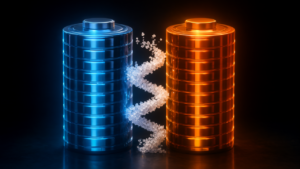
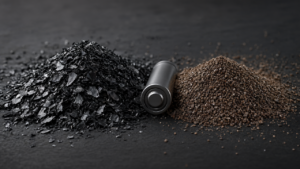
Engineers at the University of California San Diego (UC San Diego) have developed an innovative and environmentally friendly method to ‘upcycle’ spent lithium iron phosphate (LFP) battery cathode material into higher-performance lithium manganese iron phosphate (LMFP) material, which can store more energy. This approach holds significant potential to dramatically reduce both the cost and environmental impact of battery recycling.
Technical / Clinical Details
Unlike traditional battery recycling, which often involves completely dismantling spent batteries into raw materials for reconstruction, this new upcycling process focuses on directly transforming the chemical composition and structure of existing LFP cathode materials. Specifically, it involves introducing manganese into the LFP cathode and optimizing its crystalline structure to convert it into LMFP. LMFP retains the advantages of LFP, such as safety and long cycle life, while the incorporation of manganese enhances its energy density. This method minimizes energy-intensive steps like high-temperature or strong acid treatments, leading to substantial reductions in processing costs and environmental impact (energy consumption, water usage, and emissions). Initial experiments have confirmed that the upcycled LMFP material exhibits performance and stability comparable to newly manufactured LMFP.
Background & Context
The proliferation of lithium-ion batteries is driving the growth of the electric vehicle (EV) market, but the increasing volume of spent batteries and the supply constraints of expensive raw materials like cobalt and nickel pose challenges. LFP batteries, which do not use cobalt or nickel and offer superior safety and long cycle life, are rapidly gaining adoption in EVs and stationary energy storage systems. However, LFP’s energy density is often lower than some other high-performance lithium-ion chemistries, necessitating further improvements. UC San Diego’s research plays a crucial role in supporting the widespread adoption of LFP while building a sustainable battery supply chain by creating higher-value LMFP materials from existing LFP.
Strategic Significance & Outlook
This LFP cathode upcycling technology developed by UC San Diego introduces a new value proposition to the battery recycling industry. It is expected to reduce the lifecycle cost of batteries, leading to the increased market penetration of LFP-based EVs and energy storage systems. The improved performance of LMFP will contribute to extended EV range and the development of more compact battery packs. This eco-friendly approach deeply integrates circular economy principles into the battery manufacturing and recycling process, enabling both resource efficiency and environmental protection. Further large-scale demonstration and collaboration with industry will be essential for the commercialization of this technology.
Get our weekly technology intelligence — free
Receive an infographic that lets you judge at a glance whether each field’s analysis report is worth reading.
Subscribe Free — Weekly Tech Intelligence
By subscribing, you’ll receive Troy-Technical’s weekly technology intelligence newsletter.
- Your email and selected fields are used only to deliver the newsletter.
- We never share your information with third parties.
- You can unsubscribe anytime via the link in each email.
See our Privacy Policy for details.
Takes about a minute · Unsubscribe anytime